
You are here
From popular astronomy to astrophysics

In your latest book, you engage in dialogue with Camille Flammarion (1842-1925). What does he represent for you?
Jean-Philippe Uzan1: I was familiar with his work, although I only really discovered it quite late on, especially through my involvement in the French Astronomical Society (SAF), founded by Flammarion in 1887 and of which he was the first president, as well as my own explorations in science, literature and theatre. Flammarion is much less talked about today, because modern astrophysics has little to do with the astronomy he was involved in. For me, he embodies a certain kind of universalism and humanism specific to his time, fuelled by a passionate desire to popularise science and our understanding of the Universe.
What was the state of astronomy in his day?
J.-P. U. At the end of the nineteenth century, astronomy was still a descriptive science, focusing mainly on the Earth, the Moon, the Sun and the Solar System. It was based on observations made with telescopes, like the ones used at the observatory built for Flammarion at Juvisy-sur-Orge, south of Paris, in 1883.
At the time, astronomy was firmly rooted in the myth of Progress, whether scientific, technical or political. In 1871, at the time of the Paris Commune, Flammarion was 28 years old. He may have read the writings of his more radical contemporary, Auguste Blanqui. Well-known for his revolutionary theories, Blanqui had also written Eternity through the Stars, an essay in which he linked the latest astronomical discoveries to political ideas. In his view, if everything is made up of atoms and the Universe is infinite, it follows that every possible arrangement of these atoms must exist, including one in which there is another Earth on which the Commune ends up victorious!



When I read this text while I was studying for my PhD, I was bowled over by this breathtaking leap of the imagination inspired by the Copernican revolution. Flammarion and Blanqui shared the same faith in Progress. Both believed that science was a force for emancipation. It was precisely at that time that the distinctive nature of science in relation to other human activities began to emerge.
But present-day astrophysics has little to do with the astronomy of Flammarion's time. How did one turn into the other?
J.-P. U. At the end of the nineteenth century, physics came to the rescue of astronomy. First of all, the invention of spectroscopy, which Flammarion was familiar with, provided a way of determining the chemical composition of stars, and then thermodynamics revealed the connection between a star's colour and its temperature. At long last, it became possible to study them!
In the early twentieth century, physics brought about the transformation of astronomy into astrophysics thanks to two conceptual revolutions. The first took place in 1915, with Albert Einstein's general theory of relativity, which unlocked the door to spacetime. However, due to its mathematical complexity and lack of immediate applications, it was a long time before it gained acceptance among the scientific community, and it only really took off after the Second World War. Since then, it has radically changed astronomy, giving rise to both modern cosmology (the Big Bang theory) and to relativistic astrophysics (the study of pulsars, black holes and other compact objects), as well as providing a completely new observational tool, in the form of gravitational waves.
The other paradigm shift began in the 1920s. The result of a collective endeavour, quantum mechanics shed new light on the way matter behaves. In particular, it revealed the fundamental physical processes at work in the cores of stars, linking their energy production to nuclear phenomena. Without physics, we would never have understood that celestial bodies that appear very different are in fact connected by an evolutionary history.

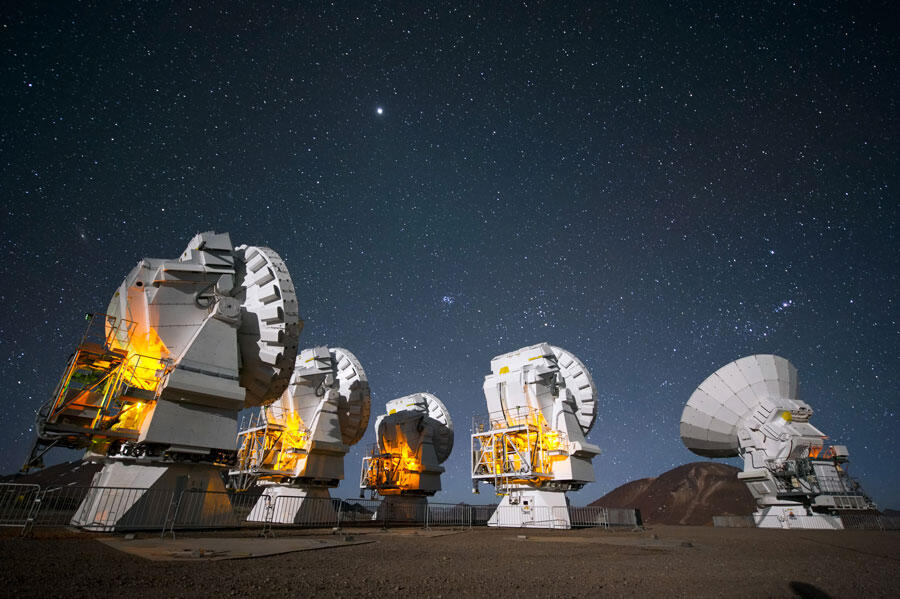
In addition to these conceptual upheavals there have been a whole series of innovations in the realm of instrumentation: giant mirrors, infrared and ultraviolet telescopes, radio telescopes, satellites, CCD cameras and neutrino detectors have now all replaced Flammarion's telescopes. These instruments have transformed the invisible into the visible, thus broadening the Universe to be deciphered.
All this implies that astrophysics is a much more complex subject than astronomy. What obstacles did you encounter in writing a popular history of it?
J.-P. U. Indeed, Flammarion had little trouble in popularising the knowledge of his time. His Popular Astronomy is very concrete: it talks about the Earth, the Moon, a little bit about the Sun (but without explaining why it shines), a few stars, and the small bodies of the Solar System. The main difficulty he met with was how to get across the notion of light years and of the unimaginably huge distances involved in astronomy.
Today, popularising astrophysics is far harder. Like Flammarion himself, I chose to adopt two complementary approaches, and to inform my readers of the different levels of difficulty in each chapter. The first, more accessible methodology summarises general scientific knowledge requiring no particular technical skills, such as the fact that we are all made of stardust, as Hubert Reeves and Carl Sagan explained so brilliantly. The second approach includes more technical passages that can be skipped on a first reading.


Incidentally, I have at all times tried to keep the terminology accurate, even in the most simplified sections. When using metaphors, I have always attempted to balance the poetic and the technical, and make it clear to my readers which was which, so as to avoid slipping into a sort of relativism that would reduce science to mere opinion. Situating knowledge is just as important as imparting it as such.
You emphasise the ‘popular’ nature of astronomy, as did Flammarion in his day. What, in your view, sets it apart from other scientific disciplines?
J.-P. U. Its obviousness. Everyone has seen the Sun, the stars and the phases of the Moon. The observation and interpretation of the heavenly bodies reflect a cultural basis shared by every civilisation, something that transcends us as humans who have all grown up beneath the same sky.
This may explain why, as the mathematician Henri Poincaré noted in his day, astronomy was a decisive factor in the development of science in general. It showed us the general characteristics of the laws of nature, helped us to master large numbers and opened the way to abstraction.
Astronomy taught us to free ourselves from illusions, for example by proving that it is the Earth that orbits the Sun rather than the other way round. In addition to actual discoveries, revolutions in astronomy– like those of Copernicus, Galileo and Newton – questioned our place in the Universe, challenged beliefs and dogmas, and promoted critical thinking, thereby stimulating philosophy and art.
And yet, we must continue to bring science out of the laboratory if we wish the public to maintain this attachment to astronomy.
J.-P. U. Absolutely. And this is all the more true given that artificial lighting in cities is causing us to lose this age-old relationship with the sky. Reconnecting to it is central to our work at the SAF. Together with several fellow astronomers, we have launched a number of initiatives designed to engage directly with the public. In 2017, Sylvain Bouley and I set up a telescope on the banks of the Seine in Paris. Passers-by were immediately drawn to it.
Simply looking at the Moon through the telescope triggered a great deal of emotion, prompting onlookers to ask questions to the scientists present. This was in keeping with the principles of Flammarion, who wanted to bring astronomy closer to the people and make it genuinely popular, at a time when science was mainly discussed in the salons of the bourgeoisie.
In 2019, for the fiftieth anniversary of the first steps on the Moon, this approach inspired an international initiative entitled On the Moon Again in which amateur astronomers were encouraged to take out their telescopes and invite passers-by to look at the Moon. It was a huge success, with over 15,000 observation sites in 77 countries! This public enthusiasm was reminiscent of that surrounding the first Moon landing in July 1969.


In addition to the emotions it arouses, astronomy can have a real social impact. For the past three years, this has been the goal of the SAF's Montreurs d'Étoiles ('Star Guides') initiative. Every year, it introduces a dozen young people from difficult backgrounds – underage migrants or young adults placed in foster care – to astronomy. Even though they had never had a chance to discover astronomy, they are now able to show the Moon to passers-by and answer their questions. Their social and geographical surroundings enable them to appeal to other, younger and more popular audiences than when we demonstrate the telescopes ourselves.
It was in this context that I recently re-read Flammarion and better understood his profound belief in “Progress through Science”, as well as the even greater importance of transforming the advances of modern science into a common, popular culture, so that we can all embrace the knowledge of our time.
Further reading
• Une histoire populaire de l'Univers (“A popular history of the Universe”), by Jean-Philippe Uzan, Editions Flammarion, May 2025, 416 pages.
• Faire rêver le monde (“Making the world dream”), by Elsa Courant, Editions Flammarion, September 2025, 204 pages.
See also
Books: de la science pour les vacances (science for the holidays) (in French)
10 livres pour inviter la science à la fête (10 books to bring science to the party) (in French)
Archaeology goes galactic
- 1. CNRS research professor at the IAP institute of astrophysics in Paris (CNRS / Sorbonne Université).
Explore more