

You are here
The myth of energy transition
What motivated you to write your book More and More and More: An All-Consuming History of Energy, recently translated into English1 and the winner of the French Senate History Prize?
Jean-Baptiste Fressoz2: The need to bring the history of energy into step with the challenge of climate change. There is a predominant genre in this area: that of the energy panorama of human history, recounting the series of transitions we supposedly have accomplished in the past – from wood to coal, then from coal to oil – and that therefore presages the upcoming transition away from fossil fuels. The problem with this approach, which I describe as ‘phasist’, is that it downplays the decidedly unprecedented nature of what must be accomplished now in the face of climate change.
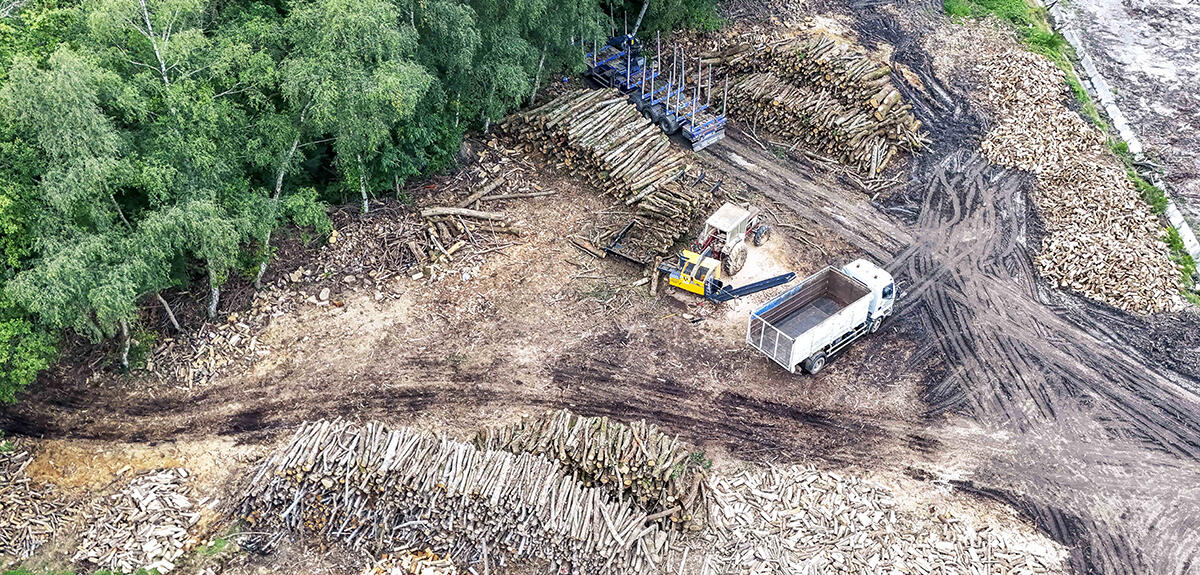
We also have a rich single-energy historiography about wood in the pre-industrial era, coal in the 19th century and oil in the 20th. But these histories of energy and resources cannot be understood without reference to one another – they are interdependent, complementary and cumulative. In addition, 95% of the world’s coal was mined after 1900. Also, the use of wood energy significantly increased in the 20th century, and even more so since the 2000s.
We therefore need to stop focusing on transitions and shifts, thinking of energy forms as being in competition. This may be true in some cases (for example, the replacement of steam engines by diesel power in the 1920s-1930s), but overall, in the 19th and 20th centuries, the history of energy is all about expansion.
But isn’t it true that there have been disruptive changeovers, for example between candles and electricity?
J.-B. F.: Absolutely, but these technological disruptions mask the permanence of resources and energies. So yes, electrification represented a true revolution, making kerosene lamps obsolete. But paradoxically, it led to a massive increase in the consumption of petroleum for lighting! In the 2000s, car headlights alone (there are about 1.5 billion automobiles worldwide) consumed much more oil than the entire world in 1900, when almost everyone was using it for lighting. And our LED bulbs, efficient as they may be, send nearly a billion tonnes of CO2 into the atmosphere – thousands of times more than in the days of gas lighting and kerosene lamps…



Regardless of technological innovations, the raw materials in question have never yet been obsolete. Exceptions to this rule are exceedingly rare. Whale oil offers a unique example of the disappearance of an energy source. Or I could mention sheep’s wool, whose use has declined by one-third since the 1950s, replaced by synthetic fibres. Or that of asbestos, now that it’s banned.
But in the end, the range of resources being consumed is widening, each one in ever-greater quantities. It is estimated that the total weight of the raw materials used by the economy in the 20th century (the extraction of biomass, fossil fuels, ores and aggregates, not including water and air) has risen 12-fold!
To take the case of the industrial revolution, did coal indeed replace wood?
J.-B. F. Well, no, and for one simple reason: to operate a coal mine, the tunnels had to be shored up with lots of wood. Under the pressure of the rock, the beams would bend and had to be replaced regularly. In the early 20th century, Britain’s coal mines gobbled up between 3 and 4.5 million cubic metres of beams per year, whereas a century earlier, the British burned ‘only’ 3.6 million cubic metres of firewood. Since producing lumber for construction requires four times more land than firewood (due to the time needed for the trees to grow), we can estimate that the United Kingdom used six to seven times more forestland to produce its energy in 1900 than a century and a half earlier.

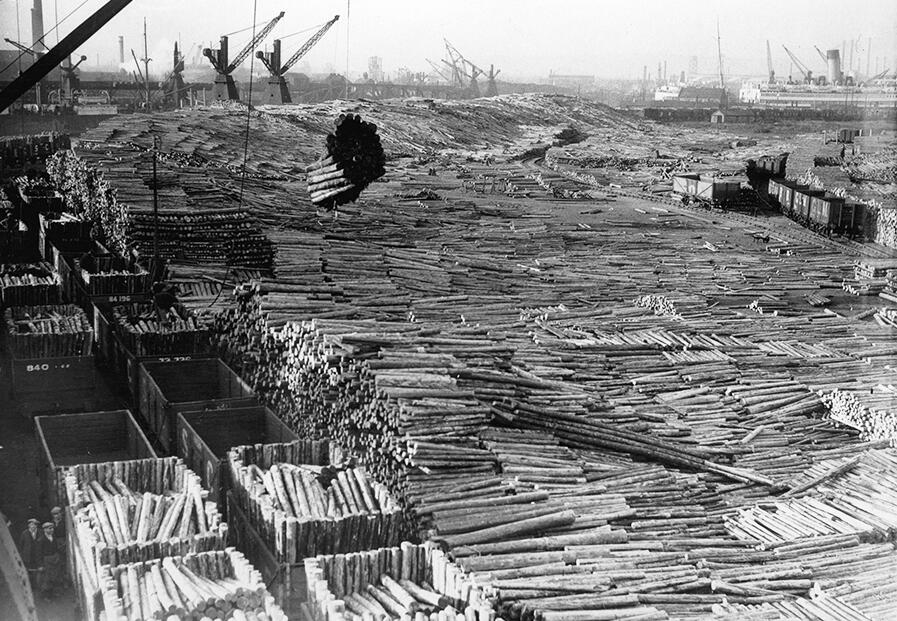
In China, for many years the lack of wood was a major obstacle to coal mining. In addition, ‘railways’ could well have been called ‘woodways’ – as they consumed much more wood than metal, because of the crossties that had to be frequently replaced.
Is wood still a source of energy today?
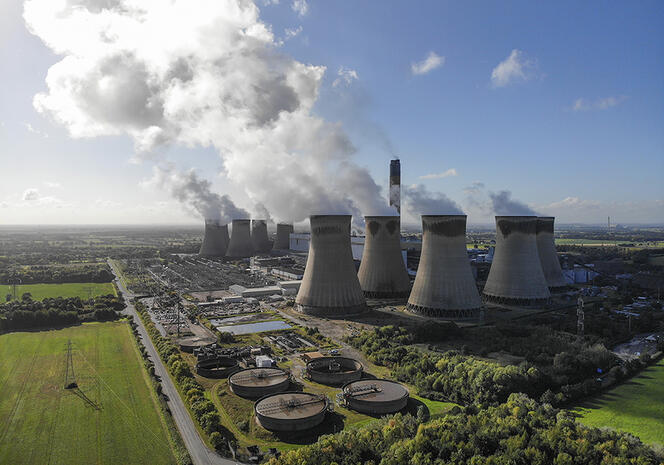
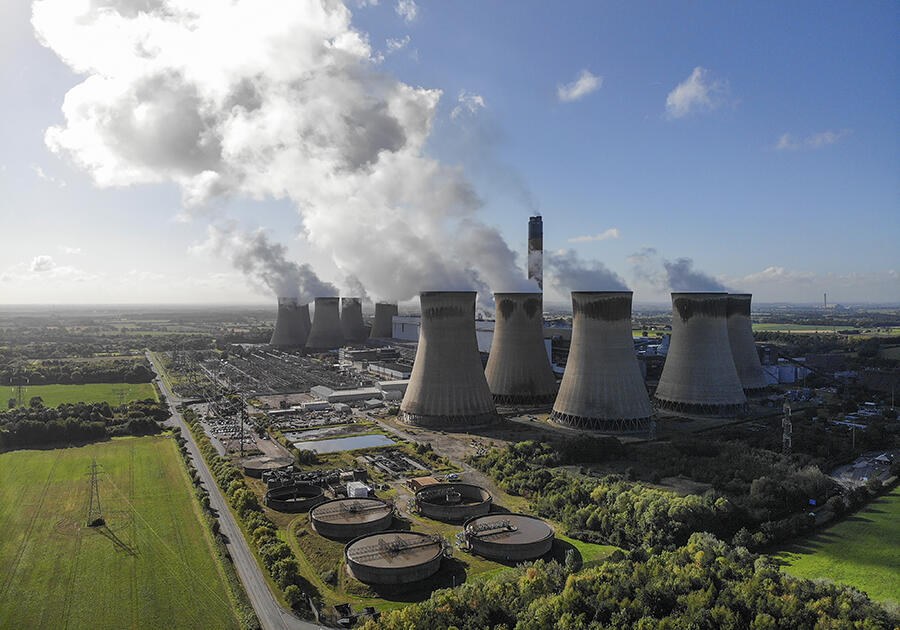
J.-B. F.: Indeed, the use of wood energy rose steadily in the wealthy countries throughout the 19th and 20th centuries, due to the production of paper and cardboard for packaging, and also because more and more electricity comes from wood. Today, the wood-fired power plant in Drax, in the UK, consumes by itself at least four times as much wood as the entire country two centuries earlier. Hardly a success, after 200 years of energy transition…
The French company Vallourec, which makes steel tubes for the oil and gas industry, owns vast eucalyptus plantations in Brazil. By itself it consumes 1.2 million cubic metres of wood (in the form of pellets) per year, which is three times what the entire French steel industry required at its peak of charcoal consumption in 1860! In this case, wood is being used to make steel, which in turn serves to extract oil.


Lastly, charcoal is perceived as a pre-industrial energy source. And yet, more of it is produced today than ever before, especially in developing countries, mostly for cooking purposes. Since 1960, the amount of firewood generated globally has doubled from 1 to 2 billion cubic metres. The African megacities with populations of 10 million (like Lagos, Nigeria, Kinshasa in the Democratic Republic of Congo, Dakar, Senegal and Dar es Salaam, Tanzania) now consume more wood than entire European countries a century earlier!
Why has the history of energy been misrepresented like this?
J.-B. F.: The reason is simple: historians tend to look at energy from an economic viewpoint, seeking to understand the roots of industrialisation and growth. To that end, they convert those tonnes of wood, coal and petroleum into energy units, and examine the evolution of the mix in relative terms. So in the industrialised countries in 1900, the energy contribution of wood, for example, did indeed become negligible compared with that of coal.


Yet in terms of trees, biodiversity and climate, it’s absolute values that count, and the number of trees felled has never stopped increasing. Moreover, historians have not studied the interrelationships between energy sources – for example, all the wood needed to mine coal or all the coal necessary to extract and use petroleum.
Despite this, the total surface of forestland in the wealthy countries is on the rise. They don’t seem to be endangered…
J.-B. F.: Yes – in fact, some geographers refer to this encouraging phenomenon as the ‘forest transition’. The problem is that a large part of this reforestation is based on deforestation in tropical countries, on transfers of biomass (soy, paper pulp, etc.) to the northern countries.
In addition, forestry has been revolutionised by oil. It was thanks to this energy that, starting in the 1950s, the muscle power of lumberjacks was replaced by new lightweight chainsaws and vehicles equipped with hydraulic cranes. In the 1970s, machines capable of felling, delimbing and sawing a tree in less than a minute made the logging industry hyper-productive. All they needed then was to open up thousands of kilometres of forest roads, using diesel-powered bulldozers, and increase productivity with synthetic fertilisers sometimes spread across the forest by airplane…
Silviculture has become a branch of intensive agriculture. And it focuses on one key species: eucalyptus, whose yields in tropical climates, boosted by fertilisers, are astronomical. In this sense, the forest transition is not necessarily good news for the climate.
Has oil replaced coal any more than coal replaced wood?
J.-B. F.: No, because oil is mainly used to power vehicles whose production requires large quantities of coal. In addition, the fuels of the 1930s contained a lot of benzol, derived from the distillation of coal tar. Cars need roads, which means cement and steel, which means coal. Lastly, oil has made cement simpler to use (think of mixer lorries) and coal cheaper, because it is easier to transport in dump trucks.
What we need to keep in mind is that all of these forms of energy are in symbiosis. Most raw materials (wood, agricultural products, metals) are produced, extracted and transported by machines made of steel manufactured using coal energy and powered by oil. In 2020, three-quarters of the world’s steel was made by burning no less than 1 billion tonnes of coal.
So coal still has a bright future ahead of it?
J.-B. F.: I am not a futurist. But coal production has indeed been greatly modernised since the 1980s, and now generates massive exports. Coal’s strongest historical growth is probably already in the past. But we should not lose sight of the fact that China alone burns as much coal as the entire world did in 1980, and that the share of fossil fuels in the global energy mix still exceeds 80% today.


So where did this idea of an energy transition come from? When was it launched?
J.-B. F.: It comes from American atomic futurology of the 1950s to 1970s. It was initiated by a small group of scientists who had worked on the Manhattan Project and were convinced that the nuclear breeder reactor3 was the key to humanity’s survival once fossil resources were depleted. They were very much in the minority, and thought that such a transition would take three or four centuries. But the concept became more widespread in the aftermath of the oil crisis.

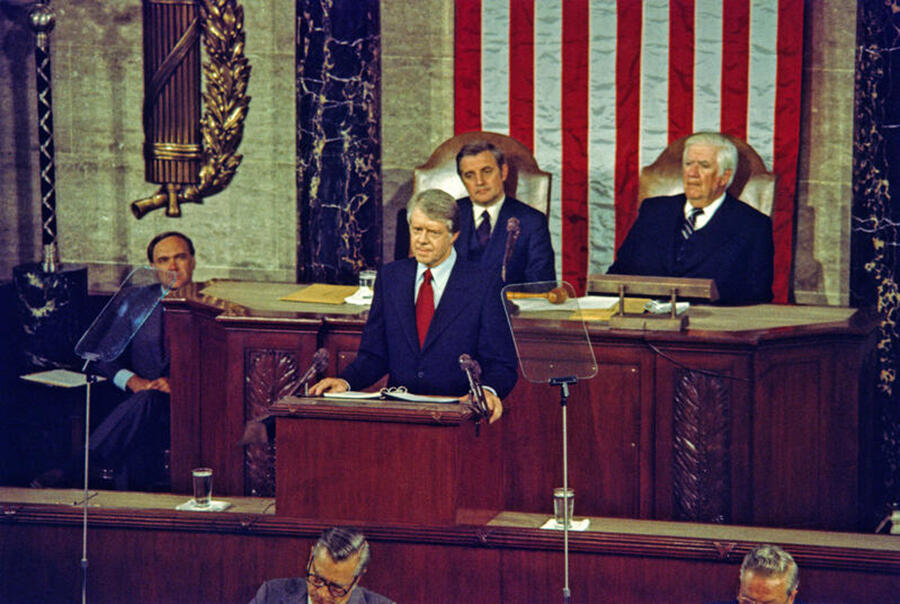
A speech by Jimmy Carter played an important role in popularising the expression. In a television appearance on 18 April, 1977, he mentioned three curves representing three energy systems harmoniously succeeding one another. In essence, he explained that the first transition took place 200 years ago, when we switched from wood to coal, then the second with the use of oil and natural gas, and that it was time, due to the growing scarcity of oil, to make a third transition, this time towards solar power and energy conservation. The president based his narrative on a misconception.
Why has this unfounded notion of a transition been so successful?
J.-B. F.: It’s a simple and highly inclusive expression. In the 1970s, everyone could identify with it: those who favoured nuclear power, supporters of solar energy, and even those who promoted coal. What’s scandalous is that the idea has been recycled to address the climate challenge. Keep in mind that the American atomic scientists of the 1960s imagined a transition over three or four centuries. But now, in the face of global warming, the transition has to be completed in three or four decades, even though fossil fuels are still abundant.
It’s easy to understand the reason for this transfer: starting in the late 1970s, a number of economists who had completed their studies during the energy crisis, William Nordhaus being the most famous, seized upon the climate issue, applying the same reasoning to problems that were nonetheless very different. Global warming is a tragedy of abundance, not scarcity.
Do renewable energies have a role to play?
J.-B. F.: Yes, of course. Renewable energies, especially solar, are becoming less expensive and can be deployed quickly. Of course, they depend on fossil resources (steel, cement, silicon), but in this case they represent relatively little carbon dioxide (CO2).
The real question is: what do we do with this carbon-free electricity once it’s generated? If we use it to drive two-tonne cars that need steel bridges and concrete roads, we are indeed reducing the economy’s carbon intensity, but we’re not solving the problem of CO2 emissions!
And what about electric vehicles?
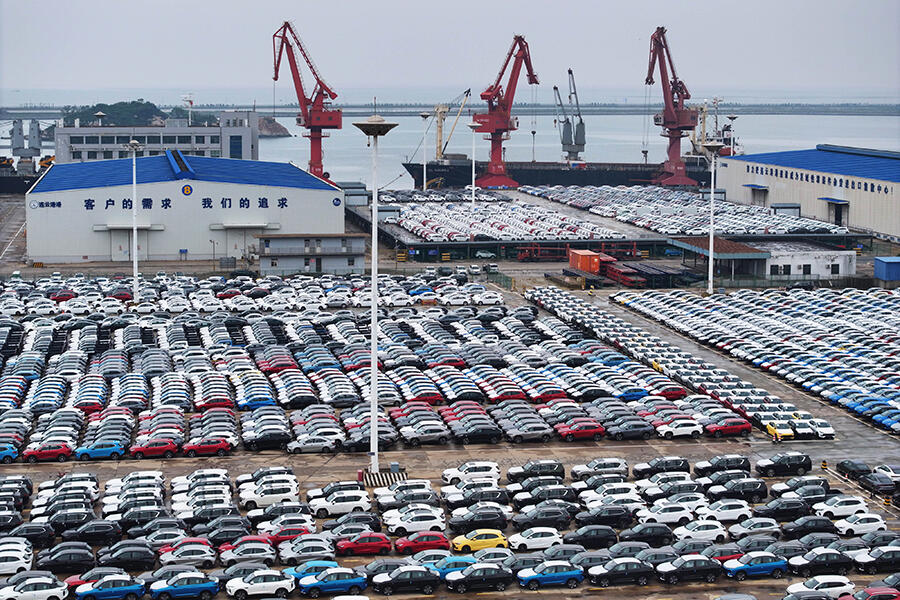
J.-B. F.: The electric car is first and foremost a matter of energy sovereignty. Half of the world’s EVs are in China, where two-thirds of the electricity is produced from coal. For the time being, the electric vehicle has had the effect of increasing the share of coal in relation to oil in worldwide mobility.

Have the experts of the Intergovernmental Panel on Climate Change (IPCC) proposed any technological solutions?
J.-B. F.: Anyone who looks closely at their reports will be surprised by the incredible technophilia that dominates the discourse. In their latest document, reference is made to Elon Musk’s hyperloop train, hydrogen is omnipresent, they talk about bitcoin and artificial intelligence, but the topic of sobriety is hardly mentioned.
The experts of Group III4 have come up with highly disputable solutions for carbon capture and storage (CCS), impelled by the fossil fuel, cement and steel industries. After pointing out in 2001 that coal-fired electricity with carbon capture would cost more than nuclear power, in 2005 they described the storage capacities (in the subsoil or on the ocean floor) as immense and ultimately not so expensive!
They then suggest an even more outlandish idea: pumping CO2 from the atmosphere using bioenergy with carbon capture and storage (BECCS). In concrete terms, this means burning wood to make electricity, then recovering the CO2 at the smokestack outlets and burying it in the ground. In its 2014 report, the IPCC predicts (in its median scenarios) that BECCS could yield negative emissions of up to 10 billion tonnes of CO2 per year! However, it should be noted that the world production of wood is only 4 billion cubic metres. So we would have to at least triple or quadruple this figure to produce the wood that would then be burned in these power plants equipped with CCS systems!
So these ‘solutions’ are unrealistic?
J.-B. F.: They would be laughable were they not influencing international policy decisions and diverting attention away from the real measures that need to be taken. In 2015 the world’s nations adopted the Paris Agreement, which was based on the unattainable technological promises contained in the 2014 IPCC report.
Are any scientists casting doubt on these false solutions?
J.-B. F.: Yes, of course. In 2017 an association of European scientific academies specifically questioned them, stressing that they risked encouraging a wait-and-see approach. In their 2022 report, the IPCC experts somewhat backtracked and spoke of ‘only’170 to 900 gigatonnes5 of CO2 – depending on the scenario – to be stored by 2100. But that’s still huge!
Is technology not the answer to global warming?
J.-B. F.: My book is not technophobic. Technological progress exists and was even tremendous in the 20th century. For example, between the two world wars the transition from steam engines to electric motors divided the carbon intensity of mechanical power by a factor of 10. Today, renewables are lowering the emission factor of electricity by 12 compared with gas. What we are doing with renewable energy is reducing the emission intensity of the economy – no more, no less.
Climate policy must be based on available, affordable technologies, regardless of whether they are old or new. For example, there is probably no point in even dreaming of hydrogen airplanes or nuclear fusion by 2050. On the other hand, we already know how to decarbonise electricity, and in that area we can undeniably talk about an energy transition. But electricity accounts for only 40% of the emissions.
What solutions do you propose?
J.-B. F.: This is the key question that my book does not answer at all. What climate policy should we pursue once we realise that carbon neutrality is largely an illusion, and that we can slow down but probably not stop climate change? If we want to reduce emissions from sectors like aviation, cement, steel, plastics and agriculture – all industries that are very difficult to decarbonise – we have to talk about levels of production and therefore distribution. We must distinguish between useful CO2 and useless CO2. We need to change our habits, and we undoubtedly need more equality in order for these very far-reaching changes to be socially acceptable. ♦
See also
Is the concept of GDP compatible with the ecological transition?
- 1. "More and More and More: An All-Consuming History of Energy", by Jean-Baptiste Fressoz, Allen Lane, 3 Oct 2024, 320 pages.
- 2. A historian of science, technology and the environment, Jean-Baptiste Fressoz is a researcher at the CRH (CNRS / EHESS). In addition to “More and More and More”, he is also the author of “Chaos in the Heavens: The Forgotten History of Climate Change” (with Fabien Locher) and “The Shock of the Anthropocene: The Earth, History and Us” (with Christophe Bonneuil), both published by Verso.
- 3. In the 1970s, experts believed that they would successfully develop a nuclear breeder reactor that would produce abundant energy and make the idea of energy limits pointless. Today though, France’s Phénix and Superphénix breeder reactors in have been shut down, and only India and Russia still operate this type of reactor. Electricity from “conventional” nuclear power plants has not been widely adopted around the world due to its high cost and technical difficulties – only four or five countries have mastered the technology.
- 4. The IPCC is organised in three Working Groups: Physical Science Basis (I), Impacts, Adaptation and Vulnerability (II), and Mitigation of Climate Change (III).
- 5. 1 gigaton = 1 billion tonnes.
Explore more