

You are here
Colonialism in green camouflage
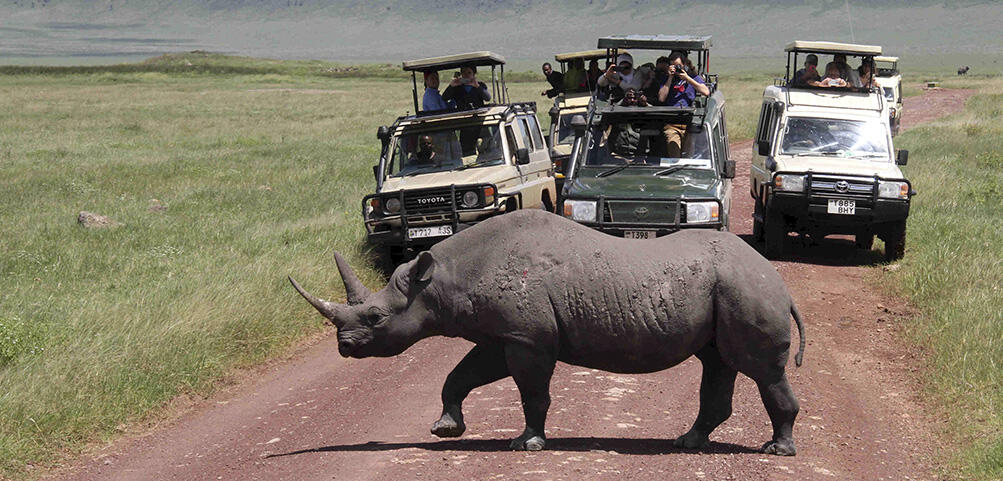
You have extensively investigated the nature protection policies implemented in Africa since the late 19th century. How did the idea germinate, in the minds of Western conservation experts, that the African continent was the last untamed Eden on the planet, to be preserved at all costs?
Guillaume Blanc1: My historical investigation was based on more than 130,000 pages of documents from eight archive collections in both Europe and Africa. To understand this myth of untamed nature, we need to imagine the viewpoint of the botanists and foresters who set out to try their luck in the colonies at the end of the 19th century, leaving behind a Europe drastically transformed by industrialisation and urbanisation. Arriving in Africa, they were convinced that they had found the nature they had lost back home.
This vision was also upheld by a number of books promoted by the mainstream press. One example is Winston Churchill’s My African Journey, published in 1908, in which he describes the African continent as a vast natural garden unfortunately populated by ‘clumsy barbarians’. Later, in The Snows of Kilimanjaro, from the 1930s, Ernest Hemingway depicted a continent where the ‘big five’ – Africa’s emblematic large mammals, namely the lion, leopard, elephant, black rhinoceros and buffalo – reigned supreme. Since then, this myth of an Eden-like continent has been perpetuated through reports by National Geographic and the BBC, and more recently the release of the famous animated film The Lion King.



Who were the key players in nature protection policies in Africa, from the earliest wildlife reserves to the creation of national parks?
G. B.: In Africa, the creation of game reserves by European colonisers in the late 19th century was primarily commercial, as it aimed to protect the elephant herds that had already been widely decimated by hunting. Starting in the 1940s, those reserves became areas dedicated almost exclusively to wildlife watching, a development that reflects a change in public opinion, with the slaughter of large animals increasingly seen as immoral.
The key players in this transformation were administrative ecologists like Julian Huxley, the very first director of UNESCO, appointed in 1946. We could also mention Edgar Worthington, deputy scientific director of the Nature Conservancy (a British governmental organisation), and the ornithologist Edward Max Nicholson, one of the founders of the World Wildlife Fund, the famous WWF. From the 1950s onwards, these scientists from the British imperial administration endeavoured to uphold science for the benefit of the government, nature and mankind.

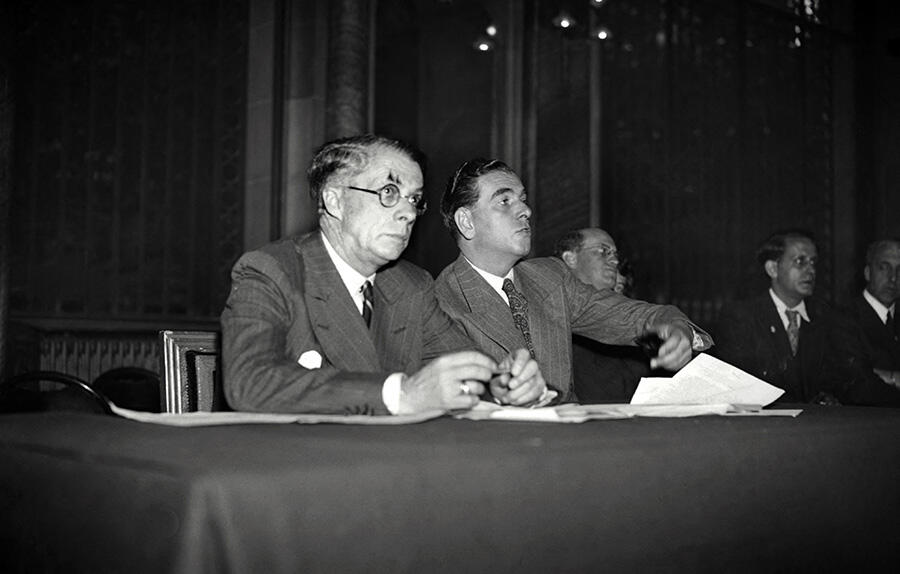
In colonial times, however, African nature seemed less endangered than it is today. Isn’t it something of a contradiction for conservation experts to insist on portraying the continent as the last wild Eden on Earth while simultaneously warning that certain species are at risk of extinction?
G. B.: To take the example of elephants, in the late 19th century, 65,000 animals were slaughtered each year in East Africa to supply the ivory trade. But at the time, the colonial administrators were incapable of realising that the massacre taking place was their own responsibility. All around the protected areas that they had created to preserve nature, the destruction of natural resources continued, with cocoa plantations in Ivory Coast increasingly encroaching on the rainforest, and the coffee crops in Tanzania and Kenya expanding on an ever-larger scale.
As this extractivist capitalism intensified, the preservation of the flora and fauna was bolstered by the creation of additional protected areas. Paradoxical as it may seem, those who sought to preserve nature by establishing game reserves, and later national parks, were the same ones who were destroying nature outside those protection zones.
An initiative called the ‘African Special Project’ provides a good illustration of this vision of nature in Africa. What was the purpose of this large-scale ecological mission, widely promoted by international conservation experts?
G. B.: The African Special Project was launched in Warsaw (Poland) in 1960 by the International Union for Conservation of Nature (IUCN), under the auspices of the United Nations. In September 1961, a major international conference was held in Arusha, Tanzania, to promote conservation programmes among African leaders who came to power after the independence movements. It brought together about 100 experts from Western countries as well as some 30 African leaders.
By mutual agreement, the latter declared their desire to continue the efforts made by European settlers in the African national parks that had been founded since the late 1920s. In order, and I quote, to ‘help African governments to help themselves’, international experts were then sent to Africa. The African Special Project continued through the late 1970s, taking the form of an alliance between African leaders and experts from around the world.
In your recently published book, La Nature des Hommes (‘The Nature of Men’), you point out that international institutions strongly encouraged African countries to exclude their populations from the areas that would become national parks…
G. B.: The institutions involved included UN agencies like UNESCO and the Food and Agriculture Organization (FAO), as well as non-governmental organisations like the IUCN, the WWF and Fauna & Flora International (FFI). These two broad categories of institutions served first of all as a mechanism for converting colonial administrators into international conservation experts. Then they went on to impose conservationist measures within the parks.
For example, the FAO would make its aid to Kenya, Ethiopia and Tanzania for the purchase of agricultural equipment conditional on the countries’ acceptance of the rules stipulated by UNESCO – namely the expulsion of the populations living in the parks in order to protect the large mammals. In this way, a genuine international system was set up, with UN agencies calling upon experts purposedly appointed to the IUCN, WWF or FFI.


In the years following decolonisation, African leaders also contributed to the mythification of a continent protected from human activity and therefore teeming with life. To what extent were they responsible for the fabrication of this image?
G. B.: Even though they didn’t choose the cultural framework imposed by international conservation experts, holding up Africa as the world’s last wildlife refuge, they knew how to exploit it to their own benefit. In the Congo, renamed Zaire in 1971 by President Mobutu, the latter announced at an IUCN conference in Kinshasa that his country had created many more parks than the Belgian colonial authority that had preceded him.
In 1970, nearly ten years after its independence, Tanzania quadrupled its budget for national parks under the impetus of Prime Minister Julius Nyerere, who was well aware of the economic potential of a national park network. Although Nyerere was quoted in the Tanzanian press as saying, ‘I do not want to spend my holidays watching crocodiles’, he was confident that Westerners were ready to spend millions of dollars to see the exceptional wildlife that his country had to offer. His intention was to make nature the greatest single economic resource of Tanzania.
Some African politicians also take advantage of the national park designation to control part of their population…
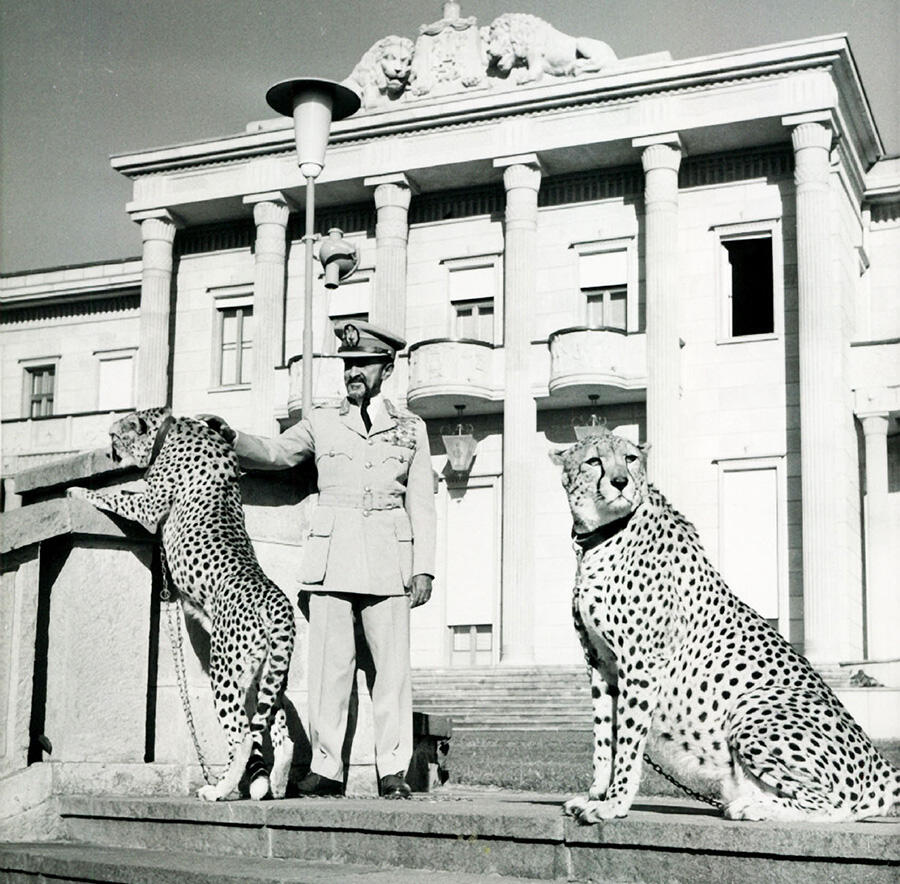
G. B.: For a country like Ethiopia under Haile Selassie, the transformation of nature into a park offers the pretext and financial means to raise the national flag over territories that elude the government’s control. When the IUCN and WWF suggested to the Ethiopian emperor that he create parks in different parts of the country, he chose the Simien region in the north, a scrubland area that was challenging the central power in Addis Ababa, the Awash in the east, which was home to semi-nomadic societies with their own political organisations, and the Omo Valley in the south, where people moved freely between Ethiopia and Kenya with no regard for national borders.

In Africa, the protection of wilderness areas often leads to the expulsion of the populations living in the targeted zones. What are the consequences for these men and women?
G. B.: This forced displacement is like an earthquake, to use the expression of the American sociologist Michael Cernea, who has monitored the displacement projects conducted by the United Nations. For the people concerned it’s a double punishment: by being evicted they are directly impacted by the creation of the national parks, from which they then derive no benefit whatsoever. Once resettled, they lose their mutual aid networks for food and socio-economic interaction.
From an environmental viewpoint, it’s also a disaster for the areas where the evictees are relocated. Where the land was previously able to withstand a certain density of livestock and extraction rate of natural resources, the overpopulation and overexploitation of the environment decried by the conservation experts becomes a reality. In a study published in 20012, two researchers from the United States and Mozambique tried to estimate the number of individuals expelled for all the African national parks. Given the statistical gaps in the historical record on this subject, they determined that between 1 and 14 million people were forced out of these conservation zones in the 20th century.

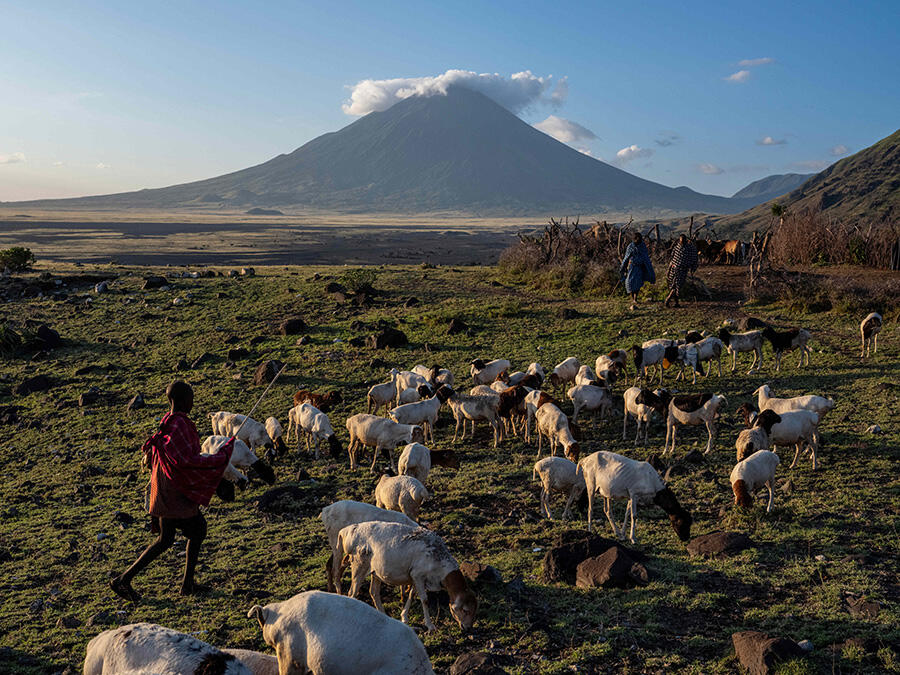
Since the late 1990s, global nature conservation policies have sought to involve those living in or near the protected areas. What effect does this new conservation philosophy have for the people concerned?
G. B.: This new doctrine has various repercussions. To take the example of Uganda, the population should now be able to benefit from the income generated by tourism in the national parks. But those who really benefit from this opening of global conservation policies are often city dwellers who become tourism entrepreneurs or guides. The actual inhabitants of the parks have no say in the management of these protected zones and continue to oppose them, sometimes virulently.
By involving the people who live in or near the parks in the management of the large wildlife species that live there, community-based conservation induces them to assign a monetary value to these animals. This is what happened in Namibia. The greater a mammal’s popularity among tourists, as in the case of elephants and lions, the more its financial value increases, and with it the level of protection offered by the population. But what happens when a pandemic like Covid-19 shuts down all tourist activity for two years? In that situation, the wildlife is no longer protected since it has no more value. Because it ignores the singularity of the societies to which it purportedly wants to adapt, the model of community-based conservation, despite its claims of involving local populations, often proves ineffective.
Are some African governments still implementing measures to exclude humans from protected natural areas?
G. B.: Unfortunately, such decisions are still quite common. The human rights organisation Survival International has carefully documented the phenomenon in Cameroon, the Democratic Republic of the Congo and Tanzania. In Ethiopia’s Simien National Park, which I have visited several times, the last evictions took place in 2016, when more than 2,500 villagers were forced to move 35 kilometres away. In the 2010s, the American geographer Roderick Neumann recorded as many as 800 murders linked to the ‘shoot on sight’ policy applied in a number of East African national parks. According to this principle, anyone seen inside the park is suspected of poaching and can be shot by the eco-guards. In countries where poaching is not even a capital crime, regular small game hunters are being executed without warning.
In Europe, the operating rules for national parks are different from those enforced in Africa’s protection zones. If we take the example of the Cévennes National Park in southern France, traditional agriculture and herding are not banned, but rather held up as an important part of the local culture. What is the explanation for this ‘double standard’ in the way nature protection areas are handled in Europe and Africa?
G. B.: The Cévennes National Park, created in 1970, encompasses more than 70% of the Causses and Cévennes site, which has been on the World Heritage list since 2011. However, the exceptional universal value that warrants this classification is, according to UNESCO, ‘agropastoralism, a tradition that has shaped the Cévennes landscape’. In fact, this argument is the basis for the French government’s allocation of subsidies for the park, to allow the shepherds’ transhumance to continue on foot instead of by truck, and to finance the renovation of the roofs and walls of pens using so-called ‘traditional’ materials.

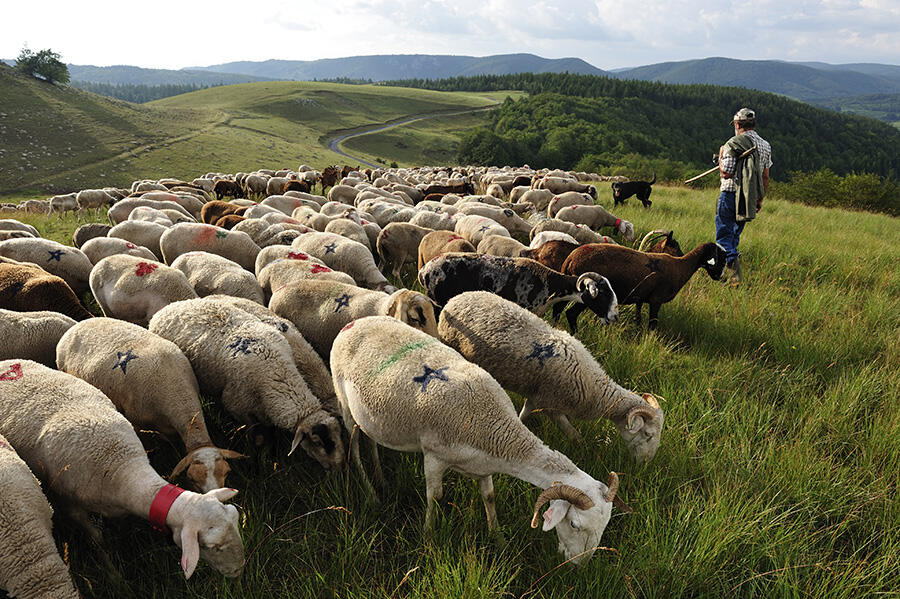
In contrast, for the Simien Park the exceptional universal value that qualified the region for inclusion on the UNESCO list is its ‘spectacular landscapes’. But according to the archives of that same international organisation, the reason why the Simien Mountains have been classified as ‘in danger’3 and the populations who lived there have been expelled, is because ‘agropastoralism threatens the value of the site’.
In light of these two examples, it is obvious that the assessment of the relationship between man and nature is not unequivocal when it comes to conservation: there is one interpretation according to which, in Europe, man shapes nature, and another claiming that, in Africa, he degrades it. By virtue of this dualism, agropastoral activities are a tradition to be preserved in Europe and a destructive practice to be eradicated in Africa.
For further reading
La Nature des Hommes – Une Mission Écologique pour “Sauver” l’Afrique (“The Nature of Men – An Ecological Mission to ‘Save’ Africa”) by Guillaume Blanc, La Découverte, 2024, 336 pages. In French.
See also:
Reconciling people and wildlife in the Okavango
German women called to the colonies (in French)
Cultural property on the path to restitution
- 1. Visiting researcher at the LAM (Les Afriques dans le Monde) laboratory (CNRS / Sciences Po Bordeaux / Université Bordeaux Montaigne) and at the Centre Alexandre-Koyré (CNRS / EHESS / MNHN).
- 2. “From Refuge to Refugee: the African Case”, Charles Geisler and Ragendra de Sousa, Public Administration and Development, 15 May 2001: https://onlinelibrary.wiley.com/doi/pdf/10.1002/pad.158
- 3. https://whc.unesco.org/en/news/1683/
Explore more












Author
After first studying biology, Grégory Fléchet graduated with a master of science journalism. His areas of interest include ecology, the environment and health. From Saint-Etienne, he moved to Paris in 2007, where he now works as a freelance journalist.