

You are here
Long-forgotten women's health

Anyone who has ever read a medication notice has had the opportunity to detect the surprising absence of gender-specific information, with the exception of recommendations for pregnant women. Far from being trivial, this omission is evidence of modern medicine’s lack of interest in the female gender.
“Until not so long ago, women were presumed to be exactly like men but smaller,” notes Colette Denis, a pharmacology researcher at the Metabolic and Cardiovascular Research Institute (I2MC) in Toulouse (southwestern France). “Apart from the reproductive system and the menstrual cycle, it was commonly accepted within the scientific community that there were no significant differences between female and male physiologies.”



This simplistic viewpoint, widely perpetuated by medical institutions headed exclusively by men, served for many years to legitimise the absence of women in health research. “As surprising as it may seem, the exploration of fundamental scientific questions in fields like cardiology, neurodegenerative disease and obesity have been based primarily on groups of male individuals,” confirms Carina Prip-Buus, a CNRS senior researcher at the Cochin Institute1, where she studies various metabolic functions.
Exclusion from therapeutic trials
Following this same principle of simplification, women have been excluded from therapeutic trials to evaluate the effectiveness – as well as the potential toxicity – of new medicinal drugs. In 1977, the Food & Drug Administration (FDA) in the United States decided to ban their participation in such studies altogether, as a result of two major health scandals that occurred in the late 1950s and early 1970s.
The former involved thalidomide, an anti-nausea drug prescribed to pregnant women that caused severe malformations in thousands of newborns. The latter concerned stilboestrol, which was intended to prevent miscarriages but caused cancer in future mothers and genital abnormalities in their offspring.
Although excluding women from clinical trials was motivated by laudable intentions, it prevented the detection of gender-specific side effects. Yet it is now a known fact that women and men can react very differently to medication. Not only do these substances have a longer duration of action in women, but they also have many more adverse effects.
“This imbalance is linked to the fact that the blood concentration and elimination time of most pharmaceutical molecules are higher for women, which also tends to increase the risk of toxicity,” Denis explains.


Certain drugs marketed in the 1970s, at a time when women represented less than 10% of the individuals included in clinical studies, had disastrous consequences. The example of Mediator, a drug marketed by Servier Laboratories, is quite telling. Intended to treat type 2 diabetes, the drug was soon diverted from its original purpose and prescribed to women who wanted to lose weight. It turned out to cause valvular heart disorders in female patients, an issue that could not have been evidenced in the clinical trials, which hardly included any women. This resulted in 2,000 deaths in France alone, almost exclusively women.
Changing practices
Fortunately, the times are changing. Long reluctant to take in women in therapeutic trials, on the pretext that their menstrual cycles and hormone fluctuations would skew the interpretation of the results, the medical community began revising its practices some two decades ago. The National Institutes of Health (NIH), the American equivalent of Inserm in France, became the first to lift the restrictions on women back in 1993.
Today, due to growing pressure from scientific bodies, most of which now require the systematic inclusion of women in clinical studies as a condition for funding2, male-female parity has greatly improved.
Still, Denis expresses reservations about this progress with regard to cardiovascular and infectious diseases: “For example, less than 30% of the participants in studies on cardiac arrhythmia are women, even though they account for 50 to 60% of the patients depending on the age bracket. For infectious diseases, the trials of antiretrovirals for the treatment of HIV include only 19% women, who nonetheless account for 32% of the people living with the virus in Europe and up to 55% in sub-Saharan Africa. The underrepresentation of females in these clinical trials limits the possibilities for developing treatment protocols adapted to their specific biological and physiological characteristics.”

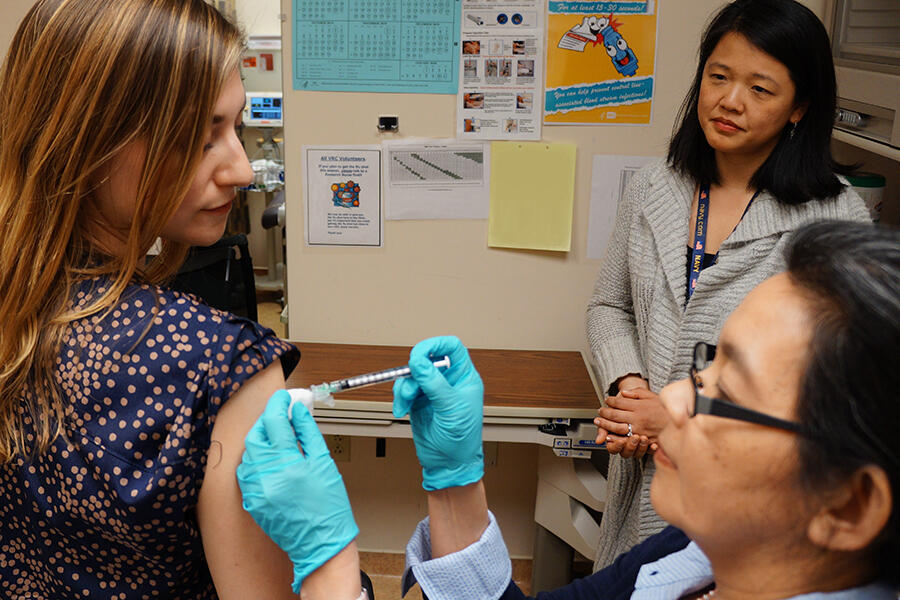
The relative absence of women in therapeutic trials is only one small part of a much more far-reaching problem: upstream, research has shown a real lack of interest in the health and functioning of the female body.
Heart attacks: delayed treatment
Myocardial infarction is a textbook case. Although long considered a risk that mainly affected men, it also concerns women, in whom it is less well detected and thus causes more deaths.
In France, according to a recent report3 by the National Academy of Medecine, hospital mortality among women who have suffered a heart attack is 9.6%, compared with 3.9% for men. The reason for this is ignorance of the symptoms when they occur in women.
“While sharp chest pain and left arm paralysis are typical warning signs of myocardial infarction in men, some women may experience very different symptoms – such as vague back pain or digestive upsets, sometimes accompanied by vomiting – that doctors still often fail to identify properly,” Denis points out.
As a result, after a heart attack, the time to treatment for a woman is on average 30 minutes longer than for a man. The time needed to achieve coronary revascularisation is also longer for women patients, due to diagnostic difficulties encountered by the emergency services.


Greater sensitivity to pain
Conversely, for other pathologies, healthcare personnel sometimes ascribe too much importance to a patient’s gender. In women, symptoms resulting from inflammatory bowel syndrome (IBS) are regularly confused with gynaecological pain.
This type of diagnostic subjectivity also extends to fibromyalgia, a condition characterised by constant muscle or joint pain. Recognised as a chronic disease by the World Health Organization since 2019, fibromyalgic syndrome is believed to affect 2% of the French population, and the vast majority of its sufferers are women. One of the first signs of fibromyalgia is general fatigue, a symptom that many physicians still tend to trivialise or downplay when it is reported by a woman.
The biological bases of this disease are nonetheless quite real. However, like chronic headaches, fibromyalgic syndrome has the particularity of manifesting itself as nociplastic pain (not caused by visible tissue damage).
“Between 80 and 90% of the various forms of nociplastic pain are observed only in women,” reports Yannick Goumon, an Inserm researcher at the CNRS Institute of Cellular and Integrative Neuroscience (INCI) in Strasbourg (northwestern France). “This overrepresentation could be due to a difference in the concentration of certain neurotransmitters in the female brain, resulting in an increased perception of pain.”
Neglected gynaecological disorders
If there is one medical field in which symptoms specific to women remain largely underestimated, if not outright ignored, it is undoubtedly gynaecological disorders: polycystic ovary syndrome, endometriosis, uterine fibroids, cervical or ovarian cancer, etc.
An expression reflects the healthcare sector’s lack of interest in women’s diseases: “bikini medicine”. Coined in the 1980s, it refers to the only parts of the female body that were of interest to medicine at the time: the breasts and the reproductive system. This somewhat provocative concept was originated by the American cardiologist Nanette Wenger as a way of denouncing a medical approach based on the standard of the male body.
Among the exclusively female pathologies, endometriosis is the most difficult to diagnose, in particular because of its many possible expressions. Characterised by the proliferation outside the uterus of tissue similar to the uterine lining, endometriosis has no specific treatment to date, even though one in ten women of childbearing age are thought to be affected by this condition.


As Prip-Buus points out, “The fact of considering endometriosis a pathology unto itself – and no longer a psychological or depressive symptom, as doctors long presumed – is now contributing to the development of research projects to improve the identification of the women with the highest risk of developing this disease, which in some cases causes very debilitating pain.” In the coming years, a national strategy to combat endometriosis, launched by the French government in 2022, calls for the development of dedicated care channels that should reduce misdiagnosis.
Slow but steady progress
The advent of a medical system that takes the specificities of the female body into account is decided well ahead of the care pathway. This implies first of all mobilising research laboratories studying human physiology based on animal models (mice, rats, rabbits). The consideration of gender in this research is still a relatively new concept.
For example, the first European Union recommendations to consider both sexes in studies on animals, or on tissue samples of human origin, were not issued until 2020. And the gender aspect has only been taken into account since 2022 in funding applications submitted to the French National Research Agency (ANR).
Progress, if slow, is nonetheless very real. Under the impetus of certain scientific journals, gender is increasingly considered a biological variable like any other in research projects. The same is true of the pathophysiological mechanisms of pain, which are the focus of Goumon’s research.
“Until about ten years ago, 80% of all pain studies were carried out on male-only rodent cohorts,” the neurobiologist recounts. “But since 2018-19, most scientific publications require researchers to work simultaneously on both sexes, because it has been found that only studies involving both males and females can detect gender variations in pain sensitivity or the analgesic effect of certain medications.”
“The decision to exclude female rodents from physiological studies was essentially a kind of methodological sloppiness,” Goumon continues. “The experimenters feared that the inclusion of females would complicate the interpretation of the results due to their hormonal fluctuations.” Although unfounded, for many years this argument justified the exclusion of female animals from these fundamental studies.
Female rodents in the lab
Still, introducing female individuals in equal numbers with males is not without raising new questions. Some believe that forming mixed groups implies an obligation to double the size of the cohorts – which goes against current rules governing research, aimed at reducing the number of laboratory animals. According to Denis, this fear is largely unfounded: “The biostatisticians who help plan our experiments now have access to statistical tests that enable scientifically useful results on cohorts including both sexes without requiring to double the overall sample size.”
To facilitate the inclusion of more female animals in in vivo research and extend the practice to preclinical drug studies, a group of UK researchers recently developed the Sex Inclusive Research Framework (SIRF), a digital interface with an innovative approach. Designed like a decision tree, it allows experimenters to verify whether it is ethically acceptable to exclude one of the two genders from a given study. If it is not, a whole series of recommendations are available to help researchers include male and female individuals in their experimental protocols.
“This new decision-making tool, intended not only for scientists but also funding organisations and ethics committees, reflects a genuine desire to step up the fight against gender bias in biomedical research,” Prip-Buus says. So that the specificities of the female body can at last be integrated in every aspect of the discipline.
For further reading
Social inequality impacts stroke recovery
- 1. CNRS / INSERM / Université Paris Cité.
- 2. In 2014, the United States was the first country to consider “sex as a biological variable (SABV)” to be taken into account, making public funding conditional on the inclusion of women in clinical trials.
- 3. See: https://tinyurl.com/infarctus-ANM (in French)
Explore more








Author
After first studying biology, Grégory Fléchet graduated with a master of science journalism. His areas of interest include ecology, the environment and health. From Saint-Etienne, he moved to Paris in 2007, where he now works as a freelance journalist.