
You are here
Dwarf elephants and the Cyclopes
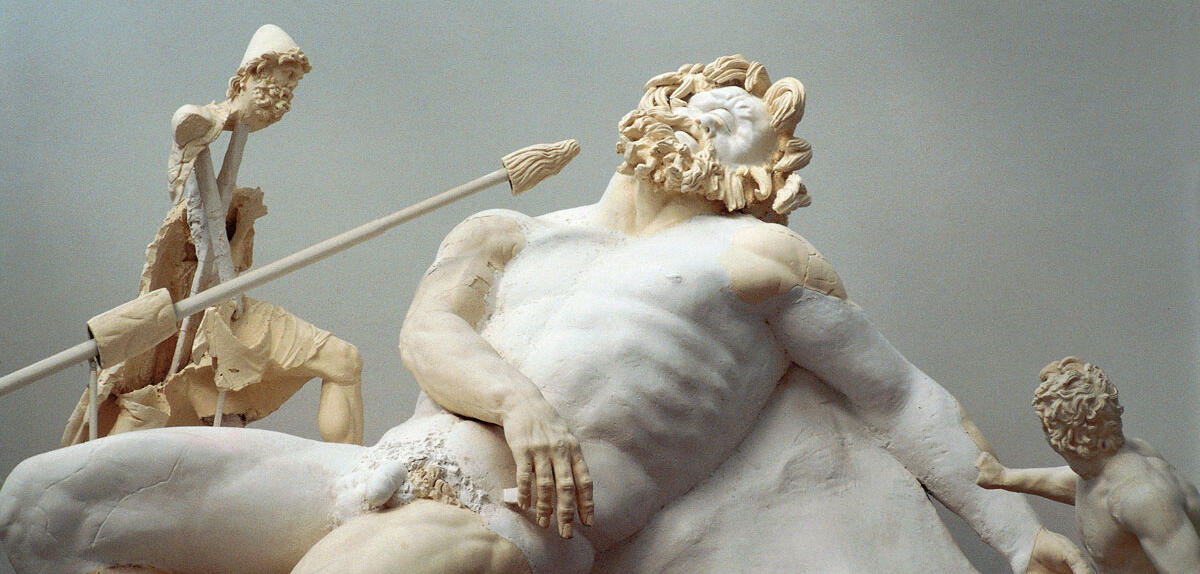
Welcome to the islands of the Mediterranean, with their sun-drenched beaches, and the delights of their cuisine… not to mention their dwarf elephants! It turns out that during the Pleistocene, the geological epoch that stretched between 2.6 million and 11,700 years ago, elephants considerably smaller than their own ancestors roamed these islands, with the exception of Corsica and the Balearic Islands. Astonishingly, their fossilised remains may even have inspired the Greek myth of the Cyclopes.
Camille Bader, a palaeontologist and PhD in evolutionary sciences at the Adaptive Mechanisms and Evolution Laboratory (MECADEV)1, studied these little-known animals while working on her doctoral thesis2 at the French national museum of natural history. Despite their small size, these elephants actually descended from forebears that were much bigger.
In fact, the evolutionary trend in the Proboscidea (the order of mammals to which elephants belong) gradually transformed them from small animals weighing 5 to 18 kg back in the Palaeocene (between 56 and 66 million years ago) to colossal creatures weighing several tonnes – as much as 21 tonnes in the case of Palaeoloxodon namadicus, which lived in Southern Asia more than 750,000 years ago.


Changing sea levels
During glacial periods in the Pleistocene, a series of temperature fluctuations caused the level of the Mediterranean to fall, making the islands accessible. "Several elephant and mammoth species were thus able to reach them on foot, or even by swimming, from Turkey, Italy and Greece," Bader explains.
These species were quite some size: Palaeoloxodon antiquus, the straight-tusked elephant, and Mammuthus meridionalis, tipped the scales at 10 to 13 tonnes and stood 3 metres at the withers. As the palaeontologist puts it, "They were pretty hefty."
However, as the glacial period drew to a close, sea levels began to rise again, and these mastodons found themselves trapped on the newly-formed islands. As no other predators or large herbivores were stranded there with them, a process known as “allopatric speciation” was then set in motion. Separated by the sea from their cousins on the mainland, the animals evolved in a divergent and surprising way.
Little competition but few resources
Contrary to the evolutionary trend observed in other proboscideans – which are protected from predators by their size – these island elephants began to regress towards dwarfism. "When you live on an island with few food resources, no competition and no predators, you don't need to be big," Bader points out. "On the contrary, being very large, which requires vast resources, would have been an evolutionary disadvantage."
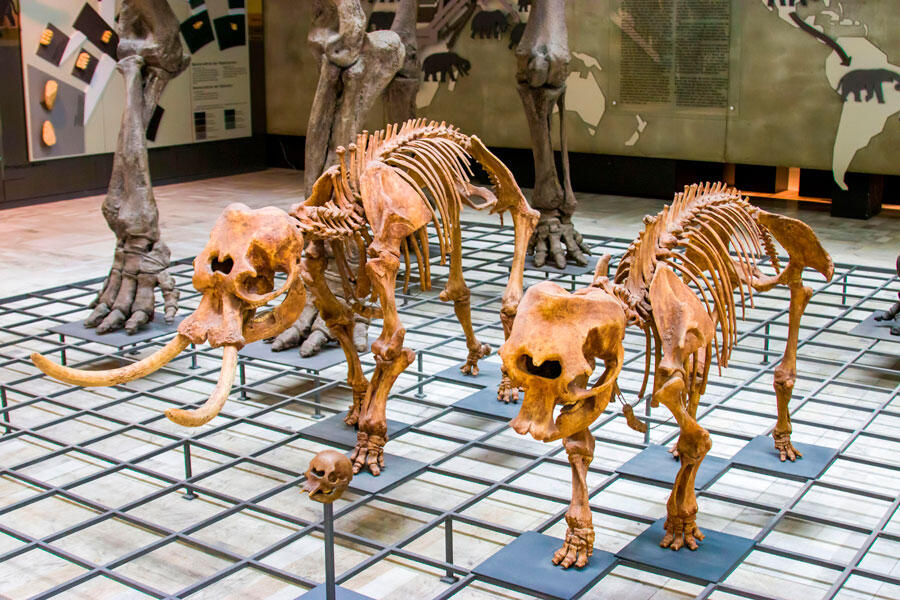
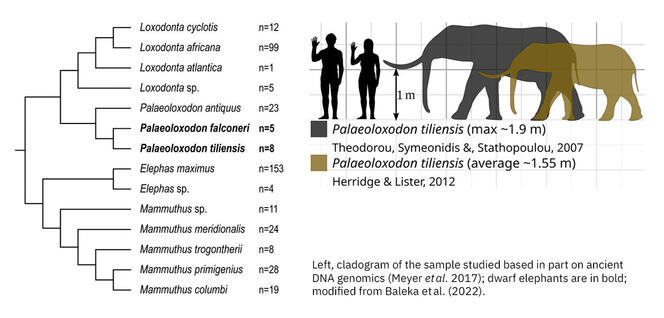
However, this dwarfism should be put into perspective. Palaeoloxodon tiliensis, on the island of Tilos, in the Cyclades, weighed up to 1.3 tonnes, while one of the smallest of the dwarf elephants, Palaeoloxodon cypriotes, with a height of one metre and weight of 180 kg, remains the largest animal to have ever lived in Cyprus.

Lighter weight, different shape
Nonetheless, these featherweights were up to 98% lighter than their giant ancestors. So how did they adapt their morphology, which was tailored for graviportality, in other words, the set of adaptations that large organisms use to support and move a massive body weight?
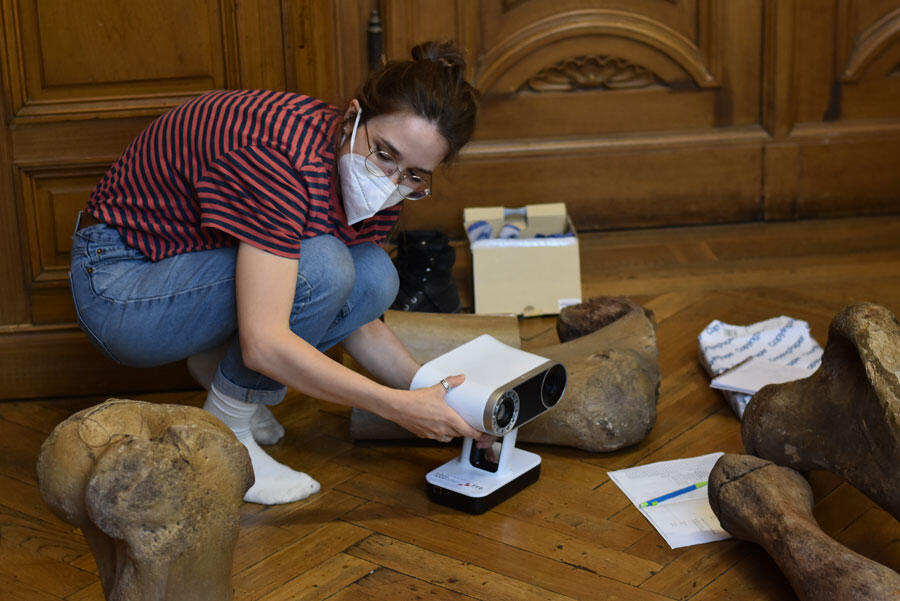
By comparing three present-day species and over 25 fossils during her PhD, Bader was able to identify the morphological characteristics specific to dwarf elephants. These are in no way miniature versions of their forebears but instead combine a number of unique evolutionary traits.
Generally speaking, they lost certain features associated with graviportality. To support a mass of 10 to 15 tonnes, giant elephants rely on columnar bones, positioned beneath the body, whereas in the dwarf elephant P. tiliensis, the legs are set slightly to the side and are more flexed, indicating a lighter weight.
Similarly, the bone trabeculae that help distribute mechanical loads in giant species are not as dense or numerous in dwarf species. "The latter could afford to have bones that were less robust because they weren't as big," Bader explains3.

Adaptation to the environment
In addition to a reduction in the elephants' large size and mass – which had made them unnecessarily cumbersome in these competition-free environments –, the loss of weight-bearing characteristics was accompanied by an adaptation to the rugged terrain of the islands. Even if it is assumed that the elephants generally lived on the coastal plains, a certain amount of evidence suggests that they may have ventured inland into more mountainous territory.
A bony protrusion at the back of the tibia in contact with the bones of the foot was more pronounced in dwarf elephants. This could have acted as a brake on sloping ground, rather like that on a scooter. Similarly, on the front legs, the fusion of the radius and ulna in the wrist-joint may have improved stability on hilly terrain.
The arrival of predators – and humans
Perfectly adapted to their environment, these 1-metre-tall animals thrived on the Mediterranean islands for around a million years. Then, when sea levels fell again, the islands once more became accessible to animals from the mainland. This time, these included predators such as bears, wolves and lions, which would have had no qualms about gorging themselves on the dwarf elephants.
"Dwarfism is great when you're all alone on an island, but not so good when predators arrive," Bader concludes.
The predators also included Homo sapiens. Although most of the proboscideans had already gone extinct before humans arrived on the islands, the latter may have locally contributed to the extinction of a few other species through hunting. These included Mammuthus creticus, a few bones of which were found in Crete, in caves inhabited by humans. They would have made easy prey and provided a plentiful meal, being larger than a pig, but smaller (and less ferocious) than a tiger.

From elephants to Cyclopes
The last dwarf elephant species, P. cypriotes, died out some 14,000 years ago. But that's not the end of the dwarf elephant story. In recent years, several publications have suggested that they may well be behind the ancient myth of the Cyclopes.
At first sight, there appears to be nothing in common between small trunked animals and one-eyed giants, until, that is, you take a close look at the skulls of dwarf elephants. It turns out that their nasal cavity closely resembles the shape of a single eye. "Admittedly, they were dwarfs as far as elephants go, but they were still large enough to conjure up an image of giant humans," Bader suggests.
She freely admits to a long-standing fascination with this idea. "From a scientific point of view, it holds up. It's true that you come across Cyclops myths in other cultures, but they either emerged later than Greek culture, as if influenced by it, or else they don't include the notion of gigantism, as is the case with certain small yōkai (supernatural entities - Ed's note) in Japanese folklore."
A multitude of myths
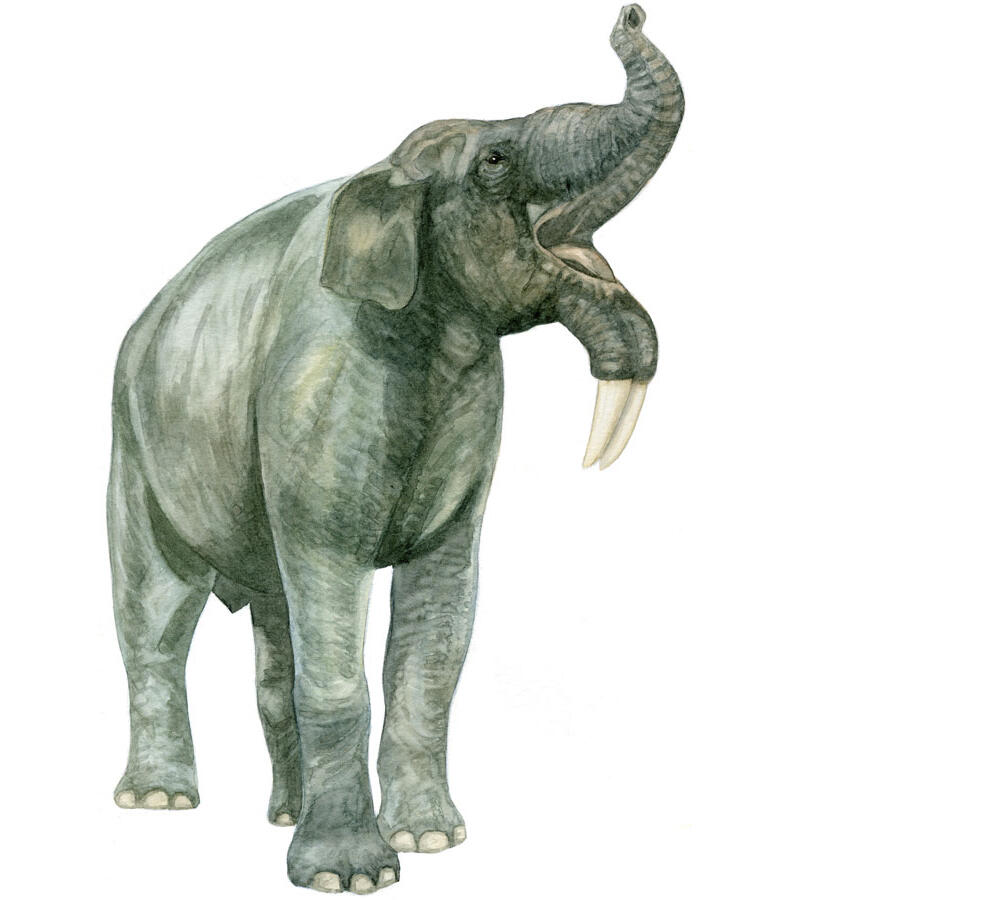
The palaeontologist is also keen to mention other proboscideans linked to local myths. In the south of France, the downward-curving tusks of Deinotherium, which lived there between 20 and 1 million years ago, inspired the “Devil's Horns” in Gascony. And during a visit to the Natural History Museum in Budapest, Hungary, while working on her PhD, Bader discovered a chained mammoth femur which at the time of the Hungarian monarchy had been exhibited as a “dragon bone”!
"We'll never know for sure," Bader says regretfully. "Nevertheless, I'd like to believe in this highly poetic image." And, who knows, these myths might even inspire further research!
See also:
Rare Ordovician fossil deposit found in France
- 1. CNRS / MNHN.
- 2. https://theses.fr/2024MNHN0025 (in French)
- 3. See also: C. Bader, et al., "Miniature giants: investigating limb long bone structure in dwarf proboscideans", Palaeontology, 2026: https://doi.org/10.1111/pala.70067
Explore more