
You are here
Scooping out oceanic CO₂ to make room for more
Over the course of 16 months, you co-led the effort by 12 European experts to establish the standards needed before marine CO2 removal techniques are implemented. This research was published by the European Marine Board (EMB) on the occasion of the COP30 conference. Why take an interest in oceans to remove CO2?
Olivier Sulpis1: Oceans cover more than two-thirds of the planet’s surface, and already absorb one quarter of our annual CO2 emissions. Numerous documents from the International Panel on Climate Change (IPCC) point out that the probability of keeping warming below 1.5 °C by the end of the century is very low, even in the event of drastic emissions cuts. To do so, CO2 must actively by removed from the atmosphere. In this context, it is regularly proposed that oceans be used as a lever for that purpose, either by increasing the effectiveness of natural processes, or by implementing new methods favouring technological approaches.



What methods do these involve? Ocean fertilisation, alkalinisation. Can you gives us a few examples, and tell us where research stands today?
O. S.: Marine Carbon Dioxide Removal (mCDR) activities seek to remove the CO2 dissolved in seawater2. Once captured, a transfer of CO2 from the atmosphere to the ocean occurs to compensate for the imbalance created in this manner.
The CO2 dissolved in saltwater can be recovered in the form of ionic solubles such as carbonate and bicarbonate ions, whose formation is favoured by increasing water alkalinity, which incidentally rises with the addition of dissolved minerals. Consequently, it has been observed that periods in which rock erosion (and hence mineral input in the ocean) was the most substantial were also when oceans absorbed the most CO2. Mineral substances such as olivine (widely available in the Earth’s crust) or calcium carbonate could, for example, be used to enhance seawater alkalinity. It is also possible to convert the CO2 dissolved in water into biomass by promoting the growth of seaweed or plankton, or by restoring damaged coastal plant ecosystems.
It is important to note that the best-known mCDR method, ocean fertilisation, has shown little effectiveness after more than 20 years of assessment. In addition, it is decried by the scientific community due to the risks it poses for marine ecosystems. Whenever a technique is based on CO2 storage in the form of biomass, it is essential to ensure that the organic matter will not rapidly decompose, which would release the CO2 in the saline water again. It is therefore important to verify that this biomass will fall to the seabed, or to use it to produce sustainable materials or energy.


While these methods are inspired by natural processes known to have cooled the planet in the past, it must be understood that they unfolded over much longer time scales. All of these approaches are still in a developmental state, and research should also explore their medium and long-term effects on the environment and marine ecosystems.
You co-preside over the group of 12 European experts who just produced this report. How did you assume this role, and what was the involvement of the CNRS?
O. S.: The CNRS proposed me as a potential contributor to this group of experts, and I was selected (along with Helene Muri3, its president) from among the other scientists as co-president in charge of drafting the report. The document was checked and approved by organisations that are members of the European Marine Board (EMB)4, including the CNRS and Ifremer for France, thereby bolstering its scientific and political legitimacy.
The EMB is independent of any private funding, and the subjects for study are selected by member organisations. The working group I am a part of is exclusively made up of scientists and lawyers from European public institutions.
What does its research consist of?
O. S.: Our goal was to establish the monitoring, reporting & verification (MRV)5 standards required to deploy marine CO2 removal techniques. MRV provides a framework for quantifying greenhouse gas capture with respect to an initial reference level: it assesses the duration for which CO2 is trapped and stored with no contact with the atmosphere, along with the associated uncertainties.


MRV must also describe the effects that mCDR has on the environment and ecosystems, in accordance with pre-defined criteria, so as to ensure that hazard thresholds are not exceeded. MRV is like a balance sheet for CO2 capture; without it, it is impossible to determine its effectiveness or consequences, nor make responsible decisions.
Why not just verify that the CO2 was captured and stored for the long term?
O. S.: MRV is difficult, because the ocean is an interconnected environment that constantly varies according to daily cycles, the seasons, the weather, species migration, and human activities. Detecting a change in dissolved CO2 levels amid all this variability requires highly precise instruments, especially since the chemical modifications we seek to detect are minimal.
What is more, we must successfully ascribe a drop in CO2 levels to the deployment of a particular mCDR method, rather than to a natural phenomenon. Determining storage duration necessitates predictive models that help us determine the evolution of water masses, in addition to interactions with ecosystems. These models are often very complex, and involve intensive computing resources.
This report was released during the COP30 in Belém, at a time when countries must revise upwards their climate ambitions. What would be your message to the negotiators who met in Brazil?
O. S.: Capturing CO2 from the atmosphere using oceans is possible and necessary in order to remain below the level of warming defined by the Paris Agreement (+1,5 °C at the end of the century compared to the pre-industrial era). However, it requires new regulations and a substantial mobilisation of public resources – especially urgent investment in scientific research, in order to objectively assess what mCDR can (and cannot) contribute. It is particularly important to limit any transition to a large scale as long as test protocols do not exist.

Announcements for massive investment in CO2 capture techniques are on the increase. Are you not concerned that you will be criticised for ‘legitimising’ these techniques, at a time when emissions must urgently be reduced?
O. S.: One of the primary messages is that even if CO2 capture could supplement the reduction of emissions, it cannot replace it. Humanity is currently emitting 40 gigatons of CO2 per year, which is 1,000 tons per second! The most direct way to lower atmospheric CO2 is to firstly curb emissions. We also want to point out that no mCDR method is close to large-scale implementation at this stage.
We are not taking a position on whether mCDR should be implemented or not, and the report does not promote any technique: it establishes the MRV requirements to avoid greenwashing and to protect the ocean. Our message is one of precaution: relying on science and supervised tests to advance, and doing so with full transparency.
Why don’t you take a stance on the opportunity of large-scale mCDR implementation?
O. S.: This report aims to present a state-of-the-art review and make objective recommendations without issuing a decision on the political opportunity of massive mCDR implementation. The document does not take a position as to whether mCDR should be pursued or not; it specifies the conditions of feasibility for any future decision.
Our role as scientists is not to decide, but to set forth what knowledge allows us to affirm, and to then establish the context and level of certainty under which an action is justifiable. In concrete terms, we characterise the evidence and contingencies, and then establish MRV requirements and thresholds to protect the environment and climate integrity. Finally, we specify the demonstrations needed before any transition to scale.
Deciding whether to implement or ban is a policy and societal choice that is based, beyond scientific arguments, on values, democratic priorities, and economic trade-offs. Our contribution is to illuminate these choices through a rigorous, transparent, and verifiable framework, in order for any decision – whatever it may be – to result from solid evidence rather than promises or fears.
You formulated 13 recommendations for decision-makers and finance providers. If you had to choose just 2 or 3, what would they be?
O. S.: One of the priorities for decision-makers is to implement a harmonised MRV regulatory framework in terms of definition, methods, and verification. For now, MRV protocols have been established by private actors, which can raise doubts regarding the objectivity and independence of their conclusions.
For science funding agencies, the priority is to select projects that help better assess long-term effectiveness, environmental impact, and the evolutive potential of mCDR methods. This notably involves studies focusing on the dynamics and future of natural carbon, in order to better anticipate and quantify the benefits of mCDR methods.
Who should pay for these incredibly costly monitoring systems that you say are essential?
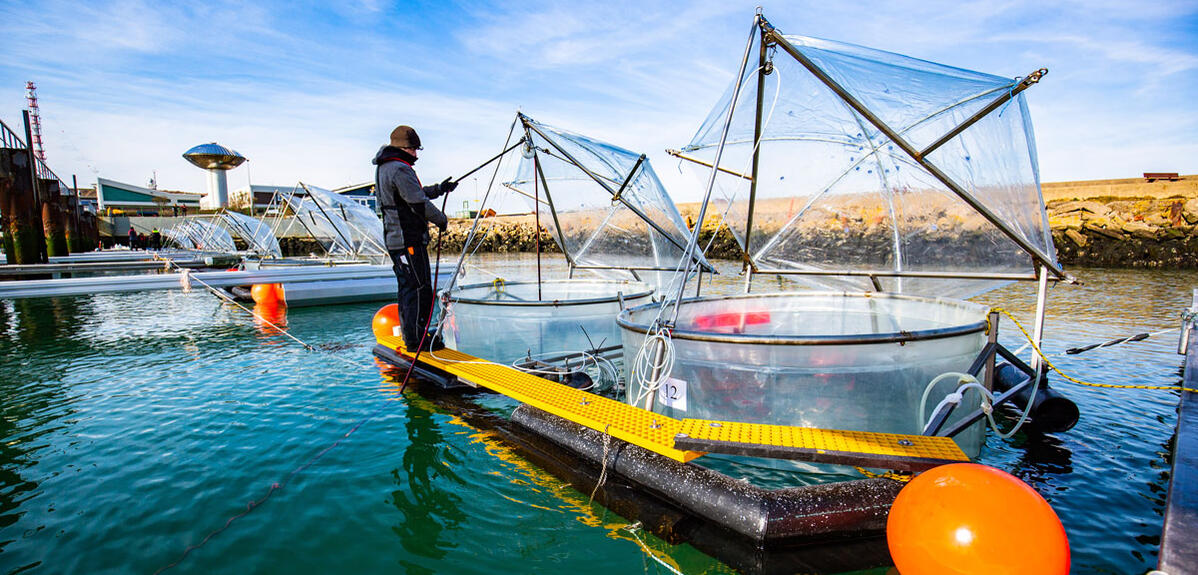
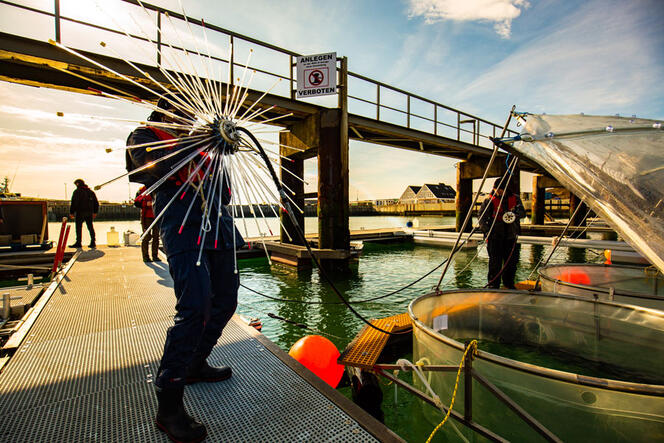
O. S.: Public and philanthropic funding has enabled the creation of observation stations, such as mesocosms, in addition to instruments and models dedicated to MRV studies of mCDR. Global ocean observation networks already exist in the form of oceanographic campaigns, autonomous robots, satellite measurements, etc. However, the longevity of funding – and hence the maintenance of these networks – is not always guaranteed. An observation network enabling the global monitoring, reporting and verification of mCDR would eventually require not only financial but also operational support from States, which are the only ones able to implement joint legislation and independent verification.
There could also be a market for carbon credits, which would be sold by entities conducting mCDR efforts, and purchased by others seeking to offset their emissions. However, such a market can proceed only after tried and tested MRV protocols are put in place. This is still a long way away.


What does leading this project represent for the CNRS and French research?
O. S.: The report proposes a European position of reference, one established by a group of experts co-presided by a CNRS researcher. The CNRS has therefore helped to structure the scientific and operational framework (MRV, observation, modelling) to be used by decision-makers in Europe and beyond, in the service of fair climate action.
I believe it is urgent for French research to further engage in studying mCDR methods. I think that scientists should take an active role in this debate. It is now clear that no single option will be enough to remove a sufficient amount of CO2, but a multitude of initiatives can coexist, as long as their environmental and ecological impact does not exceed clearly-defined thresholds.
Studying mCDR as a scientist does not necessarily mean supporting it. Rigorous explanatory and enlightening scientific research can provide solutions, as well as help limit and even ban certain potentially harmful activities. What is more, basic research, especially that concentrating on the deep seabed, will certainly benefit from greater attention being paid to the marine biogeochemical landscape.
Further reading
“Monitoring, Reporting and Verification for Marine Carbon Dioxide Removal,” European Marine Board Future Science Brief no. 13, 17 November 2025.
See also
Boarding the ships of the APERO campaign
- 1. Researcher at the CEREGE environmental geosciences research and training centre (CNRS / Aix-Marseille Université / INRAE / IRD / Collège de France), a laboratory that develops cutting-edge expertise on marine biogeochemical cycles and the climate system.
- 2. Voir « Surveillance, déclaration et vérification du captage de CO2 en mer », par Olivier Sulpis: https://www.canal-u.tv/167622
- 3. Climatologist at the NILU climate and environmental research institute of Norway.
- 4. An independent organisation created in 1995, the European Marine Board (EMB) represents 38 organisations in 19 European countries (national marine institutes, funding agencies, academic consortiums). An interface between science and policy, the EMB develops shared priorities in marine research, and advises both national agencies and the European Commission.
- 5. See: https://tinyurl.com/MRV-climat.
Explore more