
You are here
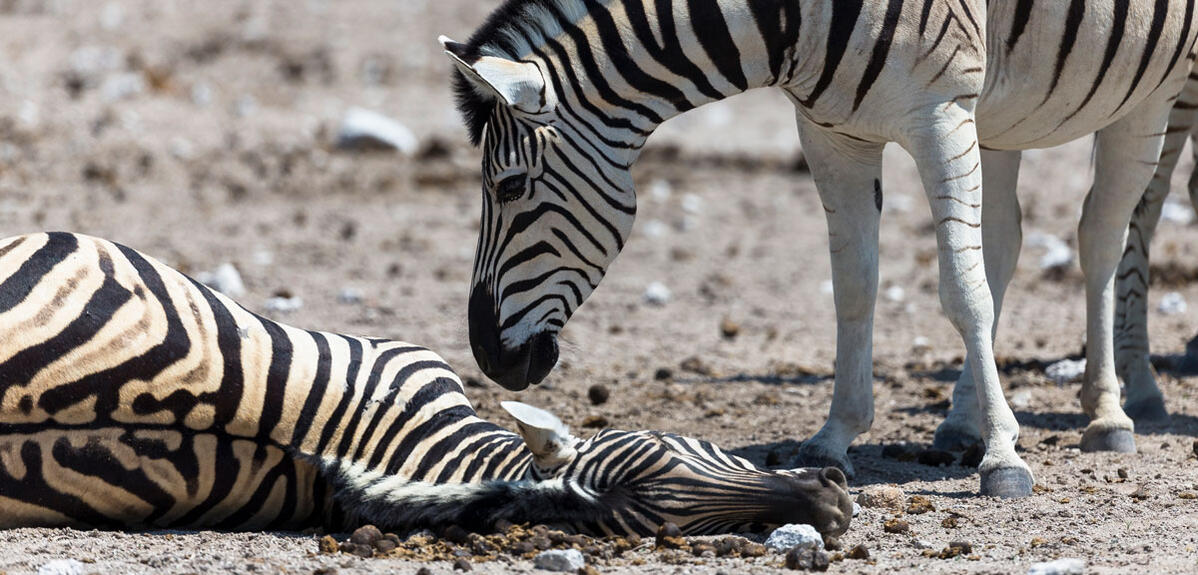
Animals are no strangers to death
As a biologist, what led you to study the question of animal behaviour in relation to death?
Emmanuelle Pouydebat1: I’m keenly interested in animal feelings and the link between them and cognition. Among all the sentiments, I was especially intrigued by sadness, in particular linked to the loss of a fellow creature and mourning. There seems to be little documentation on these topics, no doubt due to the popular misconception that these emotions call upon sentience and are specific to the human species. In addition, researchers are reluctant to investigate this area for fear of misinterpreting certain animal behaviours.
Personally, I have always thought that a degree of anthropomorphism is acceptable if it allows us to pose questions and thus make progress. Otherwise, we risk overlooking some of the animals’ capacities. We have a tendency to underestimate animal suffering, and I think that part of their mistreatment is due to this lack of knowledge.
As revealed in your book, there are actually many scientific articles addressing the question of death in the animal world…
E. P.: That was a surprise for me. In preparation for writing the book, I found several hundred, indicating that many researchers around the world are interested in death among animals. On the other hand, many of the articles merely recount anecdotes, and the few experiments conducted in this area are not reproducible. Nonetheless, I think that the value of these anecdotes should not be underestimated, in that they make us think and, from an ethical standpoint, help challenge the denial of animal sentience.



Many animals understand death. It triggers a wide range of complex behaviours and very strong reactions, from the difficulty of abandoning a dead infant or fellow creature to certain forms of self-destruction, not to mention feigning death to elude a predator. Many species also identify certain signals indicating the passing of a congener. Some ants associate specific odours with the lack of chemical vital signs and infer that one of them has died. Fish like sea lampreys and sharks flee the smell of decaying tissue.
If animals understand death, does that mean that they have an abstract conception of it?
E. P.: Do animals possess a knowledge of death in the broad sense, involving the concepts of consciousness and irreversibility? We will probably never know for certain, because we’ll never really find out how they think. However, when we see how strongly chimpanzees can react to the death of a companion, for example, it is perfectly plausible that they understand that it is an irreversible phenomenon. In that sense, yes, I associate these behaviours with criteria for intelligence.
Along these lines, are there many examples of thanatosis reactions – situations in which an animal literally plays dead?
E. P.: For me, this was the key revelation of the study. Thanatosis, the behaviour in which animals pretend to be dead in order to deceive predators or perhaps prey, opens a number of fascinating questions. It was always believed to be an involuntary reaction, programmed in the genetic code. But we have actually observed endless variations in the physiological mechanisms – slower breathing and heart rate, rigid posture… Not to mention the lizards that let themselves be swallowed by a predator and then produce serotonins that make their attacker vomit, releasing them alive and well!


Most importantly, this variability can also be seen among individuals of the same species. A seahorse that can swim very fast, for example, will simply flee when a predator approaches. But a slower one will look for potential hiding places, resorting to thanatosis if all else fails. A hognose snake will start to flee, unless it is gravid, in which case it will feign death. This all shows that an individual animal decides to play dead or not depending on the situation, its abilities at the time, whether it is alone or in a group, etc.
What conclusions can be drawn from this?
E. P.: At this stage, I’m mostly compiling questions and the hypotheses that need to be tested. We should start by asking whether these behaviours correspond to learning mechanisms. It has been observed that among opossums and hedgehogs, the young can be awkward and less convincing when mimicking death…
It is also clear that thanatosis is not the first response to danger but rather an attitude adopted as a last resort. This raises another interesting issue: presuming that this reaction is indeed voluntary, at what point does the individual understand, or decide, that it’s time to feign death? This can only be answered by large-scale observation in the wild, impossible without extensive international collaboration.
Upon the death of a congener, do animals have reactions that could be described as rites?
E. P.: Some of the observed reactions to the death of congeners rather seem to be preventative health measures. When so-called ‘eusocial’ insects (i.e. organised in castes or categories of individuals) eliminate their dead, like the wasps that drag corpses as far as 100 metres away from the nest, we can assume that it’s mainly to protect the colony. Similarly, among bark beetles or certain termite species, burying corpses seems to be the most effective way to avoid any subsequent contact with the dead insects, and thus the possible transmission of diseases.
But what about the crows that seem to practise genuine ceremonies by gathering around the body, cawing and sometimes placing objects like feathers, sticks or clumps of grass near it, as though to create a landmark? This is more than a preventive move. The question of social cohesion is of extreme importance, imparting a real evolutionary advantage. I feel that these acts could be linked to very strong emotions. It’s also apparent that crows become very agitated when one of them dies.
The same thing can be seen among giraffes and seals, which will stand guard for hours over a dead infant. Or African elephants, which not only cover the corpse with leaves or branches, but also touch its skin or tusks with their trunks. I’m convinced that all of this is evidence of complex underlying emotions, combined with phenomenal cognitive abilities, given that elephants are able to return to the same place months later, even though they roam across vast areas.

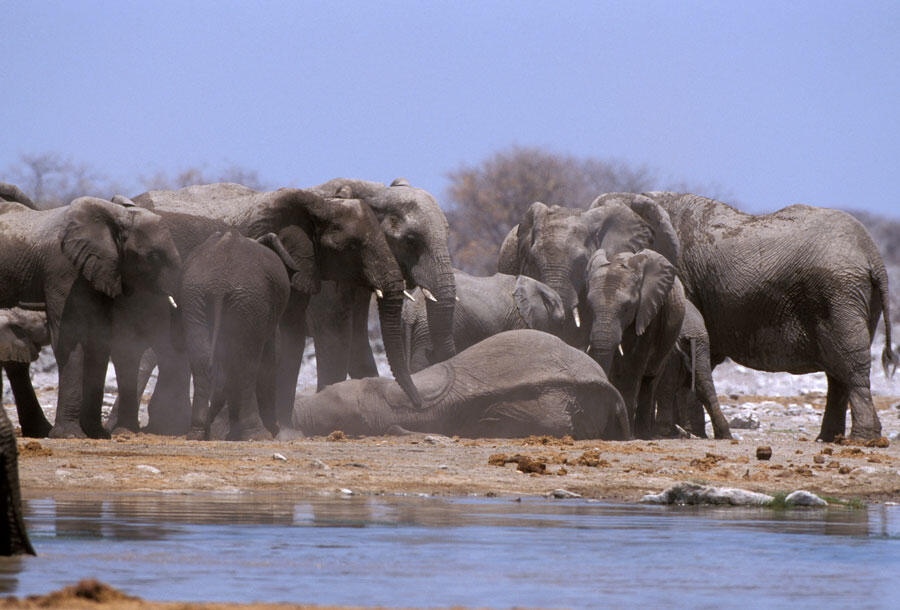
We could call these rites, in the sense that they are behaviours specific to the death of a congener. But do animals have philosophical thoughts about death? We’ll probably never be able to tell, since our knowledge of the animal kingdom also has its limits.
Have animals been observed displaying behaviours similar to mourning?
E. P.: When a mother hippopotamus struggles for hours on end to keep her calf moving by bringing it to the surface of the water, isn’t she motivated by a very strong feeling of sadness? Many primates, especially baboons, exhibit high levels of stress when they lose a close relative. Grief is a complex topic, but we know for certain that some animals show such distress after losing a loved one that they can even allow themselves to die. This phenomenon is observed most often among animals in captivity – my colleagues who work in natural habitats maintain that wild individuals will fight for survival to the very end, impelled by an overpowering drive for life.
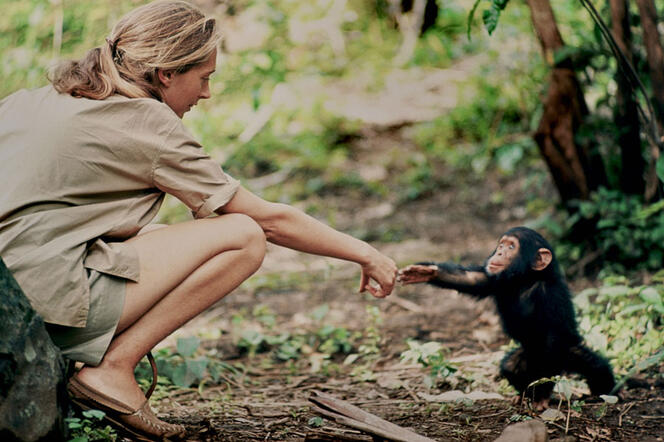
However, we know that there are exceptions. I’m thinking of the well-known example, reported by the ethologist Jane Goodall, of a young chimpanzee she called Flint who was very strongly attached to his mother, Flo. When Flo died, Flint stopped eating and lay motionless for days staring at the place where his mother had died. Within three weeks Flint was dead as well, and Goodall was deeply convinced that he had let himself die of grief.

Do pets have different attitudes towards death?
E. P.: They don’t have the same kind of life as animals in the wild. Also, they are the result of a selection. So the context is not the same, and the idea of daily survival is less important.
Some veterinarians are interested in the end of life of pets and advise, for example, when an animal dies in a household with multiple pets, to let the others see the corpse so that they realise that their companion has died. Also – and I’ve seen this several times – it’s striking how much a cat, dog or rat at the end of its life will keep struggling to the last second. Sometimes it’s hard not to assume that they understand.
A good example is the story of the gorilla Koko, who became a veritable star in the United States in the 1980s when the ethologist Penny Patterson succeeded in teaching her sign language. To keep the animal company her caretakers gave her a kitten, and Koko quickly became very fond of it. Then one day the kitten was run over by a car. When Patterson told Koko the news, the gorilla immediately reacted by signing the words “unhappy”, “sad”, “crying”…
Does what you discovered while writing this book open up new perspectives for your research?
E. P.: Observing how animals can empathise with others and, in all likelihood, have an understanding of another’s death strengthens my conviction that we must continue working, scientifically speaking, on the well-being of animals, especially in captivity.
I’m going to investigate the issue of end of life, starting by identifying when an animal begins to decline, which is not so easy. It will require being able to detect emotions using the behavioural markers that we already have, including via artificial intelligence tools. Once we have determined that an animal is approaching the end, we will try to find the best way to ease the transition – for the individual, of course, but also for the social group.
It’s a largely unexplored topic. Some zoos, in particular, have considered the question, but for health protection reasons they isolate individuals at the end of life. However, when the death is simply due to old age, there is no physiological reason for doing that. Why not let the animals die among their group?
More globally, do you see progress in our understanding of animal death?
E. P.: We need to make progress in the monitoring of certain species in the wild, gathering as many observations as possible to see if we can go beyond the anecdotal and better discern the differences in behaviours towards death among species – depending on their living environment, between individuals, and above all among groups of the same species. This will enable us to understand the role of transmission and determine whether there are cultural, tradition-based or learning mechanisms linked to death. Improving our understanding of the evolutionary value of animal intelligence in relation to death would make a fascinating long-term research project. It’s all waiting to be discovered!
For further reading
Les oiseaux se cachent-ils pour mourir ? Les animaux et la mort ("Do Birds Hide to Die? Animals and Death”), Emmanuelle Pouydebat and Arnaud Rafaelian (illustrator), Delachaux et Niestlé editions, 2025 (in French).
See also
- 1. CNRS research professor at the MECADEV Adaptive Mechanisms and Evolution Unit (CNRS / MNHM).
Explore more