

You are here
Articles
0 comments
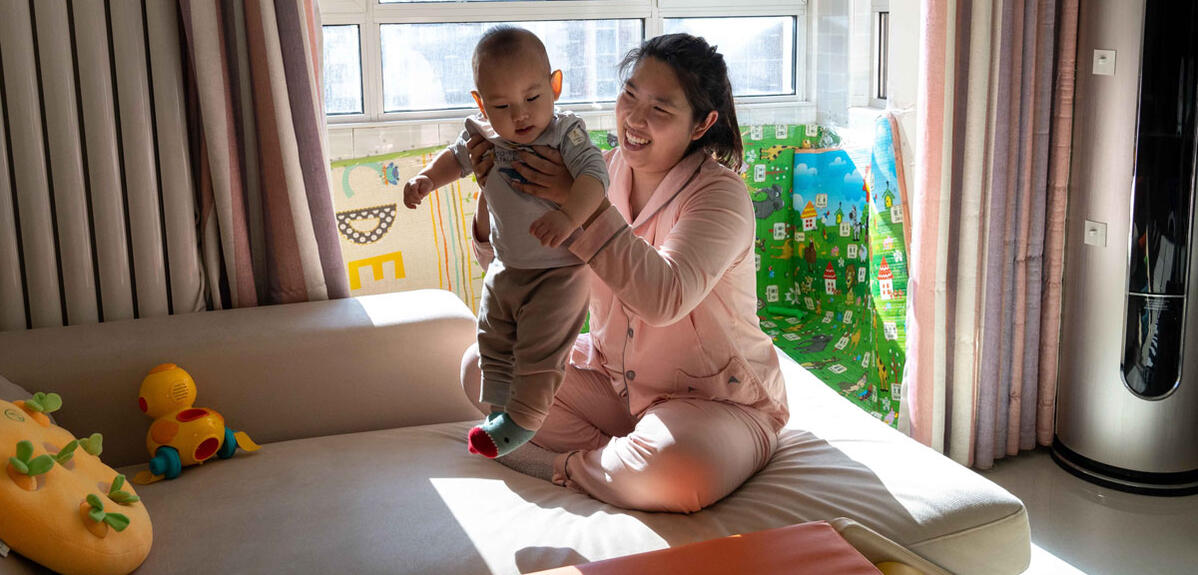
Surrogacy is on the rise in China, even though it is officially banned. The anthropologist Renyou Hou examines how the technique could alter family relationships while fitting in with traditional practices.
Recent Articles
Article
09.17.2026

The outstanding physicist Jacqueline Bloch is a specialist in polaritons, microscopic objects halfway between matter and light. She has just been awarded the CNRS Gold Medal, France’s highest...
Article
03.27.2026

While International Women’s Day was celebrated earlier this month, women are not on a par with men, including when it comes to health. CNRS News is taking a look at illnesses that are more common, or...
Article
03.20.2026

By elucidating the mechanism that enables the microscopic fungus "Candida albicans" to cause an infection, a CNRS research team has opened the way towards several new therapeutic...
Article
03.13.2026

Avatar: Fire and Ash, the third instalment of the cinematic saga, premiered in movie theatres in late 2025. Ecologists and biologists have been examining the scientific premises of the film and the...
Article
03.09.2026

How to ensure an efficient energy supply for increasingly complex medical implants? A new study provides a theoretical framework for optimising wireless and battery-free devices powered by...
Article
02.27.2026

When the outside temperature drops, our body may start to shiver. But that’s not all: it also triggers a series of coordinated reactions to maintain its temperature at 37°C. What are the mechanisms...
Article
02.13.2026

For the first time, researchers are assessing people’s opinions on policies for the global redistribution of wealth and the fight against climate change. Such measures receive massive, nearly...