

You are here
Space

On 14 September, 2015, the international LIGO/Virgo collaboration detected the very first gravitational wave signal, a tiny distortion of spacetime predicted by Einstein, in this case produced by the merger of two black holes. The CNRS astrophysicist Marie-...
Article
11.03.2025

Why is the outermost part of the Sun's atmosphere, the corona, so much hotter than its surface? Ten years after formulating a hypothesis based on a numerical model, CNRS researchers have now used direct observations of the star's surface to confirm...
Article
10.09.2025

With large-scale observation campaigns, innovative data analysis methods and theoretical advances on all fronts, astrophysics and cosmology are entering a high-precision era with the potential to unravel many of the unsolved mysteries of the Universe....
Article
09.12.2025

During his “miraculous year” 120 years ago, Albert Einstein explained the photoelectric effect, laying the foundations of quantum mechanics. The historian of science Christian Bracco provides an insight.
Article
07.09.2025
07.03.2017
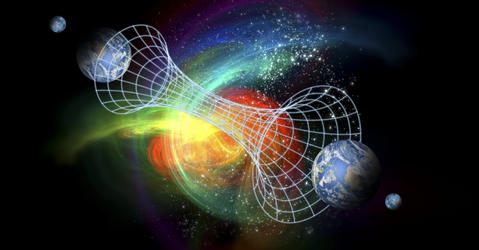
Schrödinger’s cat, a thought experiment in quantum mechanics, points to the possibility of parallel universes. Physicist Aurélien Barrau believes that one day, it will be possible to devise...
Article
06.09.2017
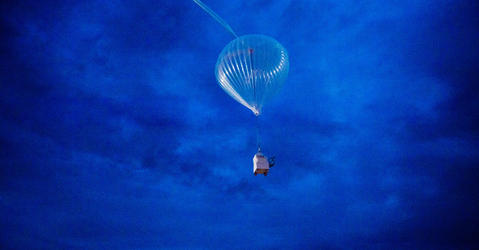
Cheaper than satellites, stratospheric balloons can carry telescopes up to altitudes of 40,000 meters, enabling researchers to observe the Universe. They recently completed a mission over Australia...
Video
03.29.2017
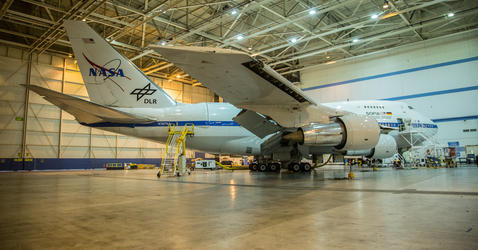
Sofia is a Boeing 747 like no other. Run by NASA and the DLR, the German space agency, this aircraft was specially modified to accommodate a telescope. Come on board with astrophysicist Olivier...