

You are here
Space

On 14 September, 2015, the international LIGO/Virgo collaboration detected the very first gravitational wave signal, a tiny distortion of spacetime predicted by Einstein, in this case produced by the merger of two black holes. The CNRS astrophysicist Marie-...
Article
11.03.2025

Why is the outermost part of the Sun's atmosphere, the corona, so much hotter than its surface? Ten years after formulating a hypothesis based on a numerical model, CNRS researchers have now used direct observations of the star's surface to confirm...
Article
10.09.2025

With large-scale observation campaigns, innovative data analysis methods and theoretical advances on all fronts, astrophysics and cosmology are entering a high-precision era with the potential to unravel many of the unsolved mysteries of the Universe....
Article
09.12.2025

During his “miraculous year” 120 years ago, Albert Einstein explained the photoelectric effect, laying the foundations of quantum mechanics. The historian of science Christian Bracco provides an insight.
Article
07.09.2025
Article
10.16.2017
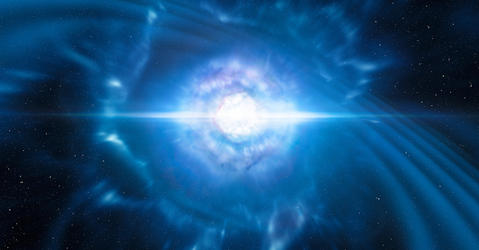
A series of observations on an unprecedented scale combining detection of gravitational waves and electromagnetic signals at all wavelengths sheds light on unsolved mysteries of astrophysics.
10.13.2017
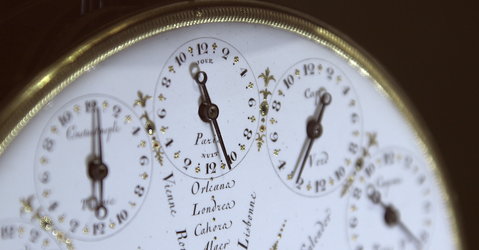
50 years ago, on October 13, 1967, the second—the unit of time—was no longer defined by stars, but by atoms. In this quest for precision, scientists are now inventing the clocks of the future,...
09.12.2017
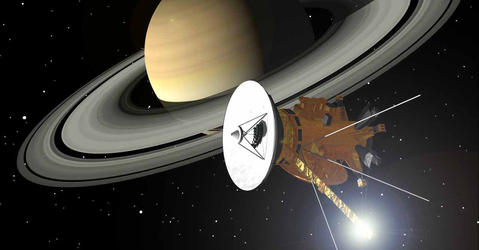
In the 20 years since it left Earth for Saturn, the Cassini-Huygens mission has made remarkable discoveries, to the point of changing our entire understanding of the Solar System. Its spectacular end...