

You are here
Articles

0 comments
Imagining and preparing for the future in order to guide research and public policy is the very purpose of foresight. A perilous exercise, scientists point out. And one that requires dialogue between disciplines, along with solid models accounting for multiple uncertainties.
Recent Articles


01.31.2017

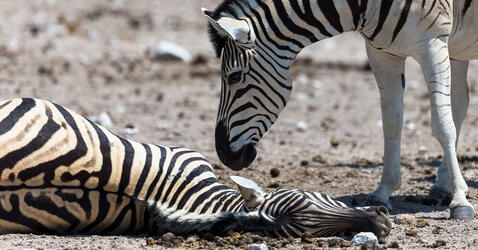
Why do people become attached to robots, how do they display this attachment, and is reproducible? Véronique Aubergé, a leading social robotics specialist shares her insight on the complex...
Article
01.26.2017

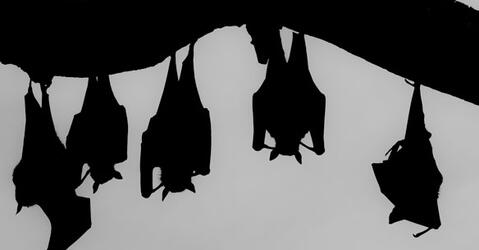
An expedition to the Kisangani region, in the Democratic Republic of Congo, has yielded surprising findings about a supposedly very rare bat species, the pied butterfly bat, whose black fur with...
01.23.2017

However objective they may seem, the figures presented in legal cases are sometimes based on a misleading or ill-conceived use of mathematics. The mathematician Leila Schneps explains the phenomenon.
Article
01.19.2017
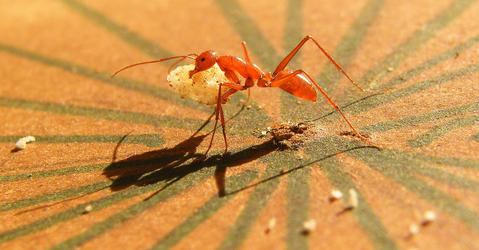
A new study sheds light on how some ant species ingeniously combine vision and memory to find their way back from foraging expeditions—whether walking forward, backward or sideways.
01.16.2017

Our memory is malleable. So much so that we can even create false memories. Insight into these mechanisms could help us find new ways to understand certain pathological disorders. Neurobiologist...
Article
01.10.2017
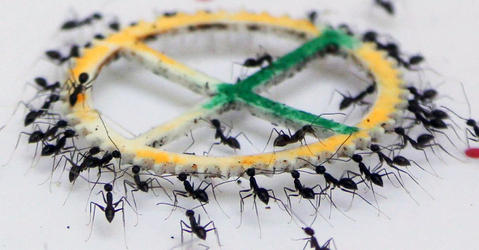
A previously unidentified type of ant trail has recently come to light: the longhorn crazy ant’s unique scent marks that help crews of coworkers carry a bulky load across obstacle-strewn territory. A...