

You are here
Ten years on, mixed results for the Paris Agreement

It is a peculiar anniversary for the Paris Agreement on the climate. Precisely ten years ago, 195 countries adopted, by consensus, the goal of reducing greenhouse gas emissions “as soon as possible,” with a view to keeping global warming below 2 °C compared to the temperature from the pre-industrial era (and below 1.5 °C if possible). For the first time, the entire world paid special attention to the climate, recognising the urgency to act. However, a decade later, things appear wide of the mark. Now that the 30th United Nations Climate Change Conference (COP 30), which was held in Belém, Brazil, has come to a close, it is time to assess an agreement as unprecedented as what it seeks to address.
One thing is certain: Saturday, 12 December 2015 will go down in the annals of global governance history. At 19:29 on that day, amid an electric atmosphere, Laurent Fabius, the French Minister for Foreign Affairs and President of the 21st United Nations Climate Change Conference (COP 21), rapped his gavel, concluding an agreement immediately recognized by a long ovation in the plenary hall at Bourget. “Our responsibility is historic, because we are the first generation to become aware of the problem, and the last able to act,” observed the political leader.


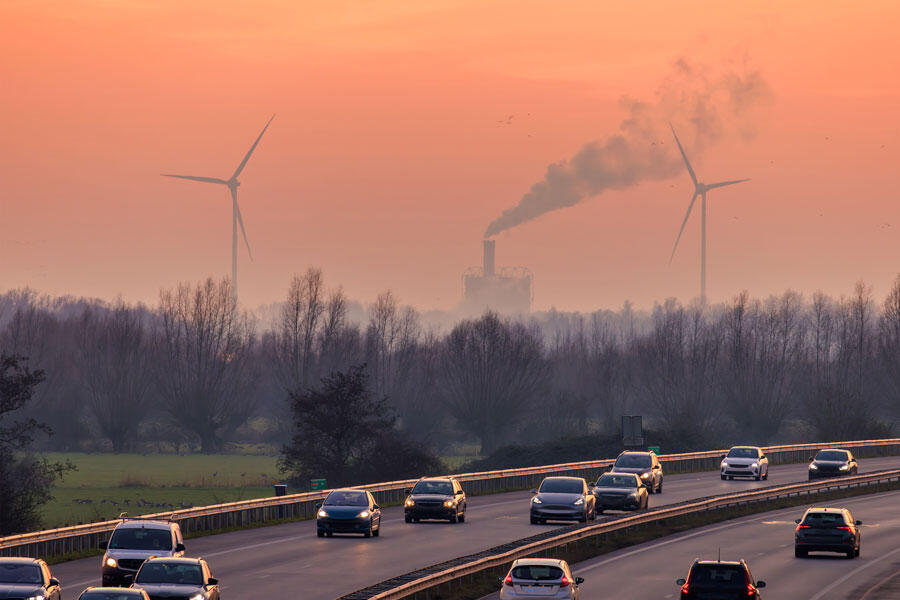
Basing themselves on the recommendations of the International Panel on Climate Change (IPCC), signatory countries committed to reducing their greenhouse gas emissions through voluntary national plans—“nationally determined contributions” or CDNs—revised every 5 years. In addition to this commitment was the need for developed countries to provide financial assistance to the most vulnerable nations. “In Paris we saw the birth of a science-based diplomacy, one leading to a universal agreement reflecting an overall awareness,” stresses Agathe Euzen, Deputy Director of CNRS Ecology & Environment.
The Paris Agreement has gradually become more robust over the course of successive COPs. In 2018, COP 24 in Katowice (Poland) adopted “rulebooks” specifying how to measure, declare, and verify each country's greenhouse gas emissions, thereby making the agreement truly operational and transparent. In 2021, COP 26 in Glasgow called for the “gradual reduction” of coal, while two years later COP 28 in Dubai marked a historic milestone by recognising the need to stop burning fossil fuels altogether. In 2022, COP 27 in Sharm el Sheikh established the creation of a “losses and damages” fund to help the most vulnerable countries.
According to Marta Torre-Schaub, a lawyer at the Sorbonne Institute of Legal and Philosophical Studies,1 “the mechanisms connected to the Paris Agreement, in addition to international law pertaining to the climate, now represent a legal basis for pursuing the fight against global warming.” “The Paris Agreement made climate the central issue, on which all others are built,” adds Jean Foyer, an anthropologist at the Americas Research and Documentation Centre,2 and the co-coordinator of a collaborative ethnography project seeking to document, from Belém, the tensions arising from global climate policy.
However, ten years after the signing of this historic agreement, it is evident that the concrete results have yet to emerge with respect to the climate.


In 2013, the IPCC Fifth Assessment Report confirmed that the average global temperature depended on the accumulation of greenhouse gas emissions. Put simply, there is only one solution to stop warming, and that is to halt net carbon emissions, which the IPCC Sixth Assessment Report, published in 2021, presented in plain language. “When net emissions are equal to 0, the Earth’s temperature will stabilize in a few dozen years, as will a large number of regimes for precipitation and extreme heat,” explains Jean-François Doussin, Deputy Director of CNRS Earth & Space.
Each quantified goal for stabilising global temperature corresponds to an emissions budget that must not be surpassed. For example, to limit global warming to 1.5 °C, the goal of “zero net emissions” must be met by 2050; to limit it to 2°C, the deadline is set for 2070. In concrete terms, as of today, remaining under 1.5 °C entails reducing greenhouse gas emissions by 42% by 2030 compared to the reference year of 2019 (or by 28% to remain under the 2.0 °C threshold).
In light of the current trajectory for emissions, this appears difficult, and even impossible. Currently, 107 countries accounting for 82% of emissions have provided quantified reduction targets, consistent with the terms of the Paris Agreement, while 10 G20 members, including the European Union, have already passed their peak emissions. However, adding up all these commitments—assuming that countries will meet them—the reduction in greenhouse gas emissions would be approximately 4% in 2030 compared to 2019 levels…far below the ambitions stated in the Paris Agreement.
Worse yet, the emissions linked to human activity actually increased by 1.3% between 2022 and 2023, a higher rate than the average for the decade between 2010 and 2019. What is more, carbon dioxide concentrations in the atmosphere continue to increase. According to the World Meteorological Organization, in 2024 global average atmospheric concentrations of CO2 saw “the largest increase since the beginning of modern measurements started in 1957.3” Not only are the contributions established by each country—the famous CDNs—insufficient given what is at stake, a growing number of countries are implementing them at a much slower rate.

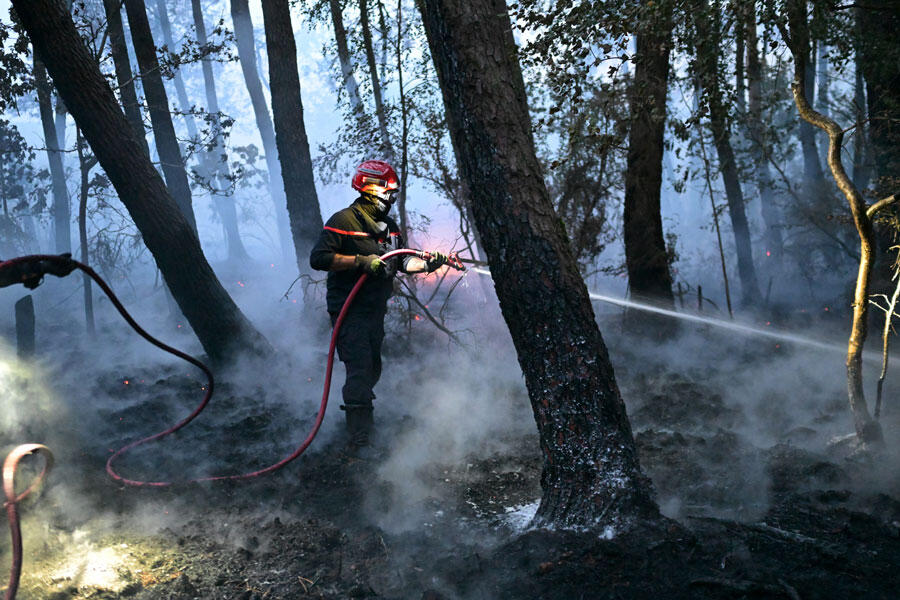
As a result, in 2024 the average global temperature rose above 1.5°C for the first time. If nothing changes, we are heading towards a global warming of 3.1 °C at the end of the century, according to UN experts. And this is true even though the effects of global warming are already being heavily felt, with more extreme weather events, storms, heat waves, droughts, floods, etc.
“The Earth system’s reaction to our emissions is no surprise. Everything that has been observed today was generally predicted by scientists,” reminds Gerhard Krinner, a researcher at the Institute of Environmental Geosciences,4 who helped draft the IPCC Sixth Assessment Report. The cause is a vicious circle in which human emissions, forest fires, and reduced carbon absorption by ecosystems feed back into one another.
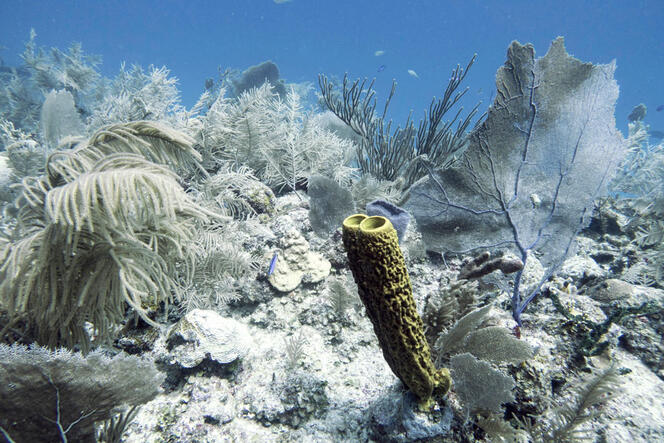
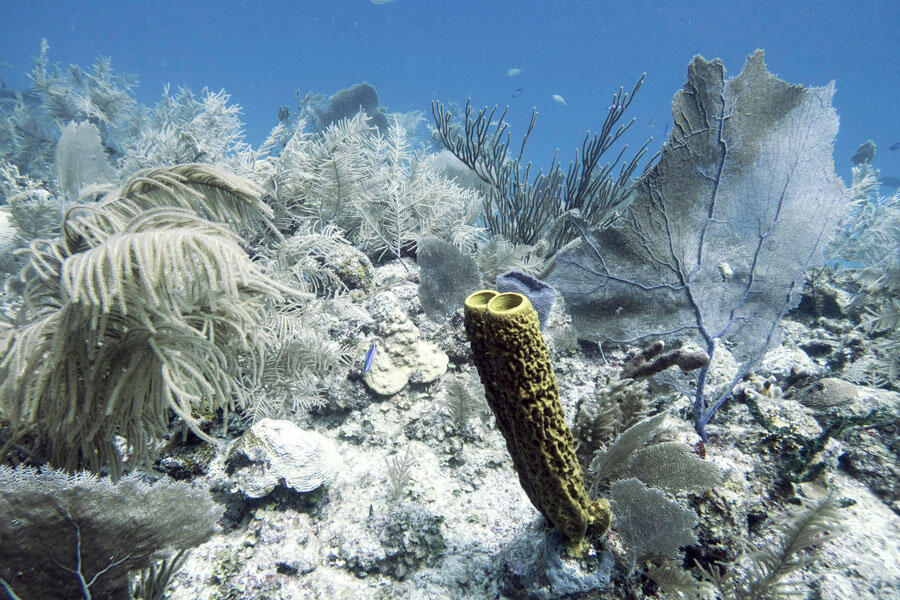
The recorded rise in temperatures comes in addition to a number of concerning observations measured by scientists. “Oceans are warming faster than anticipated by models,” Euzen points out. “Similarly, the cryosphere (the total masses of ice, snow, and frozen ground), are melting quickly.” Not to mention the decline of the Amazon forest or the death of warm water coral reefs, on which 1 billion people and one quarter of marine life depend.
This is what is so ambiguous about the Paris Agreement. Theoretically, the contributions established by each country (the famous CDNs) are “legally binding, so states are under legal obligation to implement them via their national laws,” indicates Torre-Schaub. However, as she reminds, in reality it is impossible to compel a state to fulfil its commitments, not to mention that a handful of them have refused this agreement, chief among them Donald Trump’s United States, which is nevertheless one of the primary contributors to greenhouse gas emissions.
But scientists warn we should be careful not to throw out the baby with the bathwater. “The world is indisputably better with the Paris Agreement than without,” Krinner asserts. “With the agreement, we are currently on a trajectory of +3 °C in 2100. Without it, we would be at + 4 or +5 °C,” reminds Jean-François Doussin.
“The Paris Agreement serves as a reference,” Euzen continues. “This is true for states, of course, but also for numerous non-state actors, and it is true at all scales, especially in the world’s major cities, which have often made highly concrete commitments in the fight against global warming.”


Legally, it facilitates legal proceedings against states (or polluting enterprises) that do not meet their commitments. In France, as part of the “case of the century,” the Administrative Tribunal of Paris recognized in 2021 that the French state had failed to meet its climate obligations, and enjoined it to take measures. There was also the lawsuit filed in Germany by the Peruvian farmer David Lliuya against the German energy company RWE for its partial responsibility for melting glaciers and floods in Peru. “While the Court of Appeals rejected the plaintiff’s demands, it nevertheless recognized the principle of civil responsibility for a major emitter due to the damage caused (even in a foreign country) as a result of climate change,” observes Torre-Schaub.
Better yet, last 23 July, the International Court of Justice issued an opinion affirming that states have an obligation to prevent climate damage,5 and can be held responsible for failing to do so, with the possibility of requests for reparations. The opinion is only advisory, but for Torre-Schaub, “it is a major step affirming that all of international law can henceforth be interpreted in light of the climate emergency.”
____________________________
COPs in question
On the one hand, IPCC reports, fruit of the global scientific community’s efforts and the basis for negotiations during COPs, indicate a clear path forward, and have “no equivalent on the scale of humanity,” according to Doussin. On the other, COPs offer a space for diplomacy, one in which states take over and negotiate directly (although scientists are also invited). Within these assemblies, “in addition to the climate emergency there are geopolitical considerations, with special interests often taking precedence,” Euzen regrets. One such example came during COP 28, held in the United Arab Emirates, when small island nations demanded a rapid end to fossil fuels, while producing countries used their full influence to ensure that a less clear formulation was ultimately selected. Another difficulty raised by COPs is “the requirement of unanimous decision making, which leads to laws that often fall short of what is necessary,” notes Krinner.
And yet, in an increasingly fragmented world, “COPs and the agreements that emerge from them are probably the most tangible sign of creating multilateralism, a space for the notion of building a shared world,” Torre-Schaub reckons. “We can view them cynically, but the other solution is a war of all against all, which certainly makes the Paris Agreement a highly valuable common good in today’s geopolitical context,” asserts Foyer.
- 1. ISJPS, CNRS / Université Panthéon-Sorbonne unit. Marta Torre-Schaub is also Director of the CNRS network Law and Climate Change – ClimaLex.
- 2. CREDA, CNRS / Université Sorbonne Nouvelle.
- 3. See: https://tinyurl.com/OMM-CO2
- 4. IGE, CNRS / Inrae / IRD / Université Grenoble Alpes.
- 5. See: https://tinyurl.com/CIJ-climat
Explore more








Author
Born in 1974, Mathieu Grousson is a scientific journalist based in France. He graduated the journalism school ESJ Lille and holds a PhD in physics.