
You are here
Plastic recycling is counter-productive

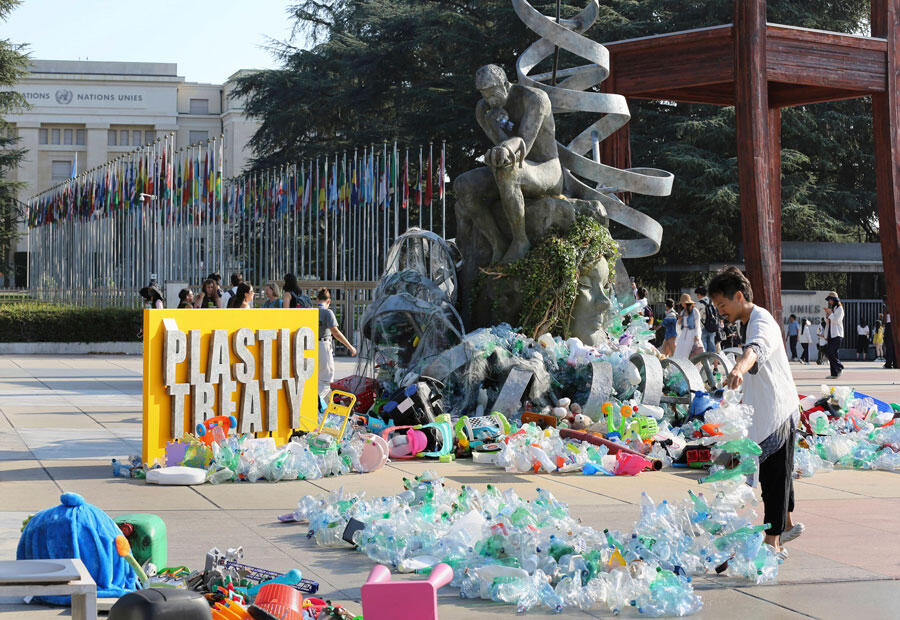
At the end of the two-week Geneva summit on plastic pollution, from 5 to 14 August 2025, Agnès Pannier-Runacher, the French minister for the ecological transition, biodiversity, forestry, maritime affairs and fisheries, condemned the failure of the fifth session of the Intergovernmental Negotiating Committee to agree on a binding international treaty to combat plastic pollution: "The priorities identified by science remain clear: we must tackle the entire life cycle of plastic pollution, starting with the recognition that current levels of production and consumption are unsustainable, and that recycling and waste management are only stop-gap measures which, although useful in the short term, will never provide a response commensurate with the scale of the scourge of plastic pollution".
The minister was referring to the basic disagreement that dominated the Swiss talks. On the one hand, the countries making up the so-called High Ambition Coalition (including Canada, France, the European Union and many African, Pacific and South American States1) are aiming to put an end to plastic pollution by 2040 by reducing the production of such materials. And on the other, the principal plastic-producing nations (primarily the United States and Saudi Arabia) are focusing solely on waste management.

Less than three months earlier, a collective scientific assessment led by the CNRS and the French National Research Institute for Agriculture, Food and Environment (INRAE) published the results of two and a half years of work on the plastics used in agriculture and in the food industry. The central focus of the study was recycling – and its limits.
“Every polymer has specific properties”
Reprocessing plastics comes up against a major problem, namely, their chemical formulation. Making polymers (the basis of plastics), requires first of all assembling monomers, which are compounds derived almost exclusively from petroleum. Additives are then mixed in with the polymers.
The result is a formulation that can also be further combined by producing either mixtures of these macromolecules, or else so-called “multilayer” structures in which "each polymer has specific properties, meaning that none of them can be substituted by another", explains the chemist Sophie Duquesne, scientific co-lead of the assessment on behalf of the CNRS.
But this is exactly where the problem lies. These formulations vary depending on their use and on the suppliers, and also become more complex when exposed to environmental factors such as UV radiation and heat, or even during the recycling process. This leads to widely differing situations that make it increasingly difficult to reprocess such plastics.
The limits of recycling
The sociologist Baptiste Monsaingeon, the other co-lead of the above-mentioned assessment, criticises "the development of a huge variety of plastics, even though only polyethelene teraphthalate (PET – used especially for water bottles) and high-density polyethelene (HDPE – milk and shampoo bottles) benefit from a functional technical recycling industry".


He advocates reducing and simplifying the number and formulation of plastics with the aim of making it easier to recycle them, rather than endlessly developing new processes for each type. Moreover, mechanical reprocessing (which involves crushing plastic objects in order to obtain a recycled raw material, without altering the polymer's structure) has its limits.
"The material breaks down with each cycle, and the mechanical properties of the polymers are gradually lost as a result," Duquesne points out.
Inadequate collection of plastic waste
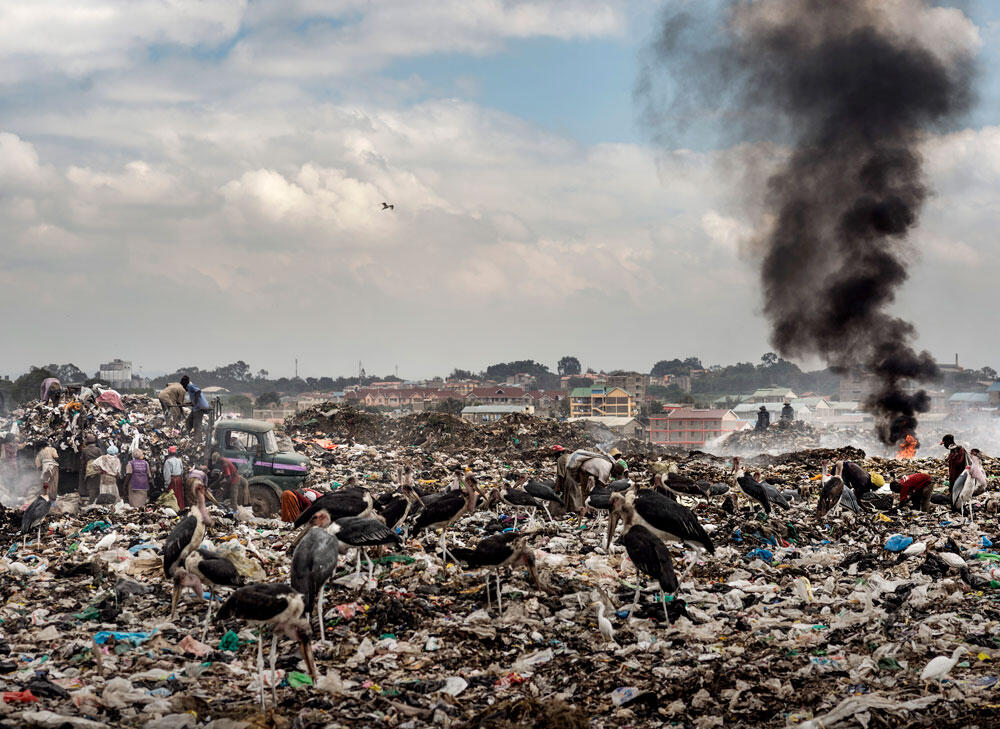
In addition to these chemistry-related issues there are also the challenges of collecting waste for recycling. The collective scientific assessment was able to come up with a rough estimate, based on over 4,500 scientific articles studied by some thirty experts from 24 research institutions across Europe. In 2023, worldwide plastic production exceeded 400 million tonnes, while less than half the waste (180 million tonnes) was recovered in 2016.
In Europe, the EU has significantly improved its effective recycling rate in recent years, salvaging up to a third of its waste for reprocessing in 2022. At the same time, however, it is also facing an increasing volume of waste.
Are other recycling options possible?
Faced with the limited results of mechanical recycling, some industry players are proposing alternative and complementary solutions such as chemical and enzymatic processes. These break down polymers into basic chemicals that can be used for new purposes. Although such methods have been promised for years, they have yet to be developed on an industrial scale.
However, there is a risk that this business model might boost the production of plastic and therefore of waste, Duquesne believes: "To justify their high initial investments, these industries require a large volume of polymers to recycle, which is incompatible with a reduction in the production of virgin plastic."

What’s more, such recycling processes (which would also require preliminary sorting to treat waste streams) would compete with functional mechanical solutions, like those used for PET, something that irritates Monsaingeon: "Is it really worth massively investing in a very costly chemical or enzymatic option, when a viable mechanical equivalent already exists?"
The priority is to reduce production
In line with the goals of the High Ambition Coalition, the collective scientific assessment reiterated the unanimous view expressed in the scientific literature, namely, that it is essential to reduce the production of virgin plastics, rather than focusing solely on waste management through reprocessing.
In fact, the promotion of recycling – by industry or by governments – is not entirely neutral. It serves economic interests, in particular by shifting the burden of waste management onto consumers. "With recycling, it is the consumers rather than industry who are regarded as the producers of waste: it's their job to sort it properly, as they're the ones responsible for it," the sociologist points out. And, in return, it provides an excuse for unbridled consumption: "On an individual level, recycling serves as a myth to legitimise consumerism."
Plastics in our bodies, the water and the soil
However, dumping increasing amounts of plastic into our daily lives entails ever greater health and environmental impacts. Present in August in Geneva as a member of the Scientists' Coalition for an Effective Plastics Treaty (an international network of independent experts on plastic pollution), the toxicologist Muriel Mercier-Bonin, a scientific joint leader of the assessment on behalf of the INRAE, stresses the need for the future international plastics treaty to include a cross-cutting article on health, in particular human health, which is impacted by plastics "throughout their entire life cycle, from production to disposal".
Even though they make up only a small part of formulations, the more than 16,000 chemicals used as additives, including the well-known phthalates and bisphenol A, have proven effects on human health, such as reproductive and developmental disorders, cardiovascular diseases, and cancers. Such endocrine disruptors put significant pressure on health systems.

Phthalates and bisphenol A are among the most studied disruptors in the literature. The collective scientific assessment has established that they alone cost Canada, the United States and the European Union up to $130 billion, taking into account medical treatment itself, hospitalisation, the resulting loss of productivity, and so on.
More recent work has shown that micro- and nanoplastics contaminate the food we eat, the water we drink and the air we breathe – in such proportions that they can now even be found in the human body, although it is not yet possible to establish causal links with certain diseases.
Polluted soils
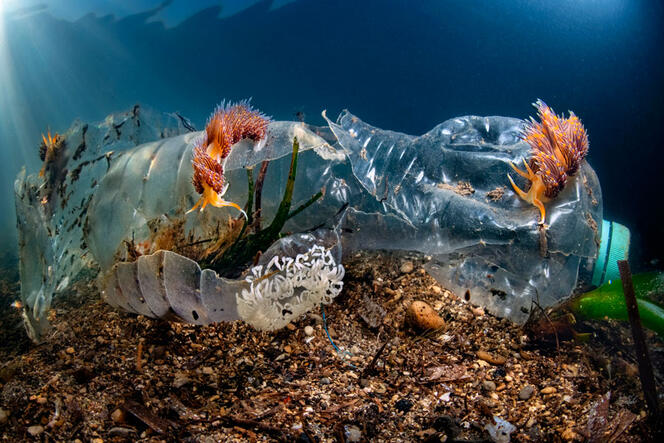
Although images of plastics drifting in the ocean are familiar the world over, those showing soil polluted by these petroleum derivatives are much less so. Yet soils are at least as contaminated as the oceans, with an estimated total mass of pollutants of over ten million tonnes.
And this pollution knows no borders. Agricultural and urban environments, where human activity is most intense, are obviously the most severely impacted. However, wind-blown microplastics (invisible to the naked eye) are found in remote deserts in Asia and on the peaks of the Himalayas. In France, a study carried out in 2024 on some forty different soil samples found no less than 250 kg of plastic per hectare.



Consumers are in no way to blame for this little-known pollution. According to the hydrologist Bruno Tassin, a member of the collective scientific assessment and senior researcher at the ENPC2, this worldwide contamination results "from multiple human activities, both in urban areas – for example, the breakdown of plastic textiles in washing machines – and in agricultural environments".
Put another way, the pollution goes from farm to fork. Tassin is categorical: "Plastics, which are external to all biogeochemical cycles, and to all intents and purposes endowed with an almost infinite lifespan, have no place in the environment, for which the only acceptable limit is zero plastic! " ♦
See also
Recycling using supercritical fluids
- 1. Complete list on https://hactoendplasticpollution.org/
- 2. Ecole Nationale des Ponts et Chaussées.
Explore more