

You are here
Articles

0 comments
In April, the researchers involved in the French-Chinese SVOM space mission presented an update on its initial findings. These provided a number of interesting insights into events that took place in the very earliest days of the Universe. CNRS News takes a closer look.
Recent %1s
Article
06.19.2017

Today’s domestic cat is a descendant of the wildcats that inhabited the Middle East during the Neolithic age. Researchers at the Institut Jacques Monod have retraced its genetic footsteps for the...
Article
06.12.2017

The world now hosts more than thirty megacities—cities with more than 10 million inhabitants—a figure expected to reach fifty by 2050. CNRS researchers look at this important trend and its effects on...
Article
06.09.2017

Cheaper than satellites, stratospheric balloons can carry telescopes up to altitudes of 40,000 meters, enabling researchers to observe the Universe. They recently completed a mission over Australia...
Article
06.08.2017
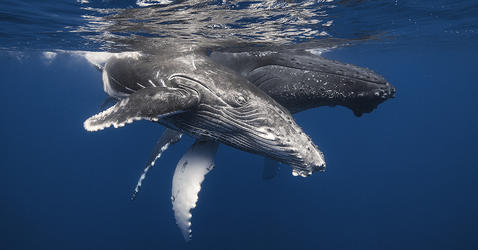
A fossil study brings us one crucial step closer to retracing the evolution of the auditory capacities of cetaceans, the mammal group namely comprising whales. An issue that intrigues scientists as...
05.29.2017
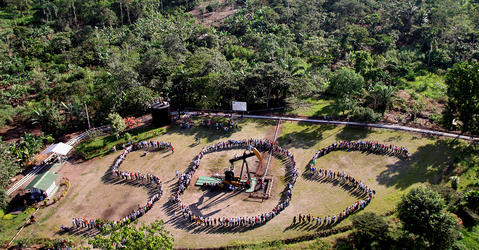
Faced with the many forms of damage caused by pollution and climate change, a growing number of legal and civil society initiatives around the world are feeding into the development of genuine...
Article
05.25.2017
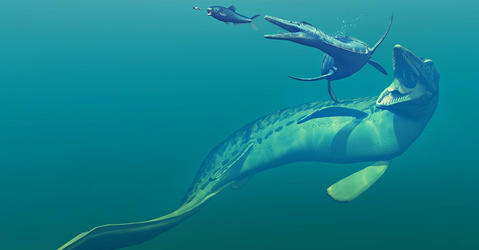
Geochemists and paleontologists have cracked the secrets sealed in the calcium isotopes of fossil teeth to reveal why many large marine reptiles vanished from the Earth’s oceans during the mass...