
You are here
Live from Mesopotamia, 4,000 years ago

Their names were Suhkana, Kunnaniya, Lamasha or Hattitum. They were wives, widows, cattle breeders, accountants or religious devotees, and they lived in Mesopotamia – 4,000 years ago. Archaeologists have found thousands of letters written on clay tablets. The messages sent or received by these women convey their emotions, their anger, fatigue, enthusiasm or anxiety.
The historian and archaeologist Cécile Michel, a senior researcher specialising in Mesopotamia at the ArScAn1, has compiled the oldest private correspondence in the history of humanity. And has sorted out part of it to allow us to walk in the shoes of some 30 women, sharing their daily lives.
Merchant families
In Ashur (present-day Qal’at-Sherqat, in northern Iraq) and Kanesh (present-day Kültepe, in Turkey, see map below) lived families of traders, whose members sometimes took off for several months, travelling hundreds of kilometres from home to sell fabrics, oil, tin, spices… “There were about 10,000 people living in Ashur at the beginning of the second millennium BC and 30,000 in Kanesh, forming the core of a network of about 40 Assyrian trading posts in Anatolia,” the researcher explains.
The only way to keep in touch with loved ones, to oversee the construction of a house or a family’s daily life from a distance, was by writing. These populations mastered cuneiform script, using the tip of a reed to etch characters into tablets of wet clay. The tablets were then placed in clay envelopes, closed and stamped with a small cylinder seal that identified the sender.


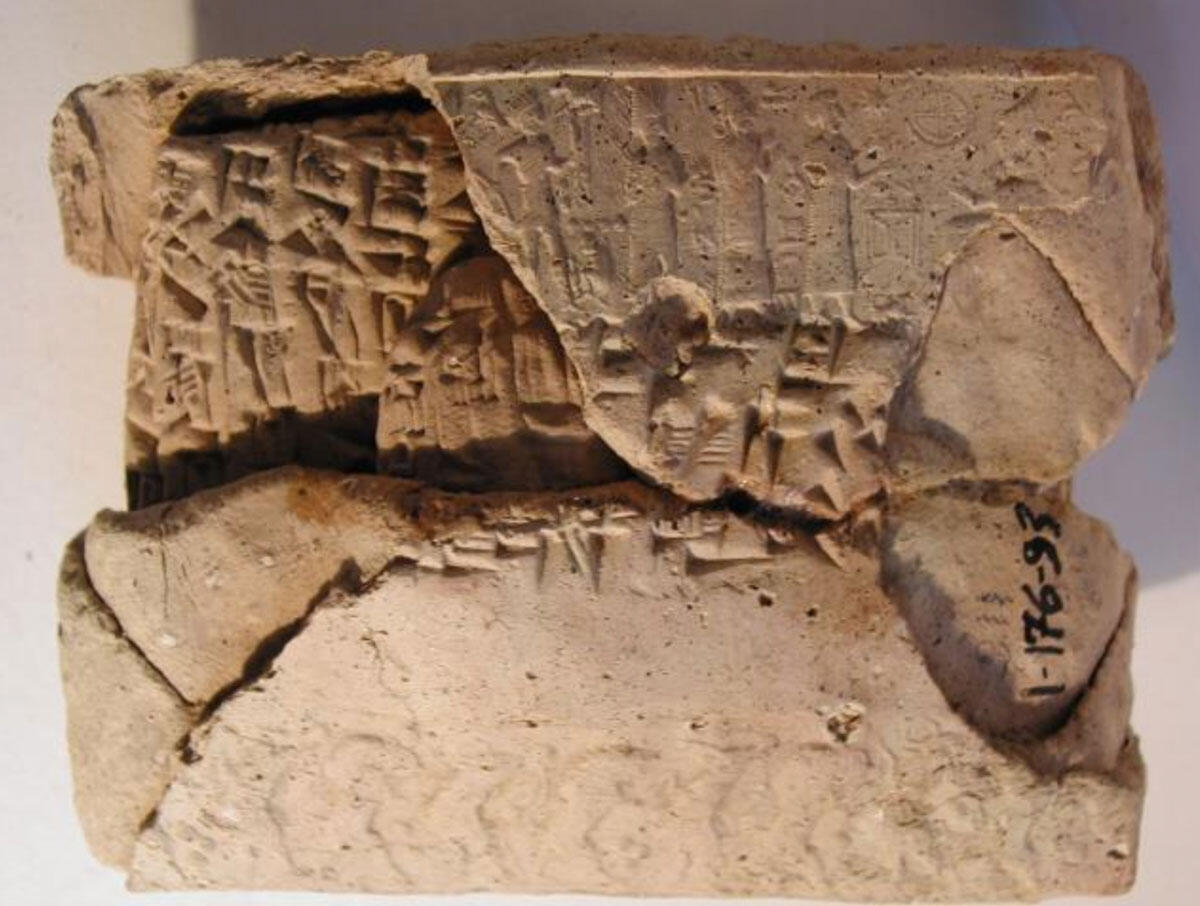
“Wrapped in leather or cloth, they were transported on the backs of donkeys,” Michel recounts. “A regular caravan took about six weeks to cover 1,000 kilometres. For urgent matters, it was possible to hire a private messenger with a mule who could deliver the mail in three weeks.”
A very modern social and economic system
The scientist has helped decipher 12,000 of the 22,000 tablets found at the Kanesh site. In a society based on trade, a great many of the messages concern money and merchandise. For example, a woman named Shishahshushar received this note from her husband: “Why did you write this: ‘Apart from 20 sacks of wheat and 15 sacks of barley that Kudubis gave me, there is nothing else!’? Where are the 40 minas2 of copper in the form of sickles and the 2.5 minas of tin that Ili-ishar and Huluba brought to Shana? This is urgent! Send me a report if they fail to get payment for the outstanding debts…”
The letters bear witness to an entire very modern-style social and economic system, which already included bearer cheques (redeemable by any adult) and limited partnerships, some of whose active associates were merchants.
“In this society, people took out many loans, for commercial purposes or personal necessity,” Michel explains. When grain reserves were exhausted and parents no longer had enough to feed their families, they would go into debt. And if they couldn’t meet the repayment deadlines, they would sometimes offer the creditor a family member, a child or woman, as a slave to discharge the debt. “When local sovereigns ascended to the throne, they would sometimes enact measures for the general cancellation of debts, freeing these slaves,” she adds.


Divorce benefits
Marriage contracts in some regions – for example in Ashur and the southern Babylonian city of Nippur (present-day Niffer, or Nuffar) – seem surprisingly modern. Husbands and wives enjoyed equal rights. Both could receive inheritances, lend money and purchase houses and slaves. Either party could request a divorce, and each would pay the same compensation fees.
One contract reads, “If Abaya divorces Adad-shamshi, he will pay her 1/3 mina of silver and must not take another wife. If Adad-shamshi divorces Abaya, she will pay him 1/3 mina of silver.”
On the other hand, in the northern Babylonian city of Sippar, women risked the death penalty for leaving their husbands. In theory, monogamy was the rule, but merchants who spent long periods away from home were permitted to take a second wife, provided that she never met the first wife.
“Turn towards Ashur, your god, and your home”
Some of the letters are quite moving, especially those that reflect the solitude, both material and emotional, of the women who wrote them. “When you left home, you didn’t leave me any money – not even a single shekel!” Taram-Kubi wrote to her husband Innaya. “Once you were gone there was a terrible famine in Ashur, and you did not even leave me any barley… What are these extravagances of which you constantly accuse me in your letters? We have nothing left to eat; we have every reason to complain! … After you have read my letter, come, turn towards Ashur, your god, and your home, and that I may see your eyes while I am still alive!”
The dozen letters written by Taram-Kubi to her husband and brother make it possible to retrace the life of a woman from a family of six children who had at least five sons, one of whom still lived at home with her. She discusses many topics reflecting the concerns of the Assyrian women left alone in Ashur, who had to run their households, manage their absent husbands’ interests, pay the taxes that came due, and fulfil their families’ religious obligations.
Her correspondence reveals her husband’s progress in the lapis lazuli trade, and her worries about the authorities’ threat to levy such high taxes that she would end up selling her own jewellery to avoid trouble for her husband – whom she never saw again, as it happened, because Innaya died in Anatolia.


Different levels of writing
“These women probably wrote their own letters, without calling on the services of a scribe,” Michel notes. “There were three levels of writing. The scribes mastered rare types of symbols, which are found perfectly formed in straight, regular lines.” A second level reflects writing skills acquired at home, passed down from generation to generation; and at the third level researchers recognise writers who learned “on the job”, using fewer characters, marked in a simple, sometimes disorderly manner.
“Most of the letters are written in this way, in a very direct spoken style – and are more difficult to translate because they don’t always follow the rules of grammar,” the researcher reports. “We have tried to capture this tone by using lots of exclamation marks. In any case, reading, writing and arithmetic were widely taught in these societies.”
Kilim weavers
This cuneiform correspondence is also a trove of information about activities like agriculture, livestock breeding and weaving. Puzur-Assur sent an apprentice weaver named Waqqurtum full technical specifications for weaving a 4 x 4.5-metre piece of Kutanum-type woollen fabric. A survey carried out in the 2010s revealed that the kilim rug weavers of Cappadocia and Jordan, who work today on traditional vertical looms like those used in ancient Assyria, still use the same procedures and techniques.


In addition, based on an experimental archaeology project, it has been estimated that to obtain the 2.5 kilogrammes of wool yarn needed to produce a Kutanum-type textile, it took about 20 days to clean and prepare the wool, plus 3 months to spin the 36 kilometres of yarn! A family in Ashur produced 25 such pieces of cloth per year – which is exactly the number of kilims woven by the women interviewed by the 21st-century archaeologists.
Some letters, still enclosed in their envelopes, are deciphered using a portable tomographic scanner that can be set up in the museums where the tablets are kept. This instrument makes it possible to see through the first layer of clay, and to read life stories now immortalised for all of history.
For further reading
Quand les femmes écrivaient l’histoire – Entre la Mésopotamie et l’Anatolie il y a 4 000 ans (When Women Wrote History – Between Mesopotamia and Anatolia 4,000 Years Ago), Cécile Michel, pub. Seuil, 392 pages, 2026 (in French).
Video
Thus speaks Tarām-Kūbi, Assyrian Correspondence (CNRS Images)
Deciphering cuneiform writing

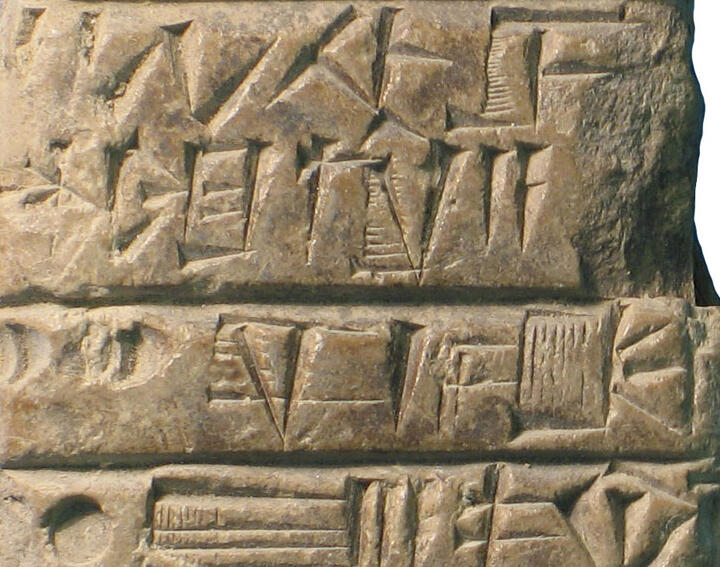
Cuneiform (wedge-shaped) writing was invented by the Sumerians in the second half of the 4th millennium BC and used to record a dozen different languages (Akkadian, Hittite, Old Persian, etc.). In this originally logographic (and later syllabic) writing system, each symbol designates a word. There are no punctuation marks or breaks between syllables and words. The story of its decryption is an adventure unto itself.
The scholars of the 19th century, like Jean-François Champollion, worked on trilingual texts. But while the Rosetta Stone3 has three different languages and three different scripts (hieroglyphic Egyptian, demotic Egyptian and Greek), the three languages inscribed on the clay tablets to be deciphered all used cuneiform characters. In the 19th century, four scientists, at once colleagues and rivals, set out to decipher this script: two Britons, namely Henry Rawlinson, a soldier and diplomat, and Henry William Fox Talbot, a mathematician, physicist and philologist; Jules Oppert, a German Jewish scholar living in France; and Edward Hincks, a vicar from a small town in Ireland.
After years of work, all four philologists received a copy of a text that none of them had ever seen, prepared by a commission. They were given two months to submit, under seal, their respective English translations. All four versions matched. And that is how Akkadian cuneiform was officially decrypted, on 25 May, 1857!
See also
The Arabian desert reveals long-hidden jewels
- 1. Archéologies et Sciences de l’Antiquité laboratory (CNRS / French Ministry of Culture / Université Panthéon-Sorbonne / Université Paris Nanterre).
- 2. The mina and its subdivision, the shekel, do not have quite the same value in Mesopotamia and in Anatolia. In Mesopotamia, one shekel is worth about 8.3 grammes and the mine 60 times more, i.e. about 500 grammes. In Anatolia, one shekel is worth 11.5 g and the mine 40 times more, i.e. 470 grammes.
- 3. https://tinyurl.com/pierre-rosette
Explore more