
You are here
How the piano set the world in tune

Rio de Janeiro, 1862. In the engraving shown above, six slaves (recognisable by their being barefoot) carry on their heads a grand piano weighing more than 600 kilogrammes – very likely a Pleyel or a Gaveau. This scene, which seems incongruous to us today, is emblematic of a flourishing trade at the time, when pianos were exported all over the globe.
From the harpsichord to the fortepiano
During her year-long residency at the Musée de la Musique in Paris, Anaïs Fléchet1, a professor of contemporary history, set out to investigate the little-known history of a symbol of European civilisation – an instrument embodying social, racial and gender hierarchies that very quickly found its place in patriarchal, largely slave-owning societies. Against the background of the triumph of European imperialism in Africa and Asia, as well as Europe's economic and cultural domination in Latin America and the Caribbean (once called the “Velvet Empire”), the piano became firmly established and, in the process, “tropicalised”.
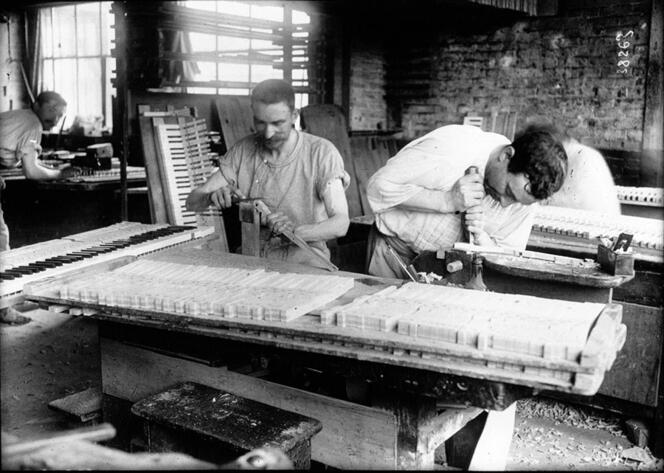

But when was this instrument invented? In the early 18th century, at a time when the harpsichord had reigned supreme in the aristocratic salons of Europe since the 15th century, an Italian named Bartolomeo Cristofori became dissatisfied with its lack of volume control. He replaced the mechanism that plucked the strings with hammers that could strike them with different intensities. The fortepiano was born, taking its name from the loud-soft modulation (forte or piano in musical terminology) made possible by these hammers.
“The two instruments, harpsichord and piano, coexisted at least until the French Revolution of 1789, with the transition from the former to the latter taking place during the second half of the 18th century,” explains Thierry Maniguet, a curator at the Musée de la Musique. “The piano’s popularity then spread throughout Europe, making it the king of instruments, especially in bourgeois society, in the 19th century.”
The birth of the great piano makers
At first, pianos were manufactured mainly in England (by the German Johann Christoph Zumpe and the Scotsman John Broadwood), then also in France by Sébastien Érard (1752-1831), followed by his competitors Ignaz Pleyel (1757-1831), Jean-Henri Pape (1789-1875), and later Joseph Gabriel Gaveau (1824-1899) who founded his manufacture in 1847. Érard built a true empire: by the mid-19th century his company had two factories, one in Paris and the other in London, producing some 2,500 pianos per year.

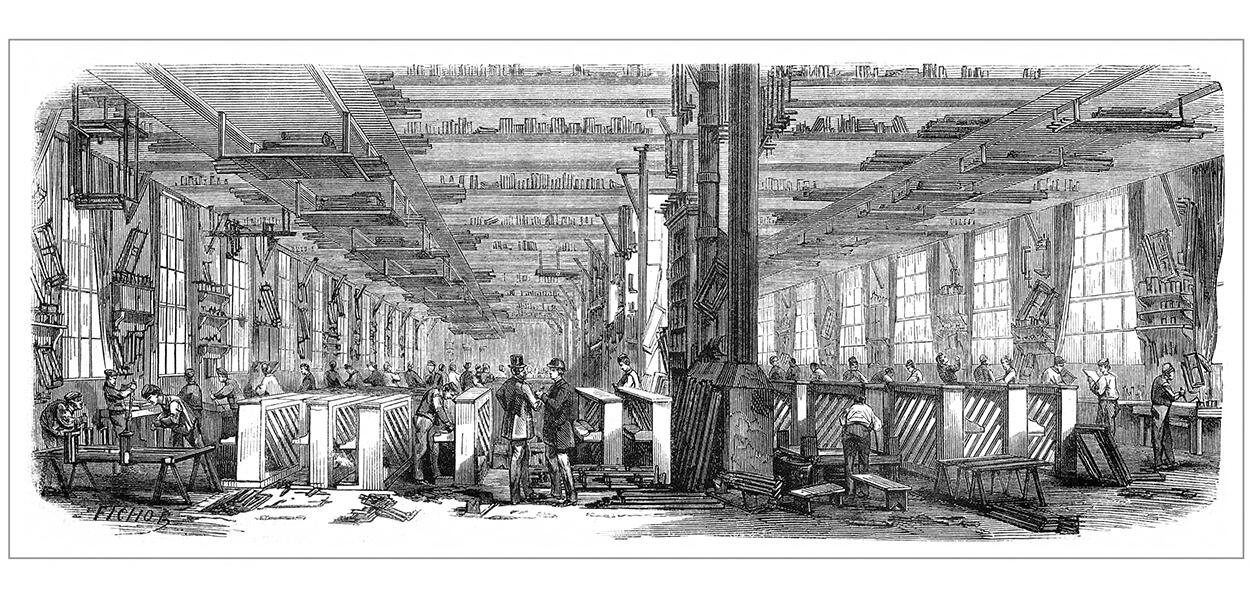
“These were vast factories, with hundreds of specialised craftsmen at work,” Fléchet recounts. Pleyel was located in the suburbs of Paris, along with Gaveau, which had a workforce of 350, while Broadwood in London employed nearly 600 people, excluding the administrative staff2!
In 1800, piano production totalled about 2,000 instruments per year, limiting the clientele to a happy few. But this figure rapidly increased, reaching 50,000 by 1850 and 500,000 pianos annually in 19003.
95,000 pages of archives
Fortunately for researchers like Fléchet, the piano makers kept massive ledger books recording information about each instrument they produced, including its type (spinet, upright, grand, baby grand, etc.) and the main variety of wood used (rosewood or mahogany). These ledgers also listed the names of the craftsmen for each stage of production: case-maker, keymaker, stringer, machinist, varnisher, finisher, as well as the selling price, the name of the buyer and the city of destination.
A few years ago, the Musée de la Musique acquired the ledger archives of two piano makers, Érard and Pleyel, and began digitising them. Delving into these 95,000 pages, Fléchet deciphered their records to trace the journey of these objects, which could measure up to two or three metres and weigh as much as a tonne.
Imagine them packed in huge crates, loaded onto sailing or steam ships, crossing the oceans under unpredictable weather conditions, rocked by the waves, perhaps rounding Cape Horn, making their way to destinations like Buenos Aires, Rio de Janeiro, Charleston, Boston, Montréal, Constantinople, Havana, or even Shanghai and Vladivostok…


“The industrial revolution and the resulting trade growth facilitated the expansion of the piano around the world,” Fléchet explains. “In the beginning, i.e. around 1800, pianos were exported mainly to North America, then to Latin America, but also to the North African colonies (Algeria, Morocco).”
A sign of wealth
They first took their place in the sitting rooms of the European elite, where the piano long stood as a sign of wealth. “From 1830 on, the European middle class constituted both a new audience and a new clientele,” Maniguet recounts. “The piano became a fixture of the bourgeois interior, and an integral part of the education of any young lady from a good family.”
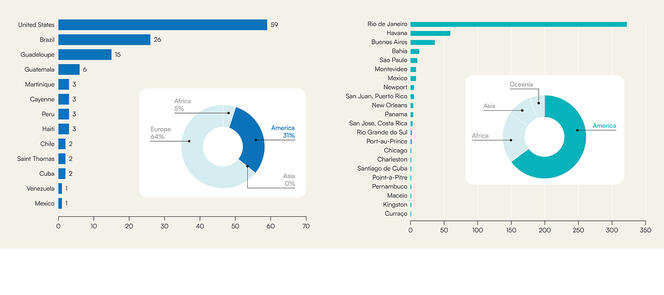


Elsewhere in the world, the piano also migrated from the living room. It spread out into the fazendas of Brazil, the theatres, the music halls. “In the major cities of Latin America, music stores became a popular meeting place,” Fléchet adds. “The elite came to buy instruments, listen to music, chat and be seen. Piano merchants were also score publishers and concert organisers, selling music on the ground floor and holding court upstairs. They hired pianists to play the new fashionable music, including opera score reductions, waltzes and polkas, as well as tangos, habaneras and popular songs.”
Little by little, the piano became a relatively “ordinary” possession – as evidenced by a classified ad in a Brazilian newspaper in which an offer to purchase this instrument features between an advertisement to sell slaves and a wanted notice for a runaway… In the United States, the piano ensconced in the middle of the saloon became an emblem of the conquest of the West.


An apt illustration of globalisation, the piano could be found virtually everywhere on the planet and its component materials came from all over the world. Rosewood, American walnut, mahogany, thyine, French walnut, pear, maple, tulip tree, hornbeam, sycamore… Many varieties of wood were used, some to decorate instruments that have become true collector’s items. The black keys were covered with ebony imported from Africa and the Indian Ocean, while the white keys were veneered with ivory from African elephant tusks. The piano united a great many raw materials resulting from colonial exploitation.
The race for innovation
The instrument was also the focus of a heated race for innovation among the different brands, driving its evolution into its current form. Progress was made, on the one hand, in response to the demands of performers who wanted a more refined action as well as more powerful pianos for ever-larger concert halls. “On the other hand,” Fléchet says, “a great many patents were filed to bolster the instrument’s resistance to the stress of transport and climatic variations.”
In the southern United States and Latin America, high humidity levels damaged the wood. In Canada, the dry heat of living room stoves during the winter had an equally detrimental effect. This gave rise to a demand for “tropicalised” pianos, to use a term found in the French manufacturers’ archives.

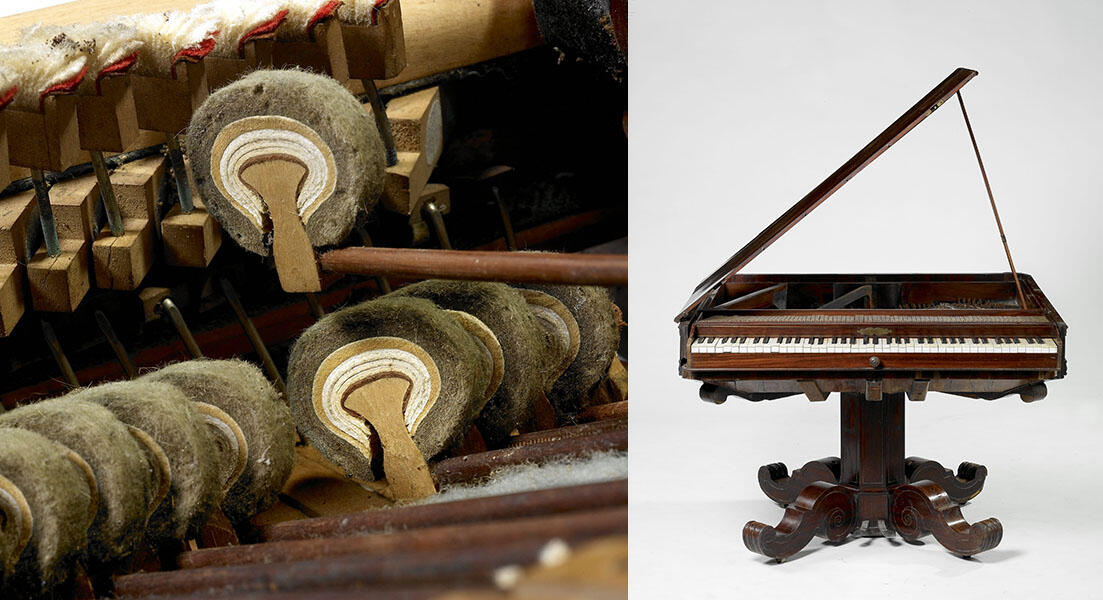
The evolution of the piano also benefited from fast technical progress in industrial sectors such as metallurgy and textiles. Initially, the Érard company took the lead by inventing the “double escapement” piano4 in 1820 to 1823. This mechanism allows a note to be easily replayed even when the key has not yet returned to its original position, making it possible to play faster.
Although Ignaz Pleyel remained faithful to the “single escapement” action, in 1826 he began equipping his instruments with iron frames, which are more moisture-resistant, and pinblocks with copper tuning pins.
“In the lands below the level of the Mississippi River, the lifespan of a piano was estimated at three years. But now we have seen that Pleyel, using a new metal fittings system, has succeeded in making instruments that hold their tune as though in the temperature conditions of any sitting room,” reported an article in the Panorama de l’Industrie Française in 1839.
Strings and pedals
Jean-Henri Pape (1789-1875) filed 137 patents for the piano. He replaced the copper lining of the hammers with felt (sheep’s wool or in some cases rabbit), thus improving the harmonisation of the instrument’s timbre when a note is struck. He also modified the crossing of the strings, stretched diagonally with the lower-pitched ones placed above the level of the other strings to increase their length.
John Broadwood invented the sustain pedal, which raises the dampers of all the strings, allowing the notes to continue vibrating even when the keys are no longer held down – a revolution in the history of the piano! And starting in 1867, the American company Steinway introduced cast iron frames that were particularly resistant to all temperatures.


Even with so many manufacturers striving to perfect the instrument – increasing its range (the number of keys expanded from five to eight octaves), improving its touch, making the sound more uniform – it never became truly standardised. A wide variety of pianos coexisted. And each brand had its “champion” performers to promote it: Chopin and Ravel for Pleyel, Liszt, Haydn and Beethoven for Érard, and Dussek for Broadwood.
Musical diversification
The dissemination of the piano allowed European music (waltzes, polkas, operettas, etc.) to spread throughout the world. But it also spawned new genres, in particular African-American, that adapted and transformed the way the instrument was played. One example is the cakewalk5, a dance that first appeared on plantations in Florida in the 1850s, and gave rise to the early ragtimes, the precursors of jazz.
The exchange went both ways. Ragtimes later appeared in the works of various Western composers, including Claude Debussy, who wrote Golliwogg's Cakewalk for piano in 1908, and Igor Stravinsky, who composed a ragtime for eleven instruments in 1917.
In the early 19th century, makers also invented pianos adapted to Arabic music6 on which the intervals were not limited to semitones, but could include quarter tone. The Egyptian Naguib Nahas made a piano on which the white keys were combined with three superimposed rows of black keys, and George Samman developed a mechanism for switching the keyboard between Western and Arabic tuning modes as desired.
The decline of the French piano makers
In the 20th century, more and more amateurs began playing the piano as its purchase and rental prices became more affordable. “The golden age of the French piano lasted until World War I,” Maniguet recounts, “but increasing competition from the United States, starting in the second half of the 19th century with Steinway and Chickering7, marked the beginning of the French decline.”
The adventure of Steinway & Sons, an American brand that has become an icon for concert performers, began with the German immigrant Heinrich Engelhard Steinweg (his name was Americanised in 1864), who “secretly produced his first grand piano in the kitchen of his house in 1836”, according to the company’s website.


“Part of Steinway’s success comes from the fact that the company pursued a particularly aggressive commercial strategy throughout the 20th century,” Maniguet says. Starting in 1857, Steinway launched a very lucrative line of decorative (“Art Case”) pianos designed by well-known artists, which became popular among the rich and famous of the day. Its concert pianos gradually took over the world. By 1900, the two Steinway & Sons factories, one in Manhattan (New York) and the other in Hamburg (Germany), were producing more than 3,500 instruments per year.
The war, a turning point
During World War II, Steinway manufactured a special upright model (the “Victory Vertical”) whose ultra-lightweight design made it easier to transport – or even to parachute! – to the European front in order to boost troop morale.
Further competition from Japanese Yamaha pianos, followed by many other Asian brands, especially from South Korea, finally edged the European manufacturers out of the market. After the war, the three biggest French houses (Érard, Pleyel and Gaveau) joined forces as the Grandes Marques Réunies to survive, but were ultimately forced to close their factories. The next to fall was the market for acoustic pianos, decimated by rising sales of cheaper and less cumbersome digital pianos.
“From a broader perspective, the piano was not the only instrument to have spread rapidly in the vast realm of what the textbooks of pre-WWII France called ‘the world minus Europe’,” Fléchet notes. “Just think of the saxophone, the accordion… But for a long time, very little research had been conducted on the history of the world embodied in the instrument (the origins of its component materials) and of the instrument in the world, i.e. its contribution to the interconnection of different cultural spaces.”
The new presentation of the collections of the Musée de la Musique in Paris, highlighting the connections among the musical traditions of different cultures, embraces this new way of understanding the history of instruments. ♦
For further reading
Do algorithms keep playing the same old song?
The sound of Palaeolithic music
- 1. Anaïs Fléchet is a researcher at the LinCS laboratory for interdisciplinary cultural studies (CNRS / Université de Strasbourg), and a professor of contemporary history at Sciences-Po Strasbourg. Her research on exports of French pianos in the 19th century was conducted as part of a programme of residencies for academics in laboratories and museums.
- 2. See https://www.lieveverbeeck.eu/Broadwood_Expositions.htm
- 3. https://www.radiofrance.fr/franceculture/podcasts/40-objets-de-la-mondia... (in French).
- 4. An escapement is a mechanism in which, after the pianist strikes a key, the hammer quickly falls away from the string without stopping its vibration. The double escapement mechanism, introduced by Sébastien Érard in 1821, allows the hammers to reposition themselves quickly after striking the string, making it easier to play repeated notes with unprecedented speed.
- 5. A dance in which slaves parodied the haughty gait of their white masters, so called because in competitions the best dancer was awarded a cake.
- 6. Unlike Western music, Arabic music does not use the tempered scale, but rather the natural scale, enabling a completely different interpretation of the scale of notes within an octave and their relationships (intervals). Consequently, some intervals in these modes are smaller than the Western semitone. The most common of these corresponds to three-quarters of a tone, but there are also intervals of one-ninth, four-ninths and five-ninths of a tone.
- 7. Chickering: a now defunct piano company founded in Boston (USA) by Jonas Chickering in 1823.
Explore more