

You are here
Slideshows

0 comments
In 2015, archaeologists unearthed a unique artefact in Iraq: a kiln comprising two interconnected chambers dating from the Chalcolithic (7000 to 5000 BC). To find out how it worked, they decided to build a replica – with surprising results.
Recent Slideshows
Slideshow
07.12.2024
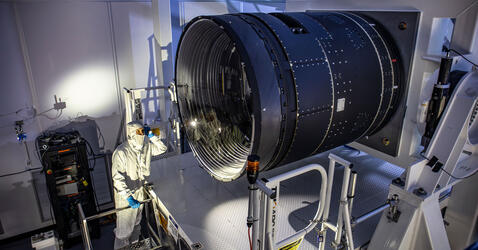
It took hundreds of scientists worldwide, including several CNRS teams, to produce the world’s largest digital camera, the LSST (Legacy Survey of Space and Time), which has finally arrived in Chile....
05.27.2024

Posture, behaviour, preparation… Everything that athletes do is of interest to science. For the Paris 2024 Olympic Games, the CNRS is pulling out all the stops to support the French competitors. The...
04.26.2024
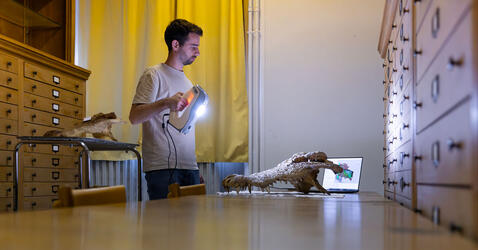
A massive asteroid struck the Earth 66 million years ago, dramatically affecting marine and terrestrial environments, and causing the mass extinction of numerous animal and plant species. The...
Slideshow
03.08.2024

Malaria affects more than 247 million people throughout the world and may have caused up to 620,000 deaths in 2021. Under the ROAdMAP project¹, Ana Gomes and her team at the Laboratory of Pathogens...
01.18.2024

For the fifth edition of the LPPI “Proof in images” photo competition, first launched in 2019 by the CNRS and its Canadian partner, Acfas, researchers were invited to submit their best science-...
10.27.2023

European hamsters, declared critically endangered since 2020, have seen three quarters of their global population disappear in the past 50 years. Intensive cereal monoculture has been identified as...