

You are here
Slideshows

0 comments
In 2015, archaeologists unearthed a unique artefact in Iraq: a kiln comprising two interconnected chambers dating from the Chalcolithic (7000 to 5000 BC). To find out how it worked, they decided to build a replica – with surprising results.
Recent Slideshows



10.27.2023

European hamsters, declared critically endangered since 2020, have seen three quarters of their global population disappear in the past 50 years. Intensive cereal monoculture has been identified as...
Slideshow
05.25.2023
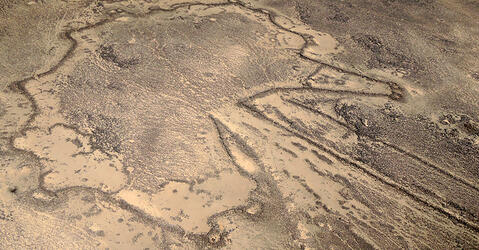
Engraved on stones and dated to 8,000 and 9,000 years ago, the oldest known plans to scale have recently been published in the journal PLOS ONE. They depict gigantic prehistoric structures known as “...
Slideshow
03.24.2023

An increasing number of women are outperforming men in very long ultra-trail races. Do they enjoy better endurance and muscle recovery? Should they be offered different training to reach their full...
01.26.2023
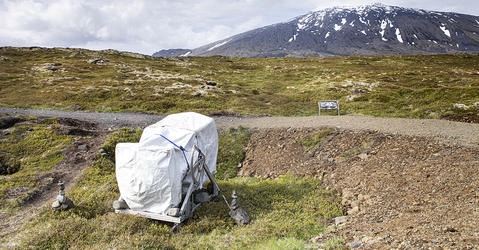
CNRS News takes you on a trip to the foot of Snaefellsjökull, a volcano in Iceland close to the heart not only of French writer Jules Verne but also of the researchers at the Institute of Physics of...
Slideshow
11.21.2022

Nestled at the heart of the French national museum of natural history (MNHN) in Paris, the Communication Molecules and Micro-Organism Adaptation (MCAM) laboratory, a joint CNRS-MNHN unit, is home to...
11.10.2022
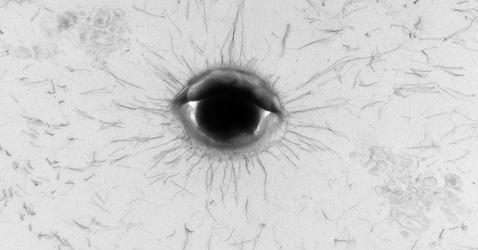
The 2022 edition of the LPPI “Proof in Images” competition is here. Discover these winning photos from research, organised by the CNRS with Acfas, its Canadian partner. You can vote for your...