
Surrogacy in keeping with Chinese tradition
You are here
 Lire en français [2]
Surrogacy in keeping with Chinese tradition
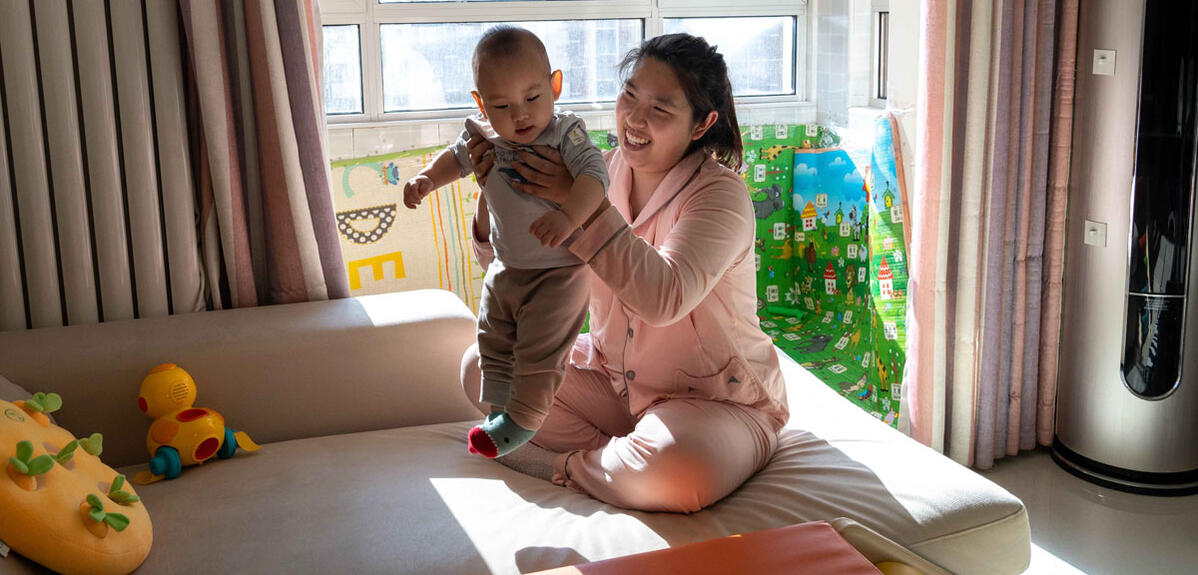
In what context is surrogacy, which enables a woman to bear and deliver a child for another person or a couple (called the 'intended parents'), practised in China?
Renyou Hou1: We have observed that the practice of surrogacy in China is gradually developing, both through domestic channels, within the country, and transnationally. Of course, we do not have access to the official number of Chinese children born to surrogate mothers. However, as a general indication and according to my sources in the field, there are more than 400 agencies in the country now offering this service, at least half of which are located in Guangzhou (Canton).
Still, surrogacy remains illegal, as does the commercialisation of eggs and sperm. Artificial insemination and in vitro fertilisation (IVF) were legalised on 1 August, 20012, but only for married heterosexual couples. In response to the growing demands of the homosexual population and infertile heterosexual couples, especially those whose only child has died (representing more than a million people) or those for whom IVF is ineffective due to their age, an underground surrogacy market has been expanding rapidly, primarily through these agencies.
In fact, the enforcement of the ban is limited. First of all, it mainly targets medical establishments and personnel, and not the intended parents. Secondly, private clinics and agencies that violate the law are issued a relatively small fine, totalling less than 30,000 yuan (about €4,000). This is not much of a deterrent compared with the cost of the procedure, which ranges from €40,000 to more than €100,000.

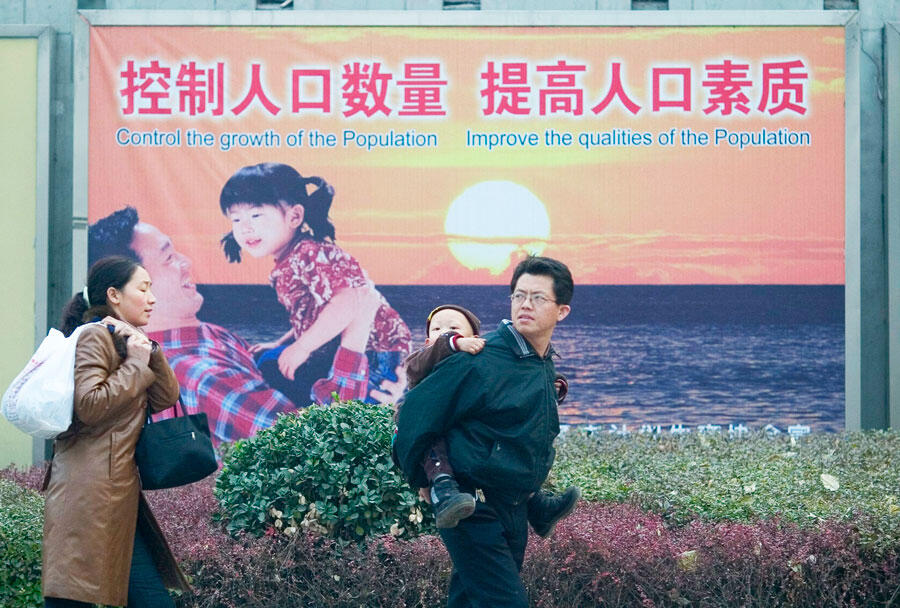
Would it be fair to say that for the Chinese government surrogacy crystallises contradictory issues regarding the birthrate?
R. H.: Indeed. After the repressive one-child period (1979-2015), the country’s demographic policies have evolved towards promoting childbirth. In 2016 the Standing Committee of the National People's Congress (NPC), China’s highest legislative body, approved a constitutional amendment to the Population and Family Planning Law allowing couples to have two children.
Then, on 31 May, 2021, the three-child policy was implemented, just a few weeks after the publication of the latest ten-year census. Indeed, with an overall fertility rate assessed at less than 1.3 children per woman, fecundity in China is well below the replacement level, usually estimated at about 2.1 children per woman. Several factors have been put forward to explain this decline: people waiting longer to marry, economic and financial constraints that make couples less willing to have more than one child, and rising infertility [9].
In China, the evolution of demographic policies has also been accompanied by the development and more widespread recourse to reproductive medicine. For example, during the one-child policy period, the use of ultrasound and abortions contributed significantly to the decline in the birthrate.
Today, now that the country’s policies rather tend to encourage childbirth, it seems quite surprising that the regulations regarding assisted reproductive technology (ART) and surrogacy have not been updated since 2001, and that access to ART is still very difficult for single women (lesbian or heterosexual). This discrepancy is an especially interesting point to be analysed as part of the DouMotherChina project.

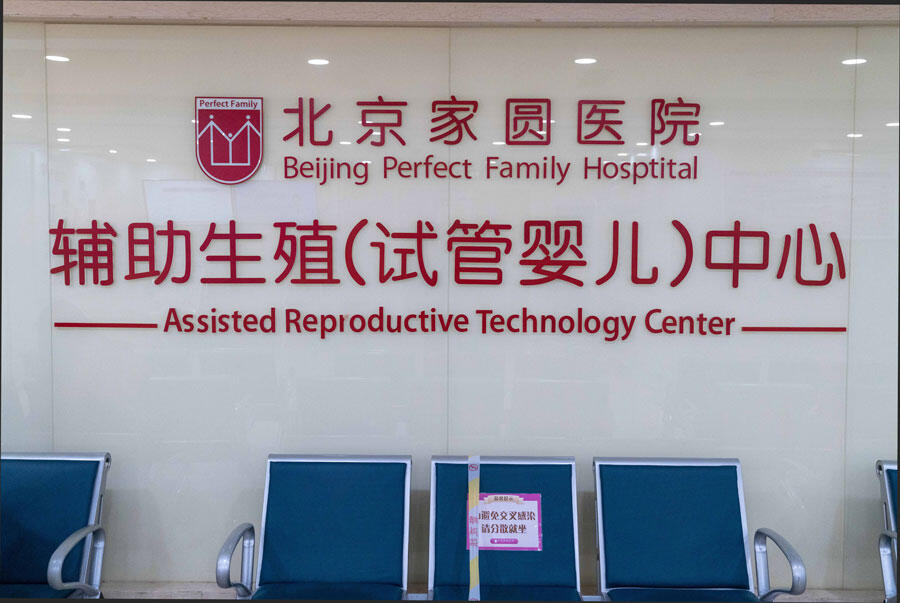
In your opinion, why is China hesitant to change its laws governing ART, and surrogacy in particular?
R. H.: For the Chinese authorities, legalising surrogacy and ART for everyone runs the risk of challenging the inviolable link between heterosexual union and filiation on the one hand, and patrilineality on the other.
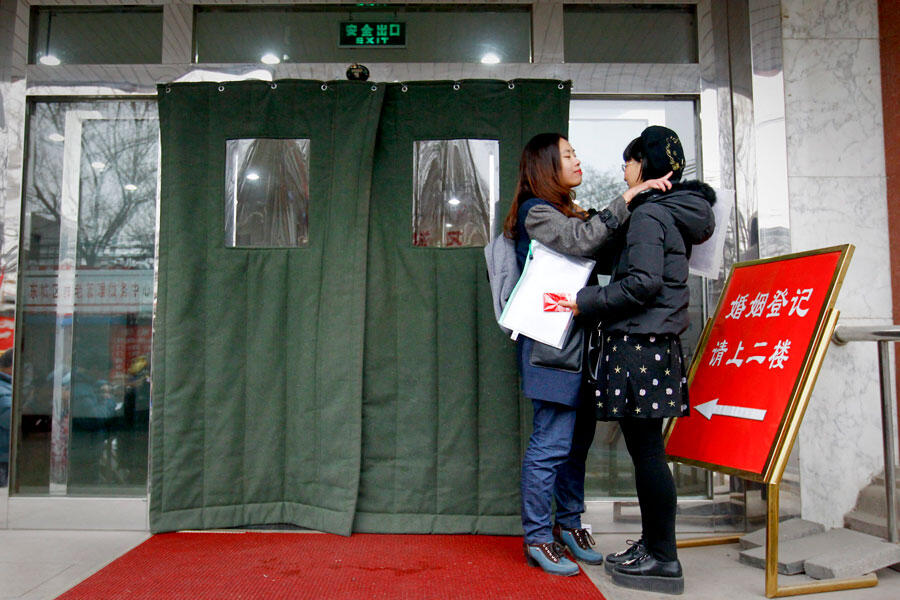
As of today, marriage is considered the only legal framework for generating progeny, establishing filiation and passing on one’s family name. In other words, matrimonial union and filiation are two indissociable facets of the kinship system in China. However, with ART, single women and homosexual couples can become parents without the prerequisite of marriage – which in any case is not authorised for gays and lesbians.
Furthermore, the Chinese kinship structure is traditionally patrilineal. The name and inheritance are handed down through the father, and by convention the children are members of the paternal family. In the classic model, when a woman marries, she must leave her family of origin and abide by the principles of patri-virilocality – she goes to live with her husband’s relatives.
Now things are starting to change. Neolocality, meaning that couples settle in their own independent marital homes, is gradually emerging. ART practices among lesbian couples and single women are also transforming the standard family model, allowing women to take the initiative in reproduction without being dependent on the male gender or the institution of marriage.
These initiatives and practices could challenge the ancient kinship system and the Confucian androcentric view, according to which women’s bodies can be seen as an ‘instrument’ for the perpetuation of the patrilineal continuum.
One key question is whether lesbian parenthood reconfigures the principle of patrilineality, and to what extent. In the DouMotherChina project, we will conduct a maternity survey among lesbians and single mothers to find out how a maternal lineage functions within these new familial and marital structures.


And yet, you show – and this is one of the focuses of DouMotherChina – that ART practices in China, especially surrogacy, fit into a kind of historical continuity.
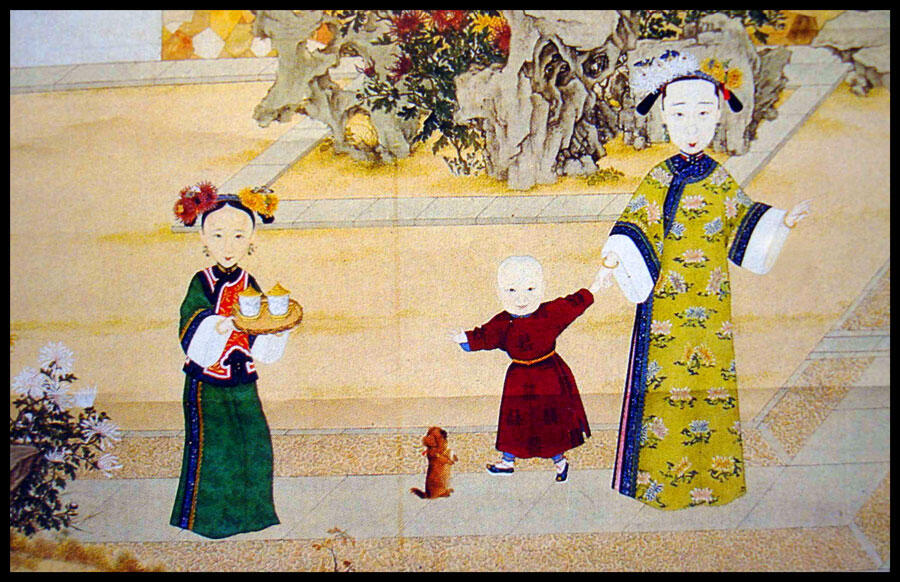
R. H.: Absolutely, and this is an important specificity: the involvement of more than two people in the reproductive process is nothing new in China. Various forms of surrogacy were even quite common in imperial China (before 1911) … especially in the polygynous marriage system, which continued until it was banned in 1950.
In these polygynous families, a man could have one ‘primary wife’ and several ‘concubines’. In social terms, the primary wife was considered to be the mother of the children born to the concubines and enjoyed higher status within the family than their biological mothers.
At the same time, adoption and the circulation of children were also widely practiced, for the purpose of perpetuating the patrilineal lineage. Within an extended family, a couple that had no children might adopt one of their nephews in order to have a male heir.
Unlike the traditional Euro-American family model, which has two and only two parents, strictly limited to one father and one mother, Chinese family configurations happened to recognise forms of multi-parenthood in certain situations. For example, in polygynous families a child could have both a biological mother and a social mother.
From this perspective, the act of giving birth is not necessarily the deciding factor in the definition of motherhood, unlike in Euro-American societies. One hypothesis is that in China, in the case of surrogacy, it would be easier to accept that the gestational carrier is not a ‘mother’.

However, surrogate mothers are looked down upon in China…
R. H.: Yes, that’s true. Those who do serve as surrogates usually don’t tell anyone and try to hide their pregnancy, especially from their families, even if they are married. They often come from rural areas and have financial problems. They are recruited by agencies that, as I understand it, offer them shared accommodation during their pregnancy. Agency employees come by regularly to prepare their meals and take care of them.
In China, having a child is rarely a purely personal choice, but a decision subjected to social and family pressure… To such a point that you refer to 'intended grandparents'?
R. H.: It is indeed very important in Chinese society to have a child, for reasons of legacy as well as ancestor worship. For one’s ancestors to continue to live in the afterlife, their descendants must visit their tombs, bringing them offerings, burning paper money… The question of filiation is therefore a cornerstone of family life, including for homosexuals.
In a sense, having offspring is more important than how it is conceived. Of course, it’s better if the parents have a biological link with the child, but the most important thing is that they have at least one, preferably a boy.
Another hypothesis of our project is that procreation will also take precedence over homosexuality. It is not uncommon for the agencies to receive homosexual clients who have been urged to try surrogacy by their parents, who might also pay for the ART and help care for the child after it is born. The existence of ‘intended grandparents’ as part of the procreation process for LGBT people is one of the distinctive features of the Chinese context.


Is there anti-surrogacy sentiment among the population?
R. H.: Generally speaking, public opinion in China leans toward banning the practice because it reflects deep class and gender inequalities. For one thing, its high cost makes it accessible only to the middle and upper classes. Secondly, the feminists denounce the possible exploitation of women’s bodies.
Lastly, it is interesting to note that when the subject is addressed in the official media and public debate, the LGBT population is rarely mentioned. Although homosexuality is not forbidden by the party-state, the majority of LGBT people are discreet or even secretive about it, despite the fact that, especially in urban areas, they are beginning to assert their own identities and lifestyles.
- 1. Renyou Hou is a CNRS researcher, a member of the Interdisciplinary Solidarity, Societies, Territories Laboratory (LISST) (CNRS / Université Toulouse-Jean Jaurès), and leader of the “DouMotherChina” project, whose mission is to shed light on the changes taking place in maternity and family relationships (in particular the use of surrogacy) in modern-day China. Winner of an ERC Starting Grant in 2025, the project entails an unprecedented investigation of maternity in China, at the crossroads of anthropology, history, law and literature: https://tinyurl.com/ERC-Chine [14] (in French).
- 2. To date, assisted reproductive technologies in China are governed by three regulations: the “Measures relative to the management of assisted reproductive technologies”, the “Basic standards and technical specifications for human sperm banks” and the “Ethical principles governing medically-assisted reproductive technologies and sperm banks”.
Explore more