The dispossessed who came in from the cold
You are here
 Lire en français [2]
The dispossessed who came in from the cold

At first glance, Greenland is a vast white desert. A huge ice sheet [8] covers 80% of the world's largest island, while its barren coastline is home to just under 60,000 Greenlanders. And yet it is this very same icy landscape that for several weeks sparked a serious international conflict between Europe and the United States, threatening the sovereignty of Greenland, a territory that belongs to the Kingdom of Denmark.
Like others before him, the US President Donald Trump has fallen into the trap of this "geologically fascinating land", according to the anthropologist Pia Bailleul1, author of a thesis on the island's natural resources. So what's so special about this frozen part of the world? The answer lies beneath the ice.
A wealth of resources
"You can find just about anything beneath Greenland's surface," the postdoctoral researcher explains: "Diamonds, precious stones such as rubies, heavy metals like zinc, iron and nickel, and strategic materials, including rare earths and lithium." The European Union, well aware of the Arctic island's rich resources long before the current clash with its powerful neighbour across the Atlantic, designated Greenland a critical and strategic territory for its energy transition as early as the Paris Agreement [9] in 2015, and then again in its Green Deal in 2019.
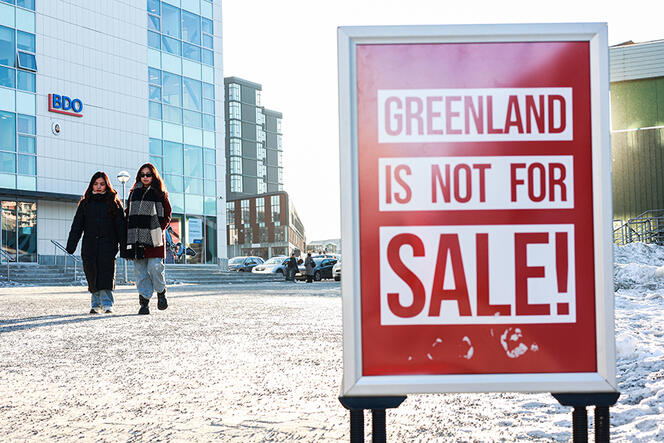

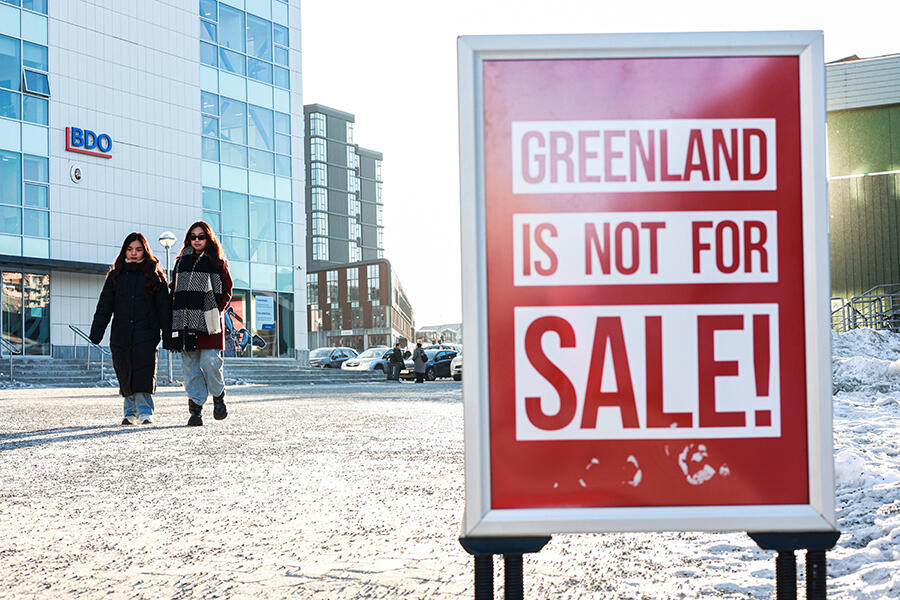
But how do Greenlanders – 90% of whom are Inuits – feel about being the centre of so much attention? Their ambivalent relationship with mineral resources has fuelled the island's independence movement for half a century. In 1979, the Greenland Home Rule Act transferred almost all the powers previously exercised by the Danish government to the territory's authorities. From then on, mining development has become inextricably linked to Greenland's quest for autonomy.
Greenland gains sovereignty over its mineral resources
The most recent change in the system of government, in 2009, saw the transfer of most remaining powers from Denmark to Greenland. Six months later, the local parliament passed Greenland's first mining law. This "granted ownership of mineral resources to the Greenlandic government, thereby recognising the island’s sovereignty over its own territory," Bailleul explains.
Nationalistic rhetoric aside, this law supports the so-called “frontier zone” commercial strategy which, since 1990, has aimed to attract foreign investors, primarily the Australian and Canadian mining giants, followed by Europe and the US, by showcasing Greenland as an under-exploited territory ripe for exploration. On the other hand, contrary to Donald Trump's claims, there are practically no signs of a Russian or Chinese presence2 anywhere on the island.
Mining, a path to economic independence?
The aim of Greenland's strategy is both economic and political. "Mining exports are destined to replace Danish subsidies, which account for up to half of the national budget," Bailleul points out. The goal, therefore, is to reduce dependence on Copenhagen.
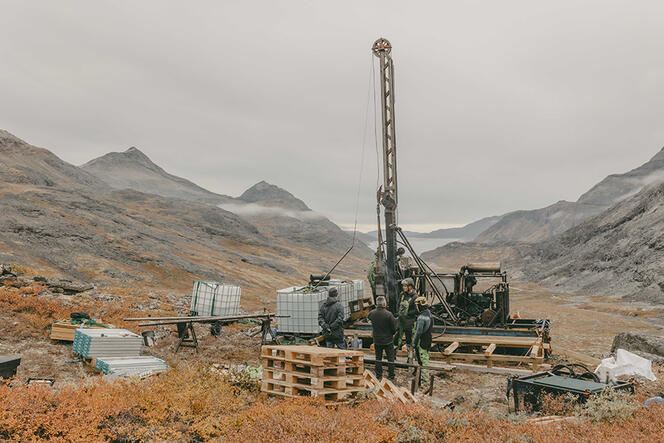

Although associated with the economic independence of the country, Greenland's mining development remains a controversial issue on the island. Its critics point to its staggering cost. To be completely free of Danish subsidies, 24 large-scale mining projects would need to be implemented, together with as many hydroelectric dams to power them, at a cost of five billion Danish kroner (nearly €670 million) each, an unprecedented sum for such facilities in Greenland3. All these projects would require extremely high, risky investments due to the thawing of the permafrost [14] (permanently frozen subsurface soil) in these Arctic regions, as well as the snow cover, aridity and geographical remoteness of the island.
Environmental issues
Consequently, it is currently "difficult to find investors, given the risks, the lack of local labour and the very strict environmental standards", Bailleul explains. As a result, the frontier zone strategy has so far only led to the opening of two mines: one for anorthosite4, in Qeqertarsuaq, on the west coast, and another for gold, in the south, which has been operating intermittently since 2004.
Opponents of mining extractivism also point to the environmental challenges of the region, which is on the front line of global warming. "In this largely undeveloped territory, every mine in operation would drastically increase greenhouse gas emissions and other forms of local pollution," the researcher confirms.
Another approach to extractivism?
These environmental issues are compounded by a strong demand for social redistribution. Refusing to see their natural resources plundered by foreign companies – as happened to so many former colonies – the Greenlanders are campaigning against major mining projects, despite supporting the principle of extractivist development.
To avoid falling under the control of mining companies, they are calling for "responsible extractivism", says Bailleul, "with mines employing no more than 200 workers, economic diversification to avoid a town becoming dependent on the mining industry, and an extractive activity serving the population, rather than the other way round".
From this perspective, Danish subsidies act as a safeguard for Greenland's sovereignty by reducing dependence on exports. According to the researcher, "Greenland is not rushing towards independence, because it can afford to take its time in developing its own autonomy."
Lands of plenty
However, Greenland's promotion of extractivism is frowned upon by its neighbours in the Arctic. "Greenland's responsible exploitation is highly unpopular with the other Arctic peoples, who have endured this North-South phenomenon for decades," the researcher emphasises.

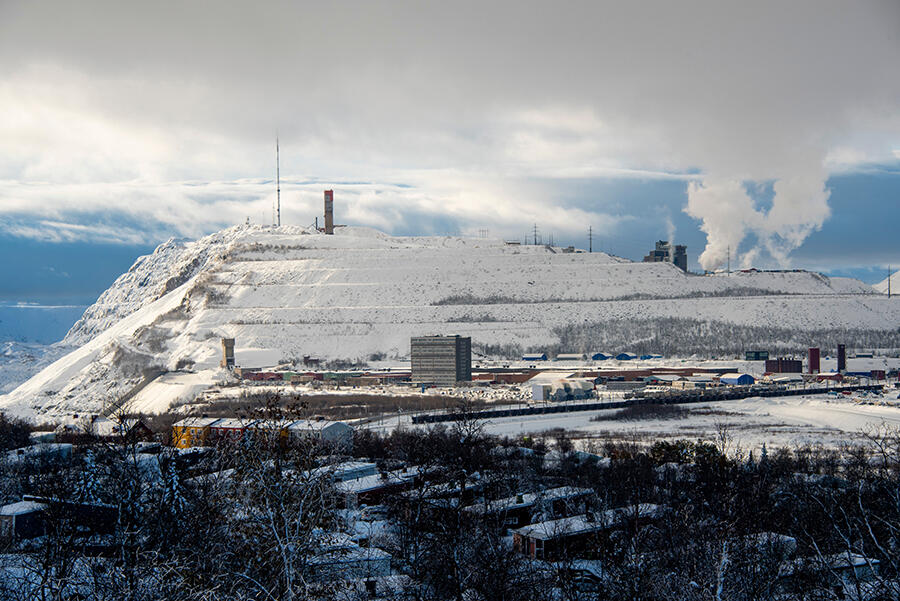
Author of a thesis on indigenous territories in Quebec and Sweden, the geographer Simon Maraud5 concurs. Like Greenland, the Arctic and sub-Arctic regions he studied for his PhD are extremely rich in natural resources, including gold, iron and lithium in western Quebec, and iron and timber in northern Sweden (where the state-owned mining company alone supplies up to 80% of Europe's iron). More recently, wind farms have also been springing up in these windy, sparsely populated regions.
The illusory wealth of the Cree
At first sight, the situation in the Eeyou Istchee James Bay territory (Quebec), where the Cree have lived for 5,000 years, resembles that of Greenland. Like the inhabitants of that island, "the Cree leaders relied on mining to make their nation one of the most prosperous in Canada," Maraud says. "And it is indeed one of the country's richest First Nations." In return for the exploitation of their ancestral territory, the Cree secured a number of jobs in the mines, as well as local training programmes and so on.
"But did they really have a choice?" the researcher asks. In fact, unlike their neighbours in Greenland, the Cree went along with the mining and hydroelectric development imposed by the provincial government, rather than choosing it themselves.


The 1970s marked a turning point: the "Project of the Century" saw the creation of nine hydroelectric dams to promote the province's energy self-sufficiency, in the process flooding Cree hunting and trapping lands, traditional burial sites and campgrounds, while excluding the Cree people from any participation in the project.
Neither for nor against
In the wake of this environmental and social disaster, the Cree began to campaign for their inclusion in the mining project. This resulted in some significant achievements, such as the signing of the James Bay and Northern Quebec Agreement in 1975, which led in particular to financial compensation for local communities.
However, "for the Cree, the issue was not whether to be for or against development, but whether or not they would be involved in it," Maraud points out. "By focusing on specific methods of mining rather than on its legitimacy, the project accepted by the Cree leaders recreated the mechanisms of colonialism."
Nonetheless, this compromise did give the indigenous nation greater influence over the region's evolution – with, for example, the Cree's categorical rejection of a uranium mining project in the 2010s.
The Sami: reindeer herders pitted against the mining giants
In Sweden, the situation of the Sami is quite different. Europe's last native people are "far more critical of mining development than the Cree, probably because they don't have the same political clout", Maraud explains. Scattered across four countries (Finland, Norway, Russia and Sweden), these reindeer herders struggle to get their voices heard by their respective governments. As a result, mines are proliferating, as illustrated by the gigantic iron excavation at Kiruna, (northern Sweden), much to the detriment of the Sami culture and economy.
In fact, ever since Swedish colonisation in the early seventeenth century, reindeer grazing lands have been steadily shrinking. The latest example is the proposed opencast iron mine at Kallak (Gállok, in the Sami language), 30 km from Lapland, a UNESCO World Heritage Site, right in the middle of the reindeer migration route. Despite local protest movements, as well as opposition from UNESCO, the Swedish government approved the project in 2022. "The Sami had no say in the matter," the geographer laments.


They now hope to oversee mining development in their territory rather than being excluded from it. "One of the Sami people's current campaigns is to acknowledge that the damage has been done and that they should therefore enjoy the economic benefits of ongoing projects on their territory," Maraud explains, "but without any new mines being opened."
Many Arctic peoples, like the Cree, the Sami, and the Inuits of Greenland, are still living under the yoke of an economic colonialism to which they subscribe willy-nilly, while at the same time endeavouring to take control of it. A paradoxical situation in which countries in the Far North clearly have their place in the Global South.
See also
Sacrificing land to oil [18]
Alaska on shifting ground [19] (video)
- 1. Postdoctoral researcher at the Sciences Po Centre for International Research (CERI – CNRS / Sciences Po Paris) and the Bruno Latour Fund.
- 2. To date, there have been two attempts by the Chinese. The first, around 2010, was part of a project that came to nothing, and a second in 2015, involved the purchase of the license of the Isukasia iron ore mining project, in the southwest of the island, but no investment followed.
- 3. See: https://vbn.aau.dk/ws/portalfiles/portal/208241864/To_the_benefit_of_Gre... [20]
- 4. Anorthosite is a rock found in fossil magma chambers on Earth that results from the fractional crystallisation of magma within them. The major economic value of anorthosite deposits lies in the presence of ilmenite, which contains titanium. Some deposits also display large amounts of labradorite, which is highly sought after, both as a semi-precious stone and as a building material. Archaean anorthosites, rich in calcium, incorporate significant amounts of alumina, which can substitute for silicon. Some deposits are mined for their aluminium ore.
- 5. CNRS researcher at the ESO laboratory (CNRS / Institut Agro / Le Mans Université / Nantes Université / Université Angers / Université Caen-Normandie / Université Rennes 2).
Explore more