
CNRS News
Published on CNRS News (https://news.cnrs.fr)

Home > Testing Pilot Whales’ Sense of Smell

Testing Pilot Whales’ Sense of Smell

You are here
Home [1]
slideshow
-A [2] +A [2]
Life [3]
Biology [4]

Testing Pilot Whales’ Sense of Smell

08.14.2017, by
Audrey Diguet [5]
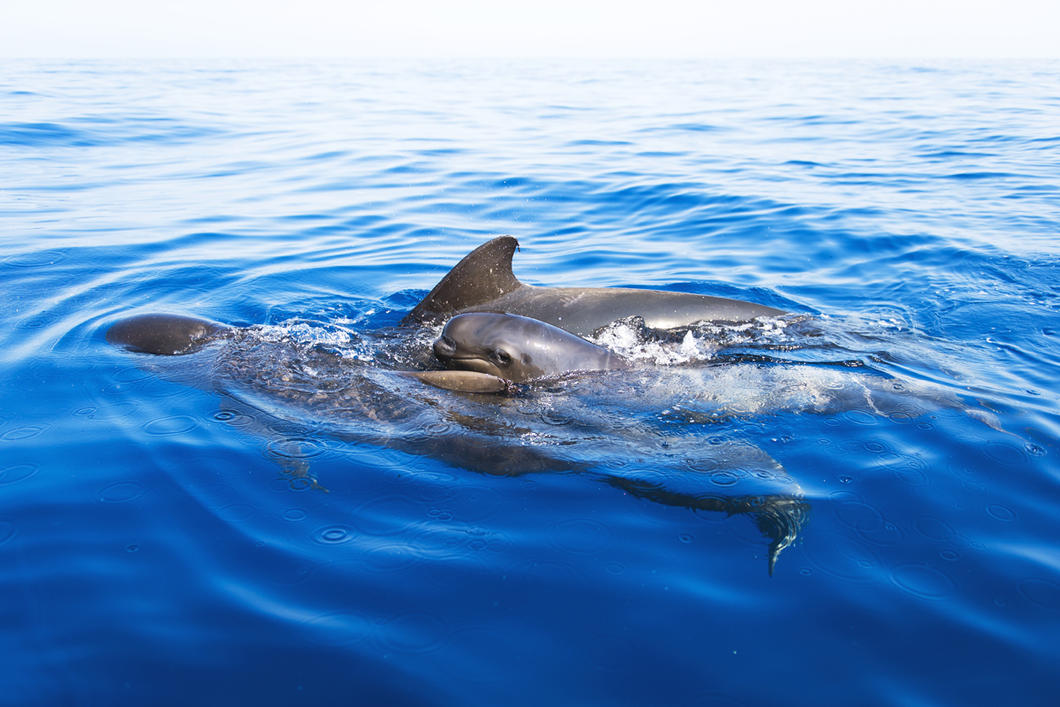
Like all members of the dolphin family, pilot whales have a highly developed acoustic sense. But what of their sense of taste and smell? Can they perceive odors and flavors? What organs are involved? On board the Else, which belongs to the Asociacion de Naturalistas del Sureste (ANSE), the team of researchers from the Centre for Functional and Evolutive Ecology (CEFE) travelled to meet a pod of pilot whales in the Mediterranean off Carthage and answer these questions.
1
Until now, the highly particular organization of the nose (blowhole) of pilot whales suggested that they might have lost their sense of smell during the course of evolution. However, recent observations show that these animals respond to chemical stimuli and that they have developed a novel olfactory system compared with that of other mammals. 
Cyril FRESILLON/CEFE/CNRS Photothèque
Slideshow mode
Share
Share
[6]
[7]
[8]
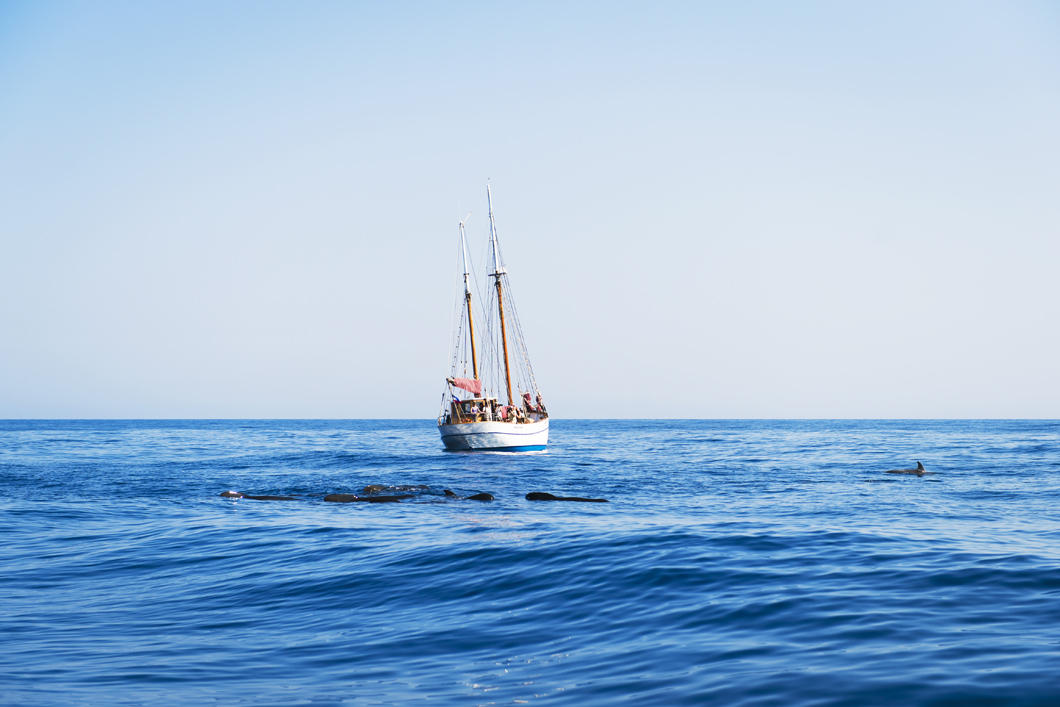
2
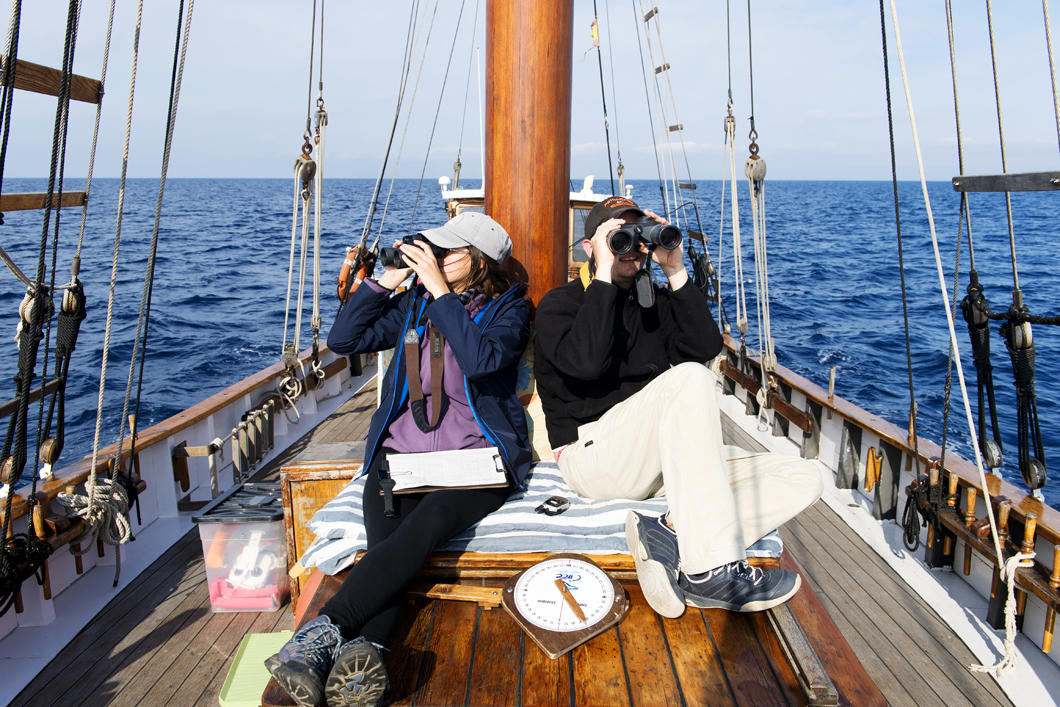
Depending on the weather and the condition of the sea, finding pilot whales may be difficult, particularly since they spend long periods seeking food in deep water. They can dive in apnea for several minutes, reaching depths of up to 1000 m.
Cyril FRESILLON/CEFE/CNRS Photothèque
Slideshow mode
Share
Share
[6]
[9]
[8]
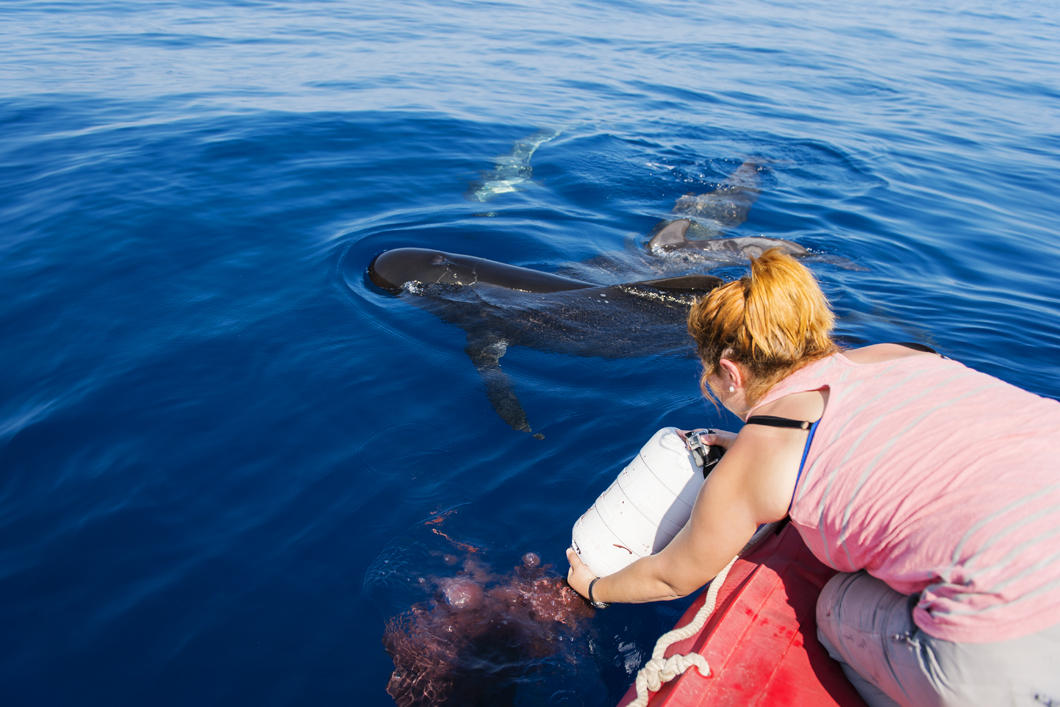
3
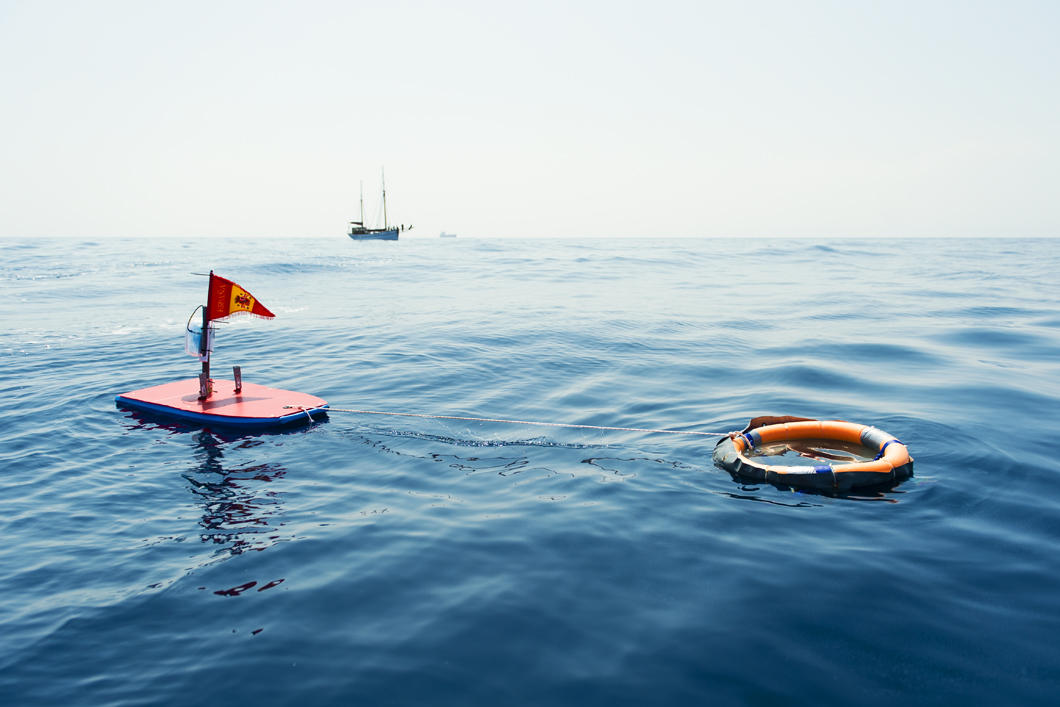
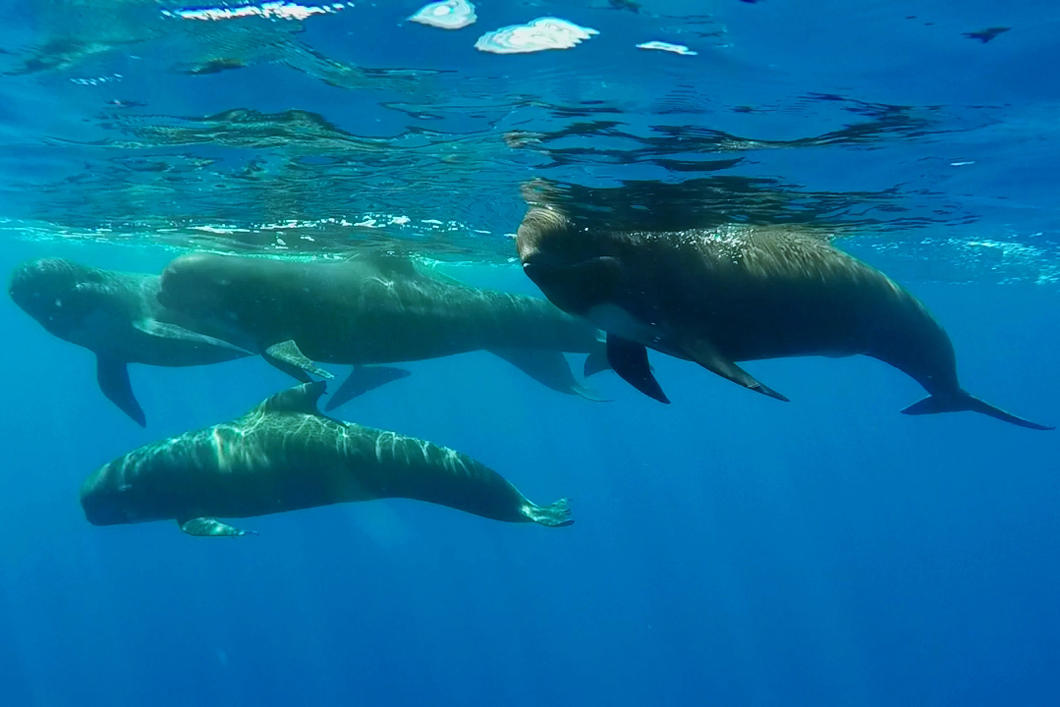
Once the whales have been located, olfactory experiments are conducted to observe how they respond to certain odors, in this case that of dimethyl sulfide (DMS) diffused from a custom-made floater. Underwater video cameras and a hydrophone placed beneath the board record their reactions.
Cyril FRESILLON/CEFE/CNRS Photothèque
Slideshow mode
Share
Share
[6]
[10]
[8]
4
Because this smell is normally associated with food-rich zones, they may be attracted to it when it is diffused in the air. It may be detected by pilot whales when they come to the surface to breathe via chemical receptors in their nasal cavity.
CEFE/CNRS Photothèque
Slideshow mode
Share
Share
[6]
[11]
[8]
5
Another experiment uses a hydrolyzed preparation of their favorite food, squid. The odor of this powder diffuses in both water and air. Pilot whales seem to detect it using their sense of taste, which involves the use of their taste buds.
Cyril FRESILLON/CEFE/CNRS Photothèque
Slideshow mode
Share
Share
[6]
[12]
[8]
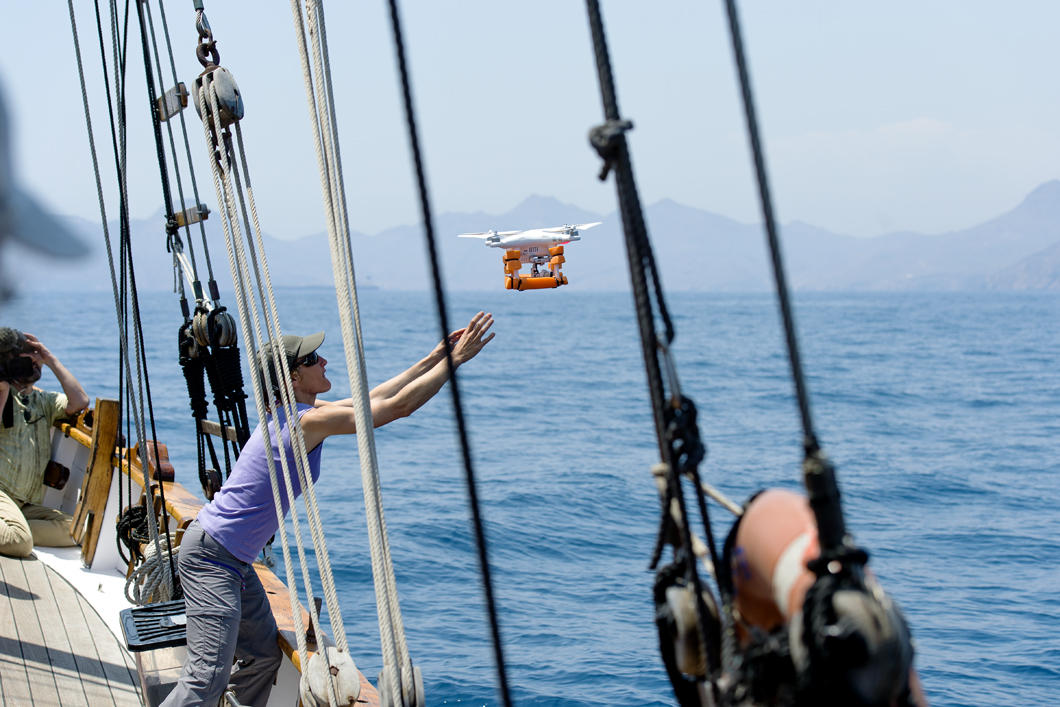
6
During the experiments, a drone hovers above the device, taking photographs every two seconds, enabling the researchers to determine within a radius of 500 m the distance of individual animals from the test zone, as well as their number, orientation, trajectories and behavior.
Cyril FRESILLON/CEFE/CNRS Photothèque
Slideshow mode
Share
Share
[6]
[13]
[8]
7
Analyzing the data collected, the researchers hope over time to identify substances that repel the whales in order to better protect them. For example, such substances would make it possible to keep the animals safely away from areas of danger such as fishing zones, areas of intense maritime traffic, ports, and so on.
Cyril FRESILLON/CEFE/CNRS Photothèque
Slideshow mode
Share
Share
[6]
[14]
[8]
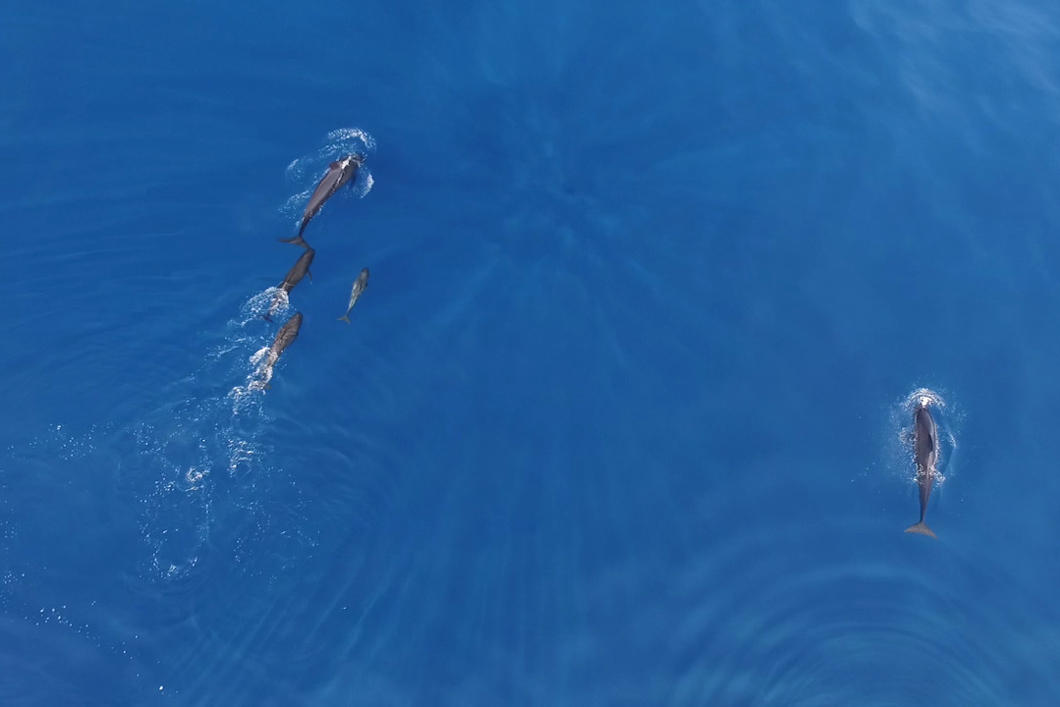
8
This photo was taken by drone. Using the thousands of aerial and underwater images produced during this assignment, the researchers will be able to analyze how pilot whales respond to the various stimuli tested.
Bertrand BOUCHARD/CEFE/CNRS Photothèque
Slideshow mode
Share
Share
[6]
[15]
[8]

Explore more

Life
Nodules (pink) formed by nitrogen-fixing soil bacteria on a leguminous plant's roots (white).
[16]
Article
01/28/2026
The super powers of the plant microbiota [16]
Bats on a tree
[17]
Article
11/26/2025
Bats, super virus busters [17]
A male zebra trying to wake a dead pregnant female zebra
[18]
Article
11/24/2025
Animals are no strangers to death [18]
[19]
Article
09/24/2025
When phytoplankton kills [19]
bacteriophage © University of Basel / Biozentrum / SPL
[20]
Article
09/01/2025
Medicine goes viral [20]
Biology
[19]
Article
09/24/2025
When phytoplankton kills [19]
[21]
Article
05/25/2025
Fukushima insects tested for cognition [21]
[22]
Article
03/26/2025
Space experiments aboard the ISS [22]
© Gulf MG / Shutterstock.com
[23]
Article
12/02/2024
Mosquitoes and their costly sting [23]
Flamants roses © Yva Momatiuk & John Eastcott / Minden / Naturepl.fr via EB Photo
[24]
Article
10/15/2024
Why birds do not fall while sleeping [24]

Keywords

Pilot whales [25] Smell [26] Dimethyl sulfide [27] Blowhole [28] Research drone [29]

Share this article

[30]
[31]
[6]
[8]

Source URL:https://news.cnrs.fr/slideshows/testing-pilot-whales-sense-of-smell

Links
[1] https://news.cnrs.fr/ [2] https://news.cnrs.fr/javascript%3A%3B [3] https://news.cnrs.fr/life [4] https://news.cnrs.fr/biology [5] https://news.cnrs.fr/authors/audrey-diguet [6] https://twitter.com/intent/tweet?url=https%3A//news.cnrs.fr/print/1170%2F&text=Testing Pilot Whales’ Sense of Smell [7] http://www.facebook.com/sharer/sharer.php?s=100&p%5Burl%5D=https%3A//news.cnrs.fr/print/1170&p%5Btitle%5D=Testing%20Pilot%20Whales%E2%80%99%20Sense%20of%20Smell&p%5Bimages%5D%5B0%5D=https%3A//news.cnrs.fr/sites/default/files/styles/lightbox-hd/public/assets/images/portfolio_globi_image_1_r.jpg%3Fitok%3D1CrrcmHN&p%5Bsummary%5D= [8] https://bsky.app/intent/compose?text=Testing Pilot Whales’ Sense of Smell%0Ahttps%3A//news.cnrs.fr/print/1170 [9] http://www.facebook.com/sharer/sharer.php?s=100&p%5Burl%5D=https%3A//news.cnrs.fr/print/1170&p%5Btitle%5D=Testing%20Pilot%20Whales%E2%80%99%20Sense%20of%20Smell&p%5Bimages%5D%5B0%5D=https%3A//news.cnrs.fr/sites/default/files/styles/lightbox-hd/public/assets/images/portfolio_globi_image_2_r.jpg%3Fitok%3DjLxBidTR&p%5Bsummary%5D= [10] http://www.facebook.com/sharer/sharer.php?s=100&p%5Burl%5D=https%3A//news.cnrs.fr/print/1170&p%5Btitle%5D=Testing%20Pilot%20Whales%E2%80%99%20Sense%20of%20Smell&p%5Bimages%5D%5B0%5D=https%3A//news.cnrs.fr/sites/default/files/styles/lightbox-hd/public/assets/images/portfolio_globi_image_3_r.jpg%3Fitok%3DtKeRbVUZ&p%5Bsummary%5D= [11] http://www.facebook.com/sharer/sharer.php?s=100&p%5Burl%5D=https%3A//news.cnrs.fr/print/1170&p%5Btitle%5D=Testing%20Pilot%20Whales%E2%80%99%20Sense%20of%20Smell&p%5Bimages%5D%5B0%5D=https%3A//news.cnrs.fr/sites/default/files/styles/lightbox-hd/public/assets/images/portfolio_globi_image_4_r.jpg%3Fitok%3DLIT6ByIW&p%5Bsummary%5D= [12] http://www.facebook.com/sharer/sharer.php?s=100&p%5Burl%5D=https%3A//news.cnrs.fr/print/1170&p%5Btitle%5D=Testing%20Pilot%20Whales%E2%80%99%20Sense%20of%20Smell&p%5Bimages%5D%5B0%5D=https%3A//news.cnrs.fr/sites/default/files/styles/lightbox-hd/public/assets/images/portfolio_globi_image_5_r.jpg%3Fitok%3DQaU2r0uC&p%5Bsummary%5D= [13] http://www.facebook.com/sharer/sharer.php?s=100&p%5Burl%5D=https%3A//news.cnrs.fr/print/1170&p%5Btitle%5D=Testing%20Pilot%20Whales%E2%80%99%20Sense%20of%20Smell&p%5Bimages%5D%5B0%5D=https%3A//news.cnrs.fr/sites/default/files/styles/lightbox-hd/public/assets/images/portfolio_globi_image_6_r.jpg%3Fitok%3D-i_17orT&p%5Bsummary%5D= [14] http://www.facebook.com/sharer/sharer.php?s=100&p%5Burl%5D=https%3A//news.cnrs.fr/print/1170&p%5Btitle%5D=Testing%20Pilot%20Whales%E2%80%99%20Sense%20of%20Smell&p%5Bimages%5D%5B0%5D=https%3A//news.cnrs.fr/sites/default/files/styles/lightbox-hd/public/assets/images/portfolio_globi_image_7_r.jpg%3Fitok%3DJ5NqtCLF&p%5Bsummary%5D= [15] http://www.facebook.com/sharer/sharer.php?s=100&p%5Burl%5D=https%3A//news.cnrs.fr/print/1170&p%5Btitle%5D=Testing%20Pilot%20Whales%E2%80%99%20Sense%20of%20Smell&p%5Bimages%5D%5B0%5D=https%3A//news.cnrs.fr/sites/default/files/styles/lightbox-hd/public/assets/images/portfolio_globi_image_8_r.jpg%3Fitok%3DOedGSub-&p%5Bsummary%5D= [16] https://news.cnrs.fr/articles/the-super-powers-of-the-plant-microbiota [17] https://news.cnrs.fr/articles/bats-super-virus-busters [18] https://news.cnrs.fr/articles/animals-are-no-strangers-to-death [19] https://news.cnrs.fr/articles/when-phytoplankton-kills [20] https://news.cnrs.fr/articles/medicine-goes-viral [21] https://news.cnrs.fr/articles/fukushima-insects-tested-for-cognition [22] https://news.cnrs.fr/articles/space-experiments-aboard-the-iss [23] https://news.cnrs.fr/articles/mosquitoes-and-their-costly-sting [24] https://news.cnrs.fr/articles/why-birds-do-not-fall-while-sleeping [25] https://news.cnrs.fr/pilot-whales [26] https://news.cnrs.fr/smell [27] https://news.cnrs.fr/dimethyl-sulfide [28] https://news.cnrs.fr/blowhole [29] https://news.cnrs.fr/research-drone [30] http://www.facebook.com/sharer/sharer.php?s=100&p%5Burl%5D=https%3A//news.cnrs.fr/print/1170&p%5Btitle%5D=Testing%20Pilot%20Whales%E2%80%99%20Sense%20of%20Smell&p%5Bimages%5D%5B0%5D=&p%5Bsummary%5D= [31] https://news.cnrs.fr/printmail/1170