CNRS News
Published on CNRS News (https://news.cnrs.fr)

Home > Touching the Depths

Touching the Depths

You are here

Home [1]
Lire en français [2]
slideshow
-A [3] +A [3]
Society [4]
Digital [5]
Robotics [6]

Touching the Depths

10.12.2015, by
Nicolas Baker [7]
When it comes to handling ancient pottery, nothing can replace a steady human hand. Or so archaeologists believed before they tested Corsaire 1 “Speedy.” The world's first submarine robot archaeologist explored the wreck of the Lune, a warship belonging to the fleet of Louis XIV, which sank off the coast of Toulon (southern France) in Novembre 1664.
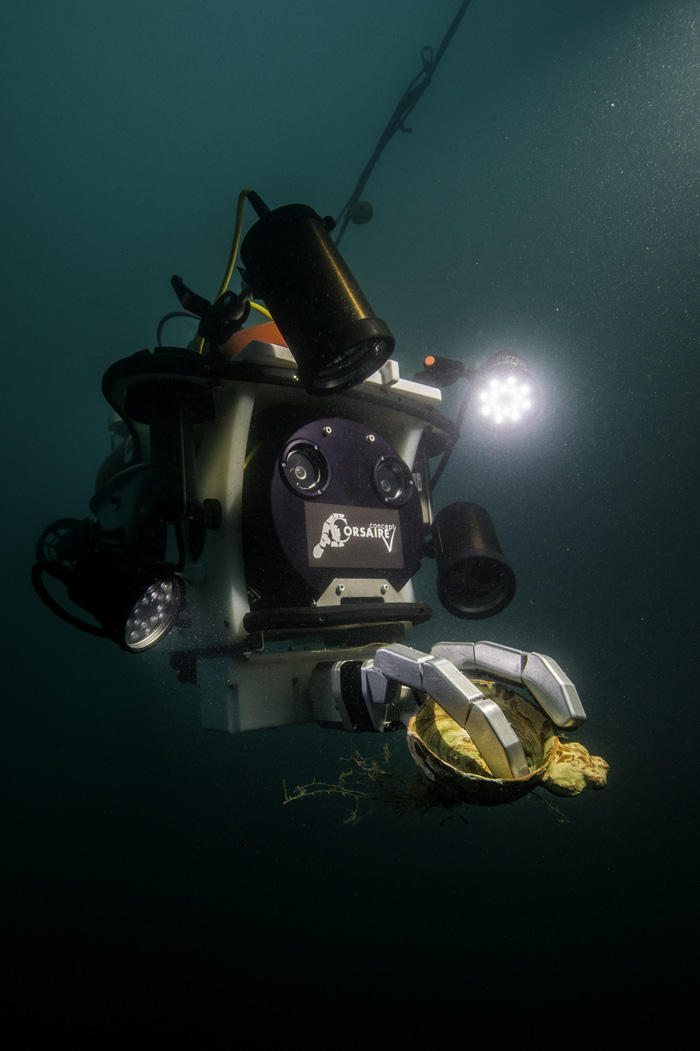
Robot in a dark water. it is grasping an archaeological object in its claw which is illuminated by a headlamp
1
The three-fingered hand with “adaptive grasp” adjusts to the shape of the object it handles without breaking it.
Teddy Séguin/ Frédéric Osada/ DRASSM/ Images Explorations
Slideshow mode
Share
Share
[8]
[9]
[10]
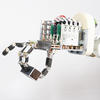
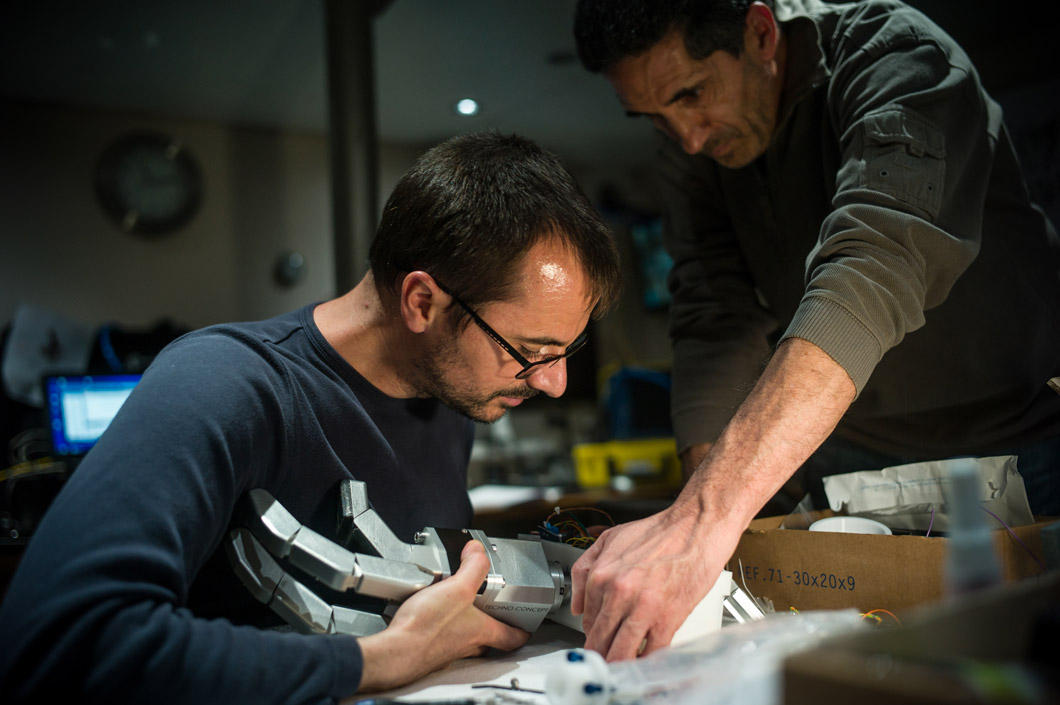
An engineer manipulates a robotic hand.
2
To mimic the precise and gentle touch of human archaeologists, the robotic hand is equipped with pressure sensors.
Teddy Séguin/ Frédéric Osada/ DRASSM/ Images Explorations
Slideshow mode
Share
Share
[8]
[11]
[10]
An operator holding a joystick in front of three computer screens. He is piloting the robot.
3
Corsaire 1 “Speedy” is controlled from the vessel, using live feeds from the on-board cameras.
Teddy Séguin/ Frédéric Osada/ DRASSM/ Images Explorations
Slideshow mode
Share
Share
[8]
[12]
[10]
The robot is on the sea floor. In the foreground: a boat anchor. A cable is visible attached to the robot.
4
A tether cable links the vessel to the robot, to exchange data and supply power.
Teddy Séguin/ Frédéric Osada/ DRASSM/ Images Explorations
Slideshow mode
Share
Share
[8]
[13]
[10]
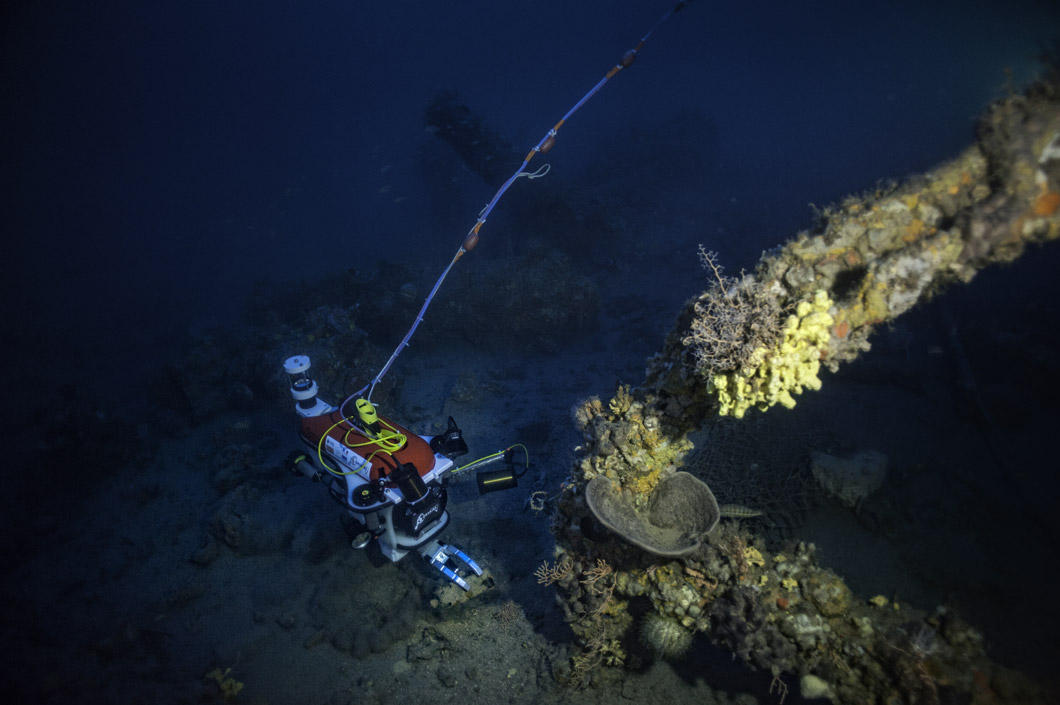
A robot arrives on a submarine shipwreck.
5
The robotic hand can be replaced by "claws," which resemble rakes that cross and overlap in order to collect objects that are difficult to handle.
Teddy Séguin/ Frédéric Osada/ DRASSM/ Images Explorations
Slideshow mode
Share
Share
[8]
[14]
[10]
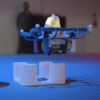
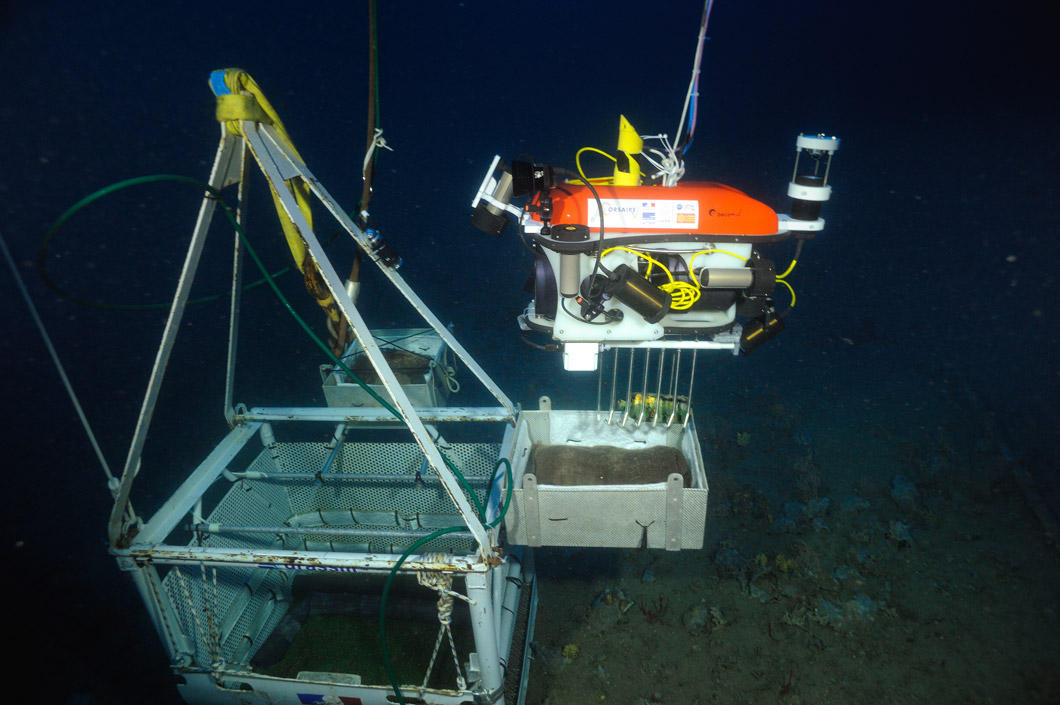
A robot places an object in a case deep underwater.
6
The samples are carefully placed in a case that is sent directly to the surface— letting “Speedy” get back to work immediately.
Teddy Séguin/ Frédéric Osada/ DRASSM/ Images Explorations
Slideshow mode
Share
Share
[8]
[15]
[10]
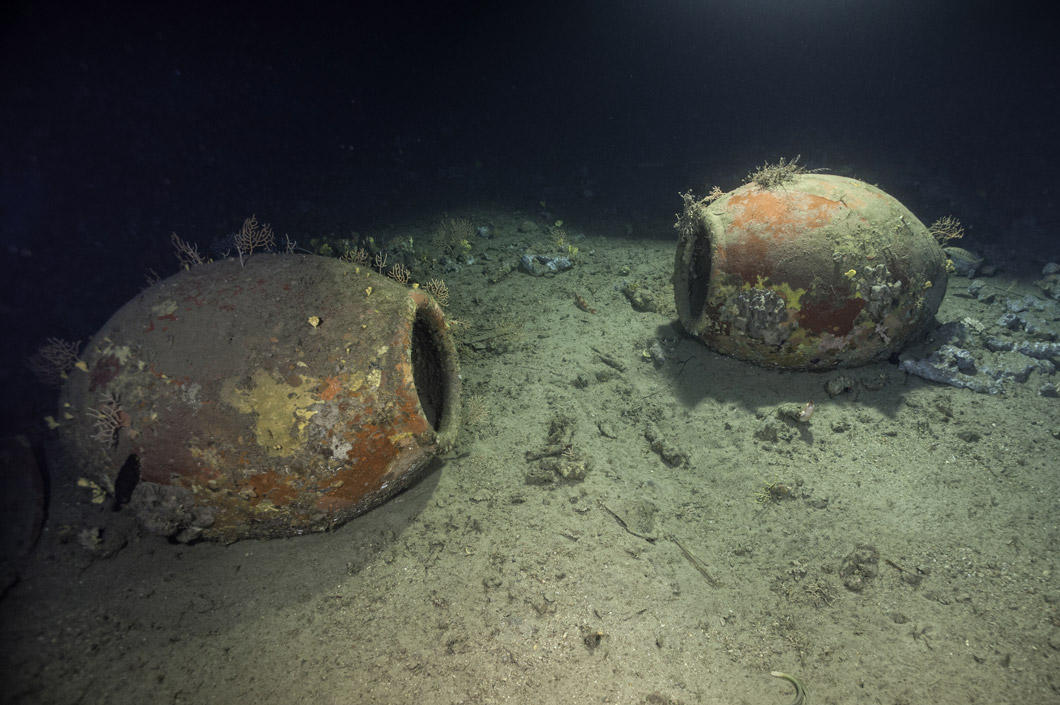
Terracotta jars at the bottom the sea.
7
The Lune shipwreck lies 90 m deep in the bay of Toulon (southern France). The ship, which belonged to Louis XIV, sank in 1664, taking hundreds of lives and thousands of objects with it.
Teddy Séguin/ Frédéric Osada/ DRASSM/ Images Explorations
Slideshow mode
Share
Share
[8]
[16]
[10]
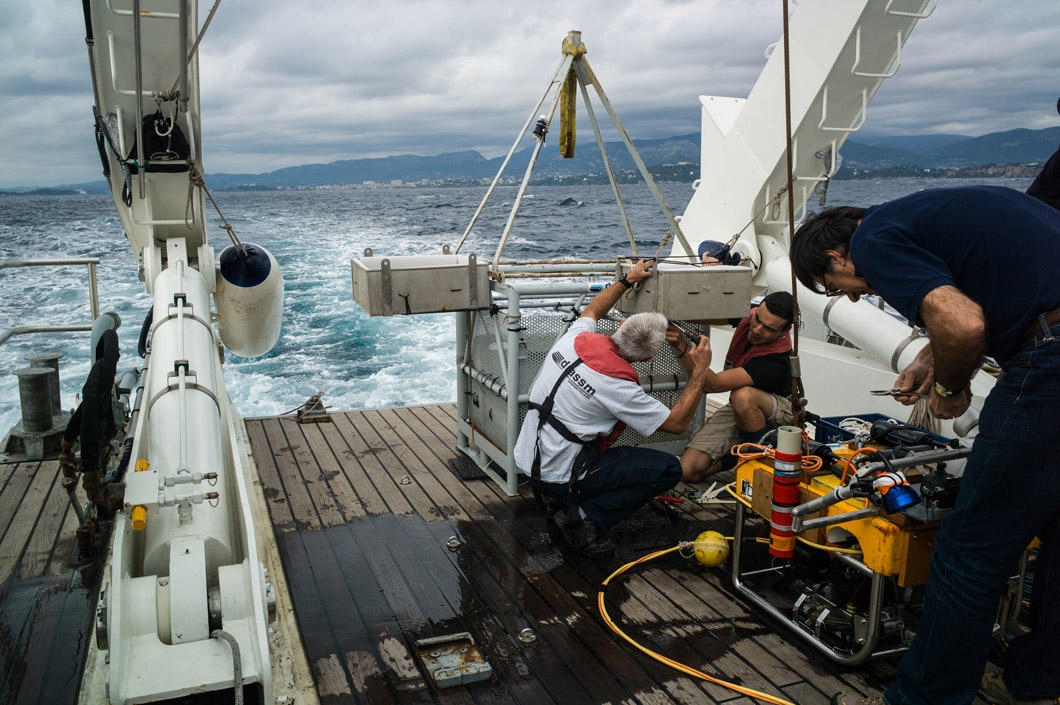
On the back deck of the boat, men are manipulating machines.
8
The Corsaire Concept Project involves archaeologists as well as 3D imaging and robotics experts.
Teddy Séguin/ Frédéric Osada/ DRASSM/ Images Explorations
Slideshow mode
Share
Share
[8]
[17]
[10]
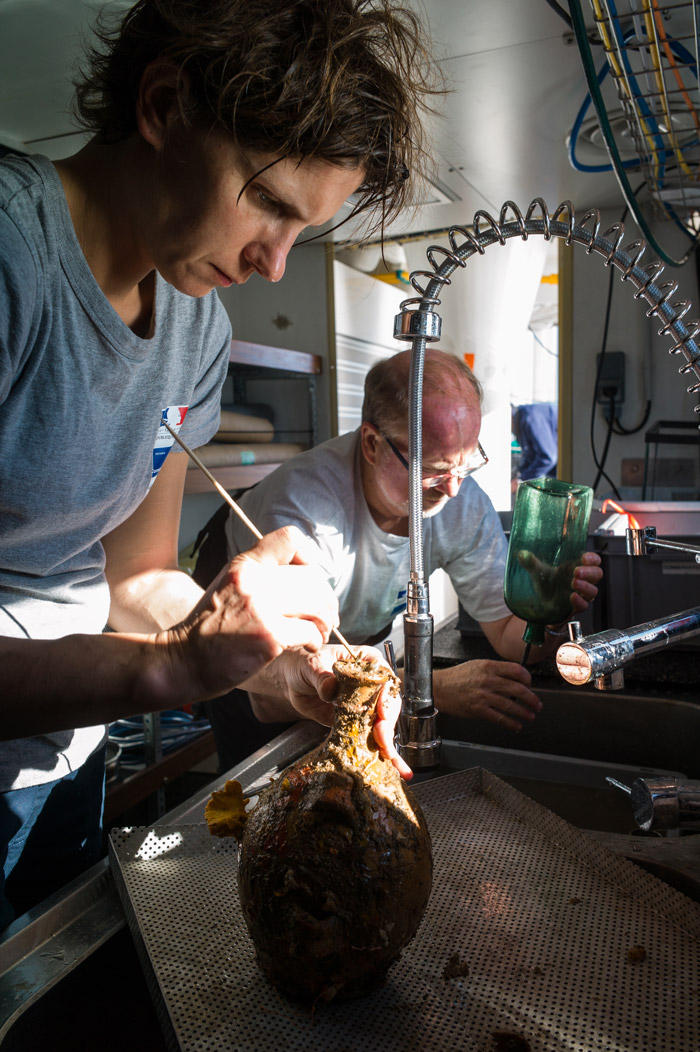
A researcher cleans a jar brought back to the surface.
9
Back on board, the finds are immediately processed. Their long stay in salt water have made them extremely fragile.
Teddy Séguin/ Frédéric Osada/ DRASSM/ Images Explorations
Slideshow mode
Share
Share
[8]
[18]
[10]
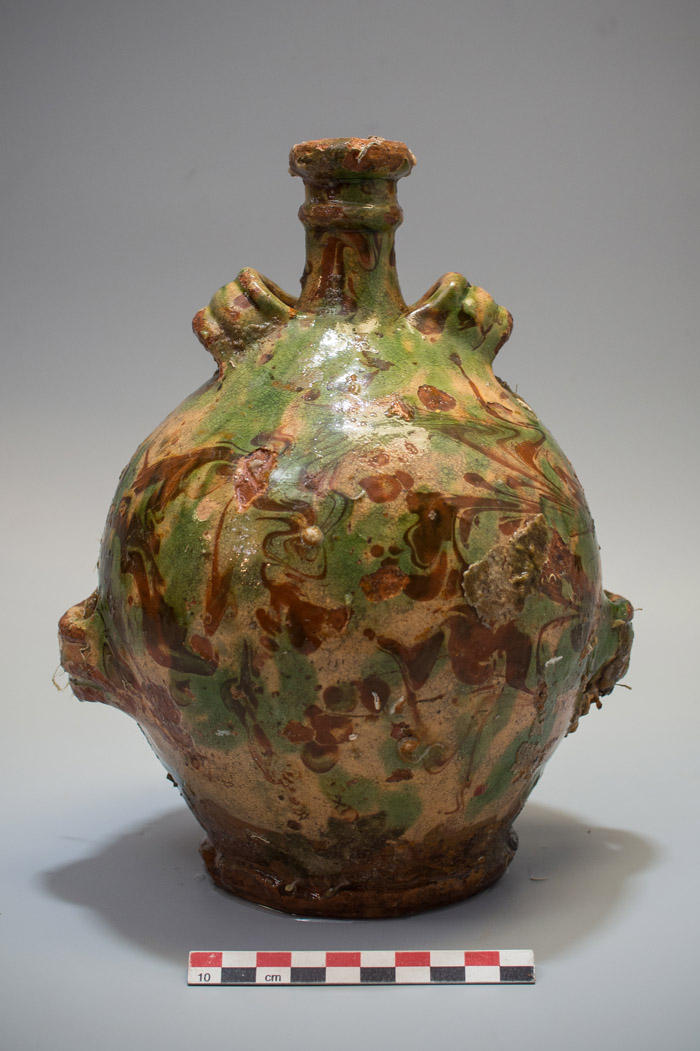
Ceramic jar in varnished yellow and green.
10
Of the many items found is this green and yellow glazed bottle, from the workshops of the Huveaune valley
Teddy Séguin/ Frédéric Osada/ DRASSM/ Images Explorations
Slideshow mode
Share
Share
[8]
[19]
[10]
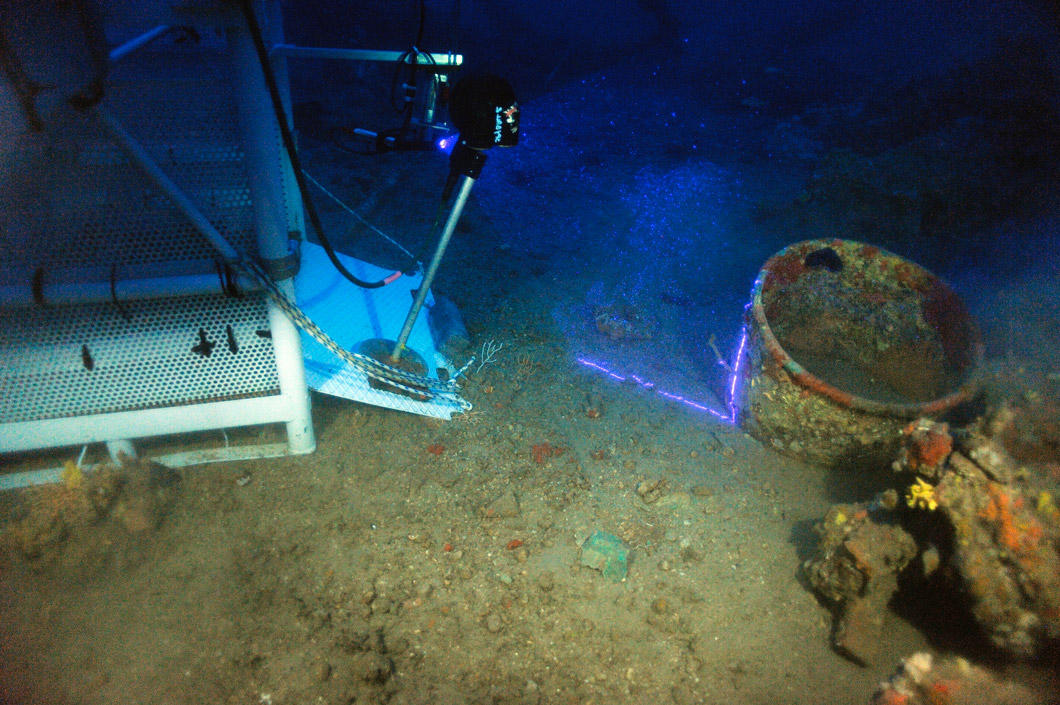
On the site of a shipwreck, a machine scans ancient pottery with a violet beam.
11
The team is also testing a 3D laser prototype that can scan objects under water.
Teddy Séguin/ Frédéric Osada/ DRASSM/ Images Explorations
Slideshow mode
Share
Share
[8]
[20]
[10]

Explore more

Society
 metamorworks / iStock.com
[21]
Article
12/02/2025
Science one step ahead [21]
adoption of a historic global warming pact at the COP21 Climate Conference in Le Bourget, north of Paris, on December 12, 2015
[22]
Article
11/09/2025
Ten years on, mixed results for the Paris Agreement [22]
[23]
Article
10/20/2025
Colonialism in green camouflage [23]
[24]
Article
10/15/2025
Cervantes, an influencer of his time [24]
[25]
Article
10/03/2025
The myth of energy transition [25]
Robotics
Robotic Seabed Cleaning Platform
[26]
Article
01/23/2023
An underwater robot to clean up coastal areas [26]
[27]
Article
10/20/2022
When microrobots manipulate cells [27]
[28]
Article
08/11/2022
French team tops RoboCup [28]
[29]
Article
07/22/2020
Five incredibly talented robots [29]
Recreational drone taking off
[30]
Video
12/20/2019
The Science of Flying Robots [30]
Archaeology
[31]
Article
04/16/2025
Meet Arthur, the first deep-sea robot archaeologist [31]
A picture of lalibela
[32]
Video
03/25/2021
Lalibela: a city dug in a rock [32]
[33]
Article
01/09/2020
Archaeologists Back in Mesopotamia [33]
[34]
Article
12/03/2019
How to Reconstruct the Sound of Notre-Dame? [34]
[35]
Article
05/15/2018
Unique Funerary Site Discovered in Peru [35]

Keywords

Archaeology [36] shipwreck [37]

Share this article

[38]
[39]
[8]
[10]

Source URL:https://news.cnrs.fr/slideshows/touching-depths

Links
[1] https://news.cnrs.fr/ [2] https://lejournal.cnrs.fr/diaporamas/un-robot-archeologue-pour-explorer-les-epaves [3] https://news.cnrs.fr/javascript%3A%3B [4] https://news.cnrs.fr/society [5] https://news.cnrs.fr/digital [6] https://news.cnrs.fr/robotics [7] https://news.cnrs.fr/authors/nicolas-baker [8] https://twitter.com/intent/tweet?url=https%3A//news.cnrs.fr/print/670%2F&text=Touching the Depths [9] http://www.facebook.com/sharer/sharer.php?s=100&p%5Burl%5D=https%3A//news.cnrs.fr/print/670&p%5Btitle%5D=Touching%20the%20Depths&p%5Bimages%5D%5B0%5D=https%3A//news.cnrs.fr/sites/default/files/styles/lightbox-hd/public/assets/images/dsc_5639.jpg%3Fitok%3Dz5rK6cHA&p%5Bsummary%5D= [10] https://bsky.app/intent/compose?text=Touching the Depths%0Ahttps%3A//news.cnrs.fr/print/670 [11] http://www.facebook.com/sharer/sharer.php?s=100&p%5Burl%5D=https%3A//news.cnrs.fr/print/670&p%5Btitle%5D=Touching%20the%20Depths&p%5Bimages%5D%5B0%5D=https%3A//news.cnrs.fr/sites/default/files/styles/lightbox-hd/public/assets/images/l6938321.jpg%3Fitok%3D__nR7VkL&p%5Bsummary%5D= [12] http://www.facebook.com/sharer/sharer.php?s=100&p%5Burl%5D=https%3A//news.cnrs.fr/print/670&p%5Btitle%5D=Touching%20the%20Depths&p%5Bimages%5D%5B0%5D=https%3A//news.cnrs.fr/sites/default/files/styles/lightbox-hd/public/assets/images/l6938506.jpg%3Fitok%3DvnFg2rW7&p%5Bsummary%5D= [13] http://www.facebook.com/sharer/sharer.php?s=100&p%5Burl%5D=https%3A//news.cnrs.fr/print/670&p%5Btitle%5D=Touching%20the%20Depths&p%5Bimages%5D%5B0%5D=https%3A//news.cnrs.fr/sites/default/files/styles/lightbox-hd/public/assets/images/dsc_8849.jpg%3Fitok%3DbhdcpVBK&p%5Bsummary%5D= [14] http://www.facebook.com/sharer/sharer.php?s=100&p%5Burl%5D=https%3A//news.cnrs.fr/print/670&p%5Btitle%5D=Touching%20the%20Depths&p%5Bimages%5D%5B0%5D=https%3A//news.cnrs.fr/sites/default/files/styles/lightbox-hd/public/assets/images/dsc_8118-2.jpg%3Fitok%3DVIxtI1Wp&p%5Bsummary%5D= [15] http://www.facebook.com/sharer/sharer.php?s=100&p%5Burl%5D=https%3A//news.cnrs.fr/print/670&p%5Btitle%5D=Touching%20the%20Depths&p%5Bimages%5D%5B0%5D=https%3A//news.cnrs.fr/sites/default/files/styles/lightbox-hd/public/assets/images/dsc_7988.jpg%3Fitok%3D62WNbV6w&p%5Bsummary%5D= [16] http://www.facebook.com/sharer/sharer.php?s=100&p%5Burl%5D=https%3A//news.cnrs.fr/print/670&p%5Btitle%5D=Touching%20the%20Depths&p%5Bimages%5D%5B0%5D=https%3A//news.cnrs.fr/sites/default/files/styles/lightbox-hd/public/assets/images/dsc_8593.jpg%3Fitok%3DunOAgzXA&p%5Bsummary%5D= [17] http://www.facebook.com/sharer/sharer.php?s=100&p%5Burl%5D=https%3A//news.cnrs.fr/print/670&p%5Btitle%5D=Touching%20the%20Depths&p%5Bimages%5D%5B0%5D=https%3A//news.cnrs.fr/sites/default/files/styles/lightbox-hd/public/assets/images/l6937880-2.jpg%3Fitok%3DCzF0voHf&p%5Bsummary%5D= [18] http://www.facebook.com/sharer/sharer.php?s=100&p%5Burl%5D=https%3A//news.cnrs.fr/print/670&p%5Btitle%5D=Touching%20the%20Depths&p%5Bimages%5D%5B0%5D=https%3A//news.cnrs.fr/sites/default/files/styles/lightbox-hd/public/assets/images/l6938703.jpg%3Fitok%3DMbYvclRS&p%5Bsummary%5D= [19] http://www.facebook.com/sharer/sharer.php?s=100&p%5Burl%5D=https%3A//news.cnrs.fr/print/670&p%5Btitle%5D=Touching%20the%20Depths&p%5Bimages%5D%5B0%5D=https%3A//news.cnrs.fr/sites/default/files/styles/lightbox-hd/public/assets/images/_b040250.jpg%3Fitok%3DH0CA6HFq&p%5Bsummary%5D= [20] http://www.facebook.com/sharer/sharer.php?s=100&p%5Burl%5D=https%3A//news.cnrs.fr/print/670&p%5Btitle%5D=Touching%20the%20Depths&p%5Bimages%5D%5B0%5D=https%3A//news.cnrs.fr/sites/default/files/styles/lightbox-hd/public/assets/images/dsc_7647.jpg%3Fitok%3Dx9tlsjY3&p%5Bsummary%5D= [21] https://news.cnrs.fr/articles/science-one-step-ahead [22] https://news.cnrs.fr/articles/ten-years-on-mixed-results-for-the-paris-agreement [23] https://news.cnrs.fr/articles/colonialism-in-green-camouflage [24] https://news.cnrs.fr/articles/cervantes-an-influencer-of-his-time [25] https://news.cnrs.fr/articles/the-myth-of-energy-transition [26] https://news.cnrs.fr/articles/an-underwater-robot-to-clean-up-coastal-areas [27] https://news.cnrs.fr/articles/when-microrobots-manipulate-cells [28] https://news.cnrs.fr/articles/french-team-tops-robocup [29] https://news.cnrs.fr/articles/five-incredibly-talented-robots [30] https://news.cnrs.fr/videos/the-science-of-flying-robots [31] https://news.cnrs.fr/articles/meet-arthur-the-first-deep-sea-robot-archaeologist [32] https://news.cnrs.fr/videos/lalibela-a-city-dug-in-a-rock [33] https://news.cnrs.fr/articles/archaeologists-back-in-mesopotamia [34] https://news.cnrs.fr/articles/how-to-reconstruct-the-sound-of-notre-dame [35] https://news.cnrs.fr/articles/unique-funerary-site-discovered-in-peru [36] https://news.cnrs.fr/archaeology [37] https://news.cnrs.fr/shipwreck [38] http://www.facebook.com/sharer/sharer.php?s=100&p%5Burl%5D=https%3A//news.cnrs.fr/print/670&p%5Btitle%5D=Touching%20the%20Depths&p%5Bimages%5D%5B0%5D=&p%5Bsummary%5D= [39] https://news.cnrs.fr/printmail/670