CNRS News
Published on CNRS News (https://news.cnrs.fr)

Home > An asteroid reveals its secrets

An asteroid reveals its secrets

You are here

Home [1]
Lire en français [2]
Space [3]
Astronomy [4]
-A [5] +A [5]
article

An asteroid reveals its secrets

02.12.2024, by
Grégory Fléchet [6]
Reading time: 7 minutes
 Nasa / Goddard / University of Arizona
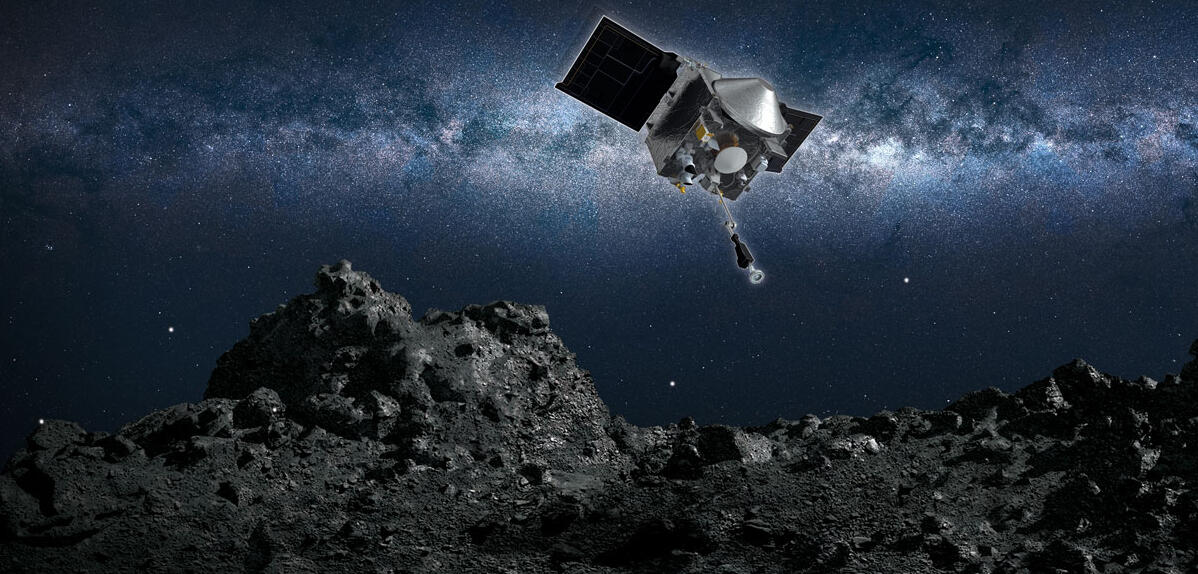
Artist's impression of NASA's OSIRIS-REx mission collecting samples from asteroid Bennu.
Nasa / Goddard / University of Arizona
On 24 September, 2023, material collected three years earlier from the surface of asteroid Bennu was successfully returned to Earth by the OSIRIS-REx mission. Some thirty laboratories around the world, including several CNRS research teams, are now busy analysing the precious samples.

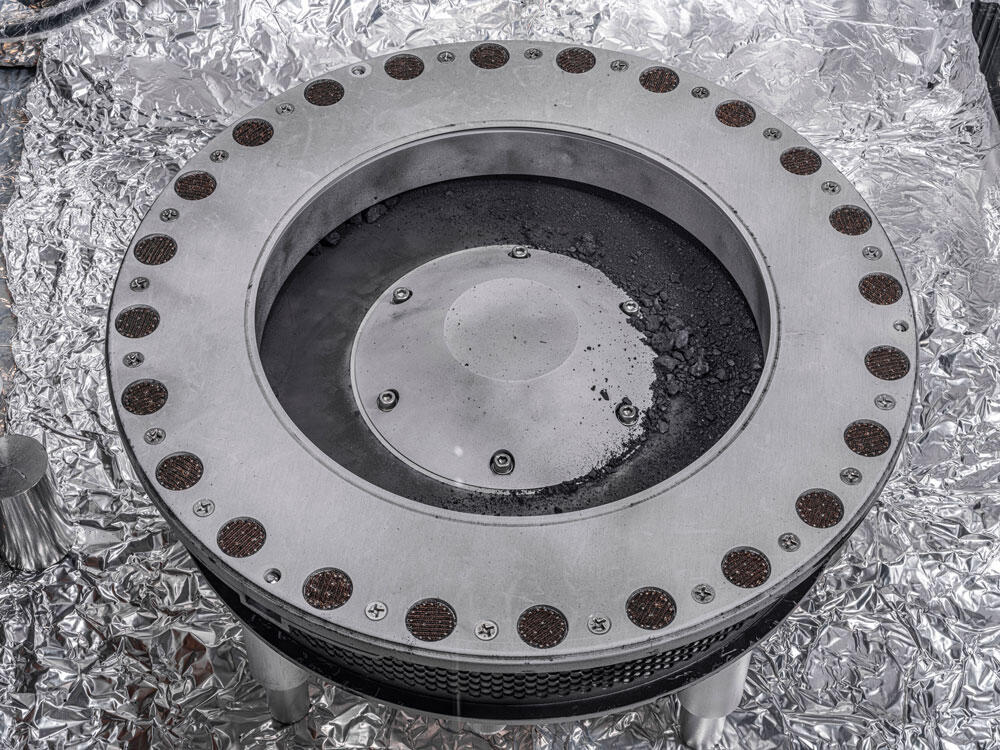
The challenge facing NASA's OSIRIS-REx mission was, to put it mildly, daunting. It consisted in sending a spacecraft to an asteroid 500 metres in diameter and 300 million kilometres away, study it from every angle for two years, take a sample from its surface, and return it to Earth to examine its composition in detail. Against all odds, seven years after the launch, the mission has turned out to be a resounding success, with the sample collection exceeding all expectations. "Instead of the 60 grams of material we had hoped to collect, in the end the spacecraft successfully brought back some 170 grams of a mixture of fine particles and rocks up to three or four centimetres in diameter," says Patrick Michel, CNRS research professor at the Joseph-Louis Lagrange Laboratory1 in Nice (southeastern France) and a member of the OSIRIS-REx scientific team.
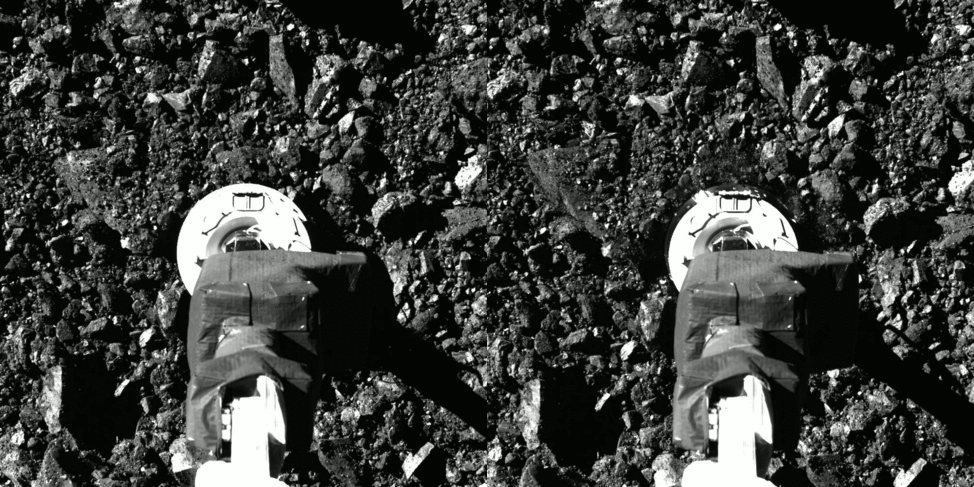
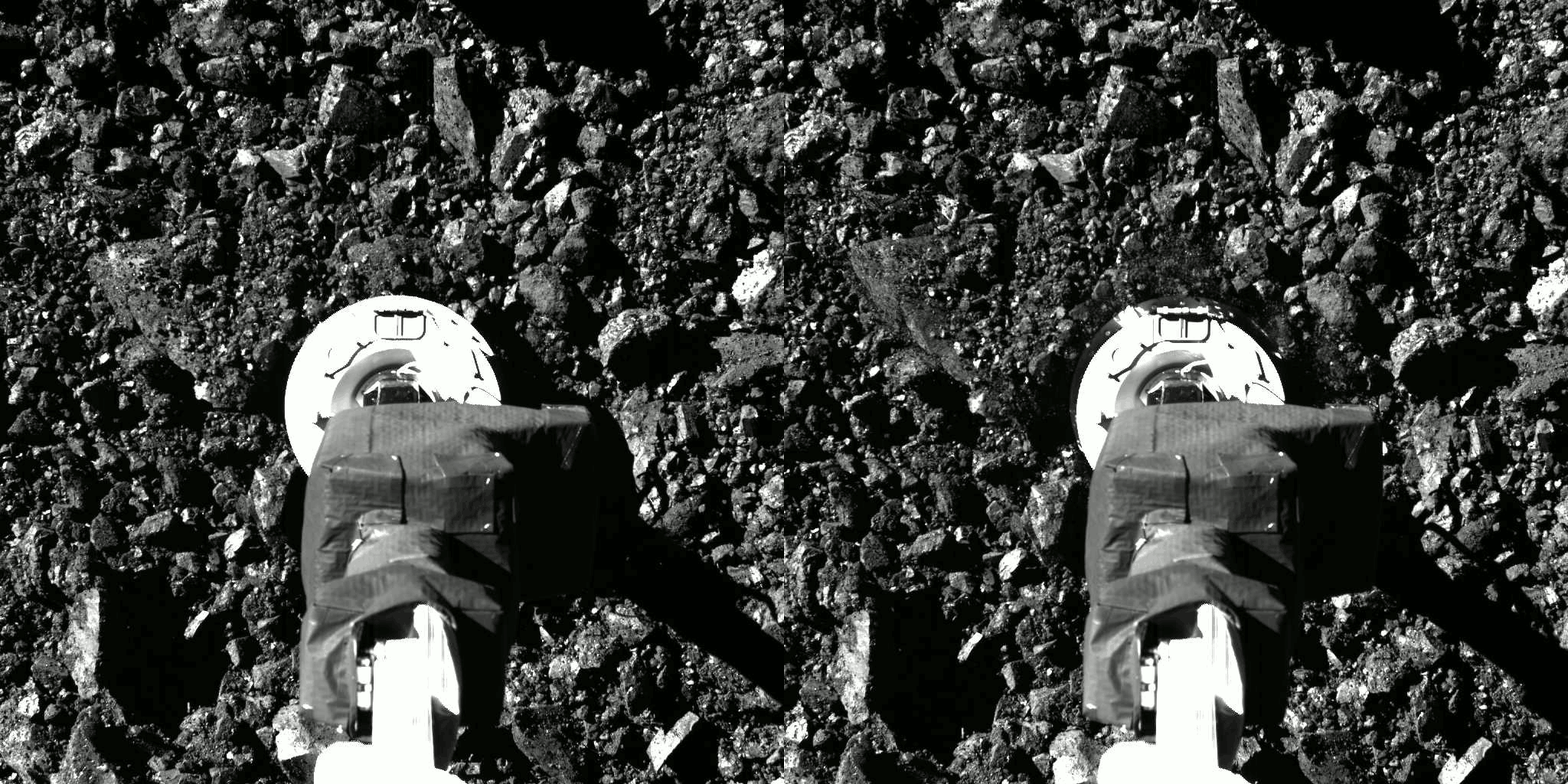
 Nasa / Goddard / University of Arizona
OSIRIS-REx lands on the surface of asteroid Bennu, as seen by the SamCam imager.
CNRS News
 Nasa / Goddard / University of Arizona
OSIRIS-REx lands on the surface of asteroid Bennu, as seen by the SamCam imager.
Nasa / Goddard / University of Arizona
Share
Share
[7] [8] [9]

An initial portion of the material from the asteroid was recovered from the periphery of the protective capsule2 in the days following its return to Earth. Once it had been extracted in a clean room at NASA's Johnson Space Center in Houston, Texas (US), eight one-hundred-milligram samples were sent in early November to eight laboratories based in the US, Japan, Australia and Europe, which then distributed them to a number of other research teams for specific analyses. To prevent any contamination, the fragments were placed in a metal cylinder under a nitrogen atmosphere before being sent to their respective recipients.
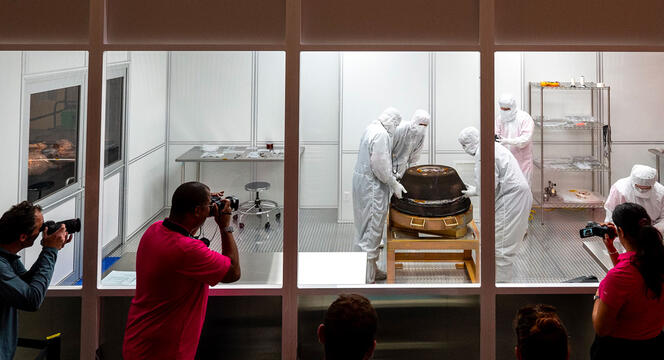
 

Nasa / Keegan Barber
On 24 September, 2023, after recovery in the desert, the capsule was opened in a clean room at the US Department of Defense's Utah Test and Training Range. The compartment containing the samples was then sent to NASA's Johnson Space Center (Texas), before being distributed to research laboratories around the world.
CNRS News
Nasa / Keegan Barber
On 24 September, 2023, after recovery in the desert, the capsule was opened in a clean room at the US Department of Defense's Utah Test and Training Range. The compartment containing the samples was then sent to NASA's Johnson Space Center (Texas), before being distributed to research laboratories around the world.
Nasa / Keegan Barber
Share
Share
[7] [10] [9]

A team headed by Guy Libourel, bringing together scientists from the Research Centre for Heteroepitaxy and its Applications [11](CRHEA)3 and the J.-L. Lagrange Laboratory, was one of those selected, which is not surprising given their unique expertise in cathodoluminescence analysis.

Understanding how Bennu was formed

"We are the only ones in the international consortium to use this technique, which involves exciting the minerals in an asteroid grain with a beam of electrons," explains Labourel, who is a professor of cosmochemistry at the Université Côte-d'Azur. "By combining this method with a scanning electron microscope, we can obtain in just a few minutes extremely precise information about the structure and chemical makeup of the various minerals in the sample, as well as about the physical and chemical conditions under which each mineral was formed." Of the 100 mg of asteroid dust sent to Libourel, a few dozen grains with diameters of less than a millimetre have already been analysed using cathodoluminescence.
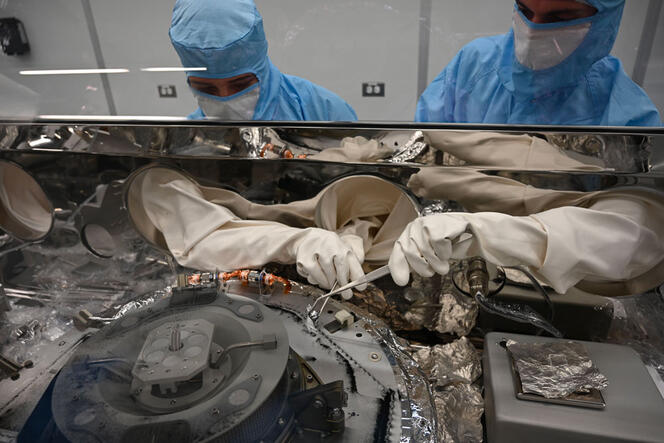
Nasa
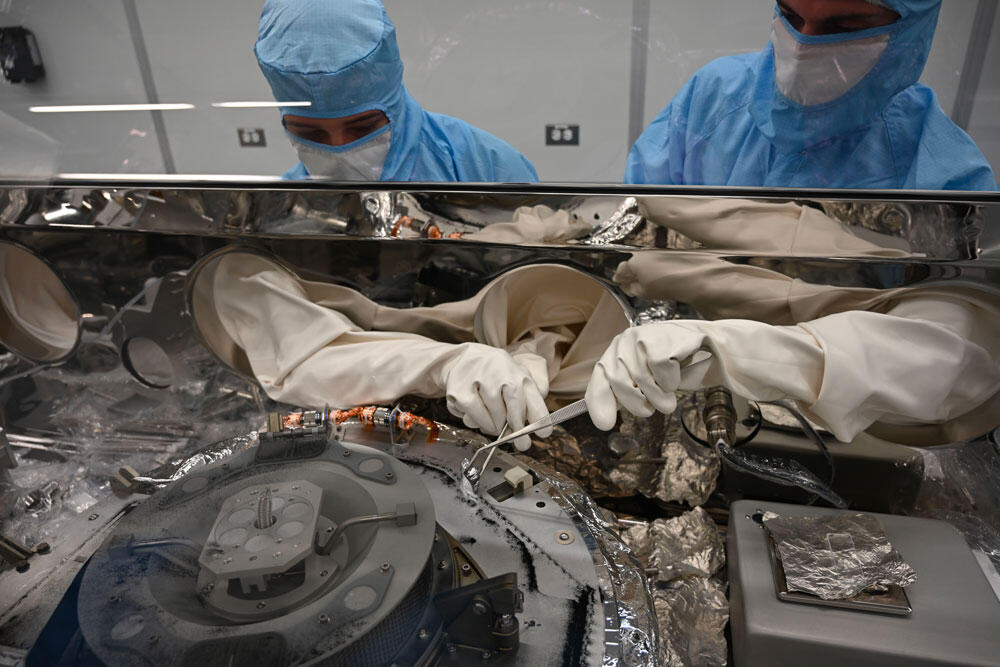
The tricky task of disassembling the capsule to recover the asteroid particles collected by OSIRIS-REx (Johnson Space Center).
CNRS News
Nasa
The tricky task of disassembling the capsule to recover the asteroid particles collected by OSIRIS-REx (Johnson Space Center).
Nasa
Nasa
Share
Share
[7] [12] [9]

In addition to carbonates, Libourel and the other scientists in the consortium will be looking for a wide range of minerals including phosphates, iron oxides and various hydrated silicates, with the aim of finding out more about the conditions under which the asteroid was formed.

At the CRPG4, near Nancy in eastern France, two teams are involved in this research, focusing in particular on the chemical constituents of Bennu. The first group, made up of three researchers including the geochemist Bernard Marty, is looking at isotopes of nitrogen and of noble gases such as neon and xenon. For these analyses, which entail destroying the entire sample by heating it with a laser, the scientists were lucky enough to be sent a few milligrams of material from Bennu directly from the Johnson Space Center in November 2023. Their job is to to determine the origin of these fine particles of dust, which hold the key to the environment in which the Sun formed just under 4.6 billion years ago.

Using isotopic distribution to go back in time  

The second CRPG team involved in the study of the asteroid fragments is also made up of three scientists, including the CNRS researcher and cosmochemist Laurette Piani. Last December, she travelled to southeastern France to pick up some of the particles from Bennu, which had previously been specially prepared by Libourel's team at the CRHEA. These particles come in the form of polished grain sections, embedded in a resin whose surface is also finely polished. "From each section we can take hundreds of samples a few micrometres in diameter and one micrometre in depth by sputtering the surface with a tightly focused ion beam from an ion microprobe," Piani explains. The tiny amount of material collected in this way is then transferred to a mass spectrometer. The ion microprobe can measure the concentration of the various isotopes of a specific chemical element such as oxygen, hydrogen or magnesium with high precision. "By determining the isotopic composition of each chemical element, we should be able to identify some of the processes that led to the formation of the grains that currently make up the surface of Bennu," she adds.
 

 Nasa / Erika Blumenfeld & Joseph Aebersold
Scientists recovered more samples than expected (170 grams of a mixture of fine particles and rocks) from the sample head, here seen from above.
CNRS News
 Nasa / Erika Blumenfeld & Joseph Aebersold
Scientists recovered more samples than expected (170 grams of a mixture of fine particles and rocks) from the sample head, here seen from above.
Nasa / Erika Blumenfeld & Joseph Aebersold
Share
Share
[7] [13] [9]

Of the hundreds of thousands of celestial bodies – planets, asteroids, comets, etc. – in our Solar System, Bennu is one of the most primitive. The rocks composing it will provide evidence of the events that took place during the collapse of clouds of gas and dust that gave rise to the Sun. "One of the main purposes of our work is to determine the context and chronology of the formation of the first solids in the protoplanetary disc that developed around our star a few million years after its birth," Piani explains.

Shedding light on the role of asteroids in the emergence of life

The cosmochemist is also hoping to characterise the nature and origin of the fluids that circulated inside the asteroid once it had formed from the aggregation of dust in the protoplanetary disc. Preliminary analyses carried out by NASA in the weeks following the return of the samples to Earth have already confirmed that Bennu contains clay minerals. As well as these hydrated materials, the fragments of the asteroid have also proved to be rich in carbon, and NASA even claims to have detected organic compounds that may be related to amino acids. The simultaneous presence of these three components lends weight to the idea that asteroids may have played an important role in the emergence of life on Earth, by delivering the necessary ingredients via the impacts that occurred towards the end of our planet's formation5.
 Nasa / University of Arizona / CSA / York / MDA
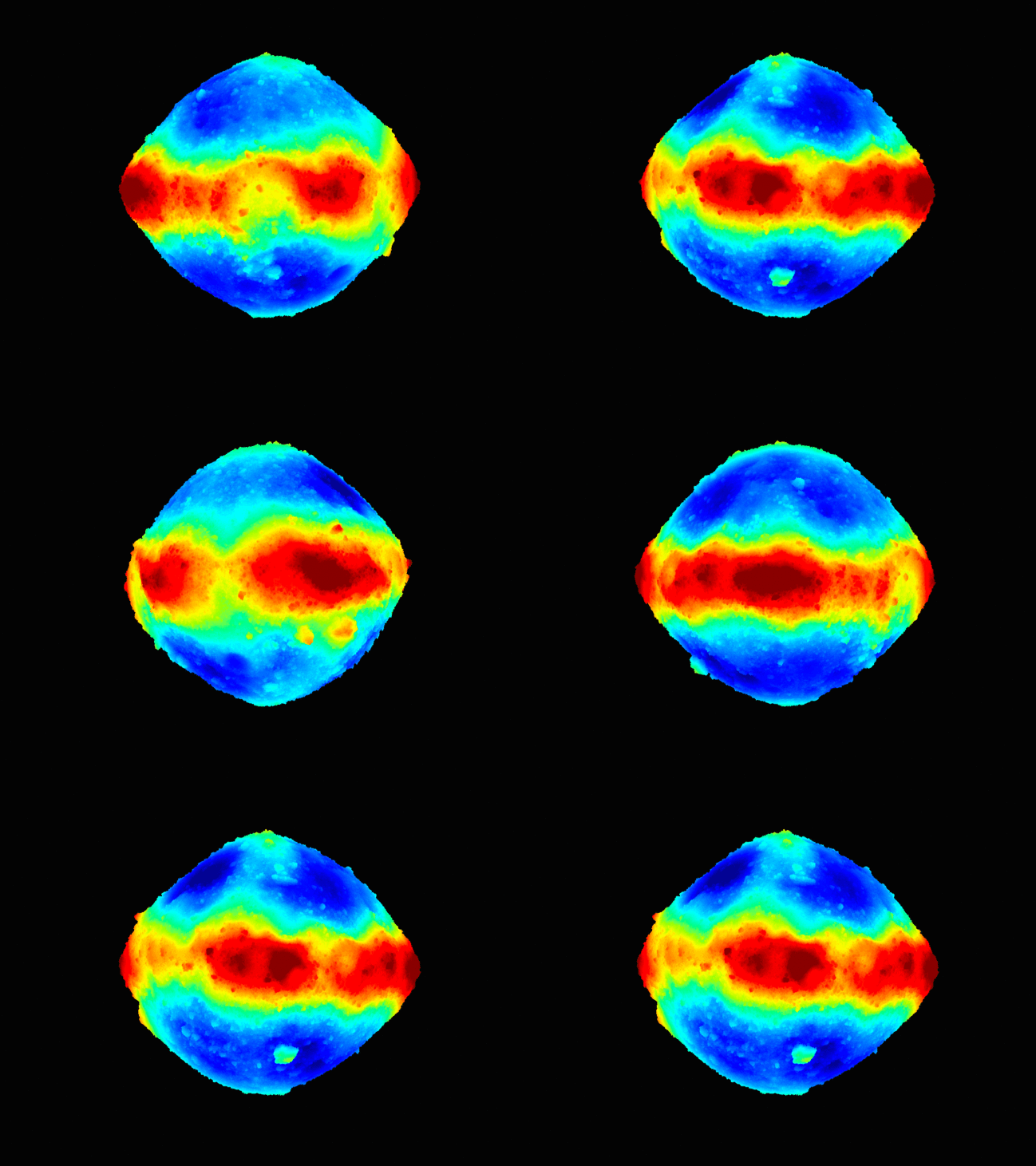
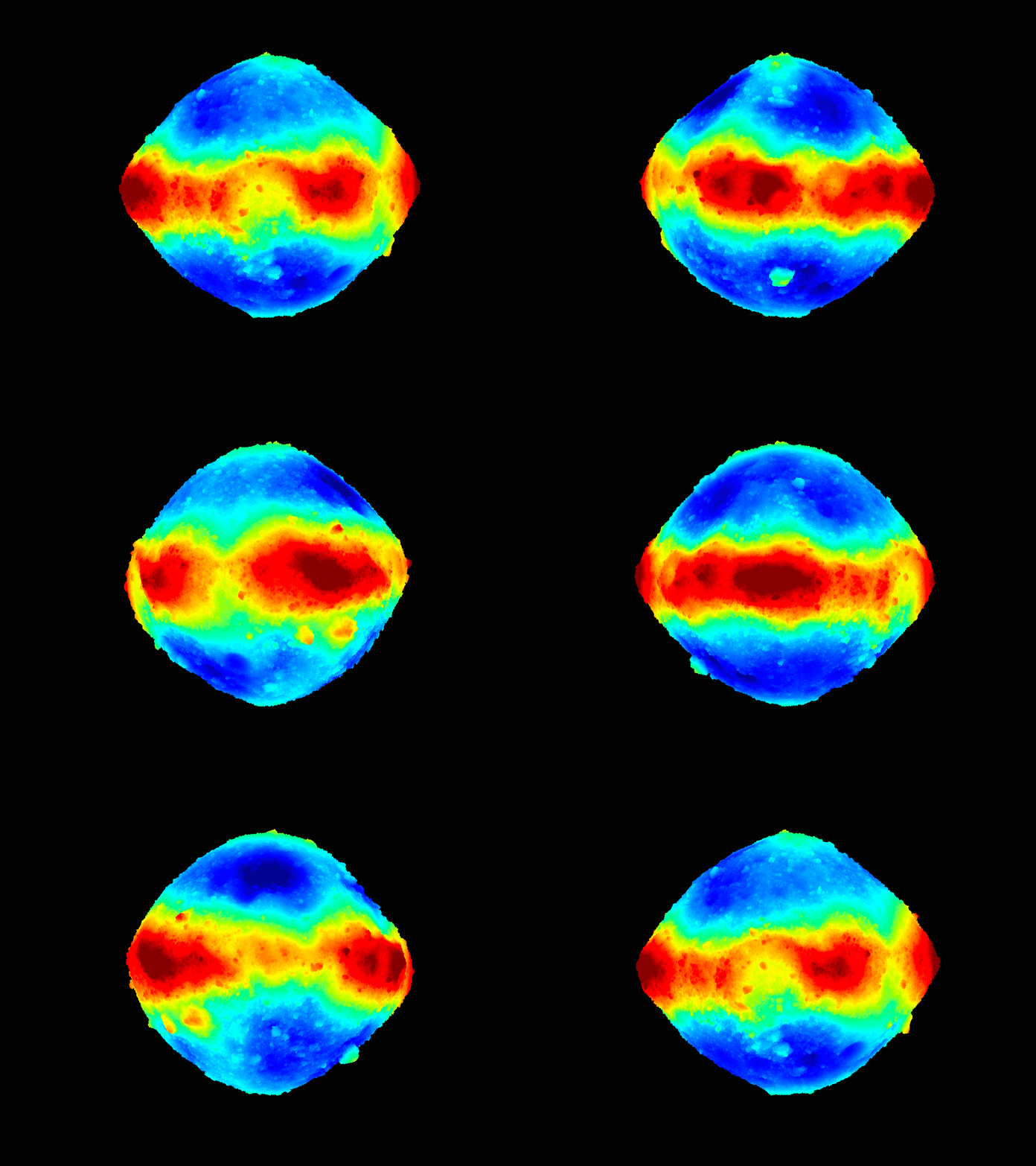
3D map of the topography of asteroid Bennu, made from 20 million measurements by the OSIRIS-REx Laser Altimeter (OLA).
CNRS News
 Nasa / University of Arizona / CSA / York / MDA
3D map of the topography of asteroid Bennu, made from 20 million measurements by the OSIRIS-REx Laser Altimeter (OLA).
Nasa / University of Arizona / CSA / York / MDA
Share
Share
[7] [14] [9]

Aside from these promising discoveries, hundreds of researchers around the world are hard at work gathering as much information as possible about the chemical composition and physical properties of the rocks from Bennu's surface. "The challenge will be to relate this small-scale data to the large-scale information collected during the flyby of the asteroid, in an effort to determine the events that resulted in the formation of this extremely porous, low-density cluster of rocks and debris," explains Michel, who will be coordinating this work for the OSIRIS-REx mission. Over the coming weeks, the consortium's 38 laboratories that have already gained access to the Bennu samples will continue their investigations. While their findings remain confidential for now, some of them should be unveiled at the Lunar and Planetary Science Conference to be held in Houston, Texas, on 11-15 March. There may well be some surprises in store. Watch this space! ♦

Further reading on our website
Hayabusa 2 brings back asteroid dust  [15] 
Investigating the origins of life   [16]
How to deflect a killer asteroid [17] 


Footnotes
  • 1. CNRS / Observatoire de la Côte d’Azur / Université Côte d’Azur.
  • 2. It was not possible to open the capsule itself, which contained the rest of the sample, until 11 January, the time it took NASA teams to develop a tool to remove the last two fasteners preventing access to the storage compartment. https://blogs.nasa.gov/osiris-rex/2024/01/11/nasas-osiris-rex-team-clear [18]...
  • 3. CNRS / Université Côte d’Azur.
  • 4. Centre de recherches pétrographiques et géochimiques (CNRS / Université de Lorraine).
  • 5. See NASA's Bennu Asteroid Sample Contains Carbon, Water on nasa.gov.

Explore more

Space
This illustration shows the merger of two black holes and the gravitational waves that ripple outward as the black holes spiral toward each other.
[19]
Article
11/03/2025
Gravitational wave detections spark great expectations [19]
Image Nasa / GSFC / Solar Dynamics Observatory
[20]
Article
10/09/2025
Hottest news from the Sun's corona [20]
Vera C. Rubin observatory © RubinObs / NSF / DOE / NOIRLab / SLAC / AURA / H. Stockebrand
[21]
Article
09/12/2025
The Big Bang within the reach of telescopes [21]
[22]
Article
07/09/2025
1905: Einstein initiates the quantum age [22]
Mont-Saint-Michel © GLAZ / Mathieu Rivrin / Hemis.fr
[23]
Article
03/18/2025
Solar storms ahead [23]
Astronomy
Image Nasa / Jet Propulsion Laboratory-Caltech
[24]
Article
08/30/2024
Planet 9, do you copy? [24]
© Peter Jurik / stock.adobe.com
[25]
Article
04/24/2024
Gaia BH3, the black hole that shouldn't exist [25]
[26]
Article
03/27/2024
Archaeology goes galactic [26]
© Sonia Collavizza, CNRS 2022
[27]
Video
06/08/2023
The birth of exoplanets [27]
[28]
Video
10/02/2022
Hunting Martian auroras [28]
Asteroid
[17]
Article
02/25/2020
How to Deflect a Killer Asteroid [17]
[29]
Article
05/21/2018
An Alien Asteroid in our Midst [29]
GAÏA
[30]
Article
09/13/2016
Gaia: the Great Galactic Map [30]

Keywords

Asteroid [31] Bennu [32] OSIRIS-REx [33] Nasa [34] cathodoluminescence [35] electrons [36] cosmochemistry [37] scanning electron microscope [38] asteroid dust [39] carbonates [40] Phosphates [41] iron oxide [42] silicates [43] neon [44] xenon [45] Isotopes [46] Nitrogen [47] ion microprobe [48] Solar System [49] Protoplanetary disc [50] Carbon [51] amino acids [52]

Share this article

[53]
[54]
[7]
[9]

Source URL:https://news.cnrs.fr/articles/an-asteroid-reveals-its-secrets

Links
[1] https://news.cnrs.fr/ [2] https://lejournal.cnrs.fr/articles/quand-la-recherche-fait-parler-les-asteroides [3] https://news.cnrs.fr/space [4] https://news.cnrs.fr/astronomy [5] https://news.cnrs.fr/javascript%3A%3B [6] https://news.cnrs.fr/authors/gregory-flechet [7] https://twitter.com/intent/tweet?url=https%3A//news.cnrs.fr/print/2045%2F&text=An asteroid reveals its secrets [8] http://www.facebook.com/sharer/sharer.php?s=100&p%5Burl%5D=https%3A//news.cnrs.fr/print/2045&p%5Btitle%5D=An%20asteroid%20reveals%20its%20secrets&p%5Bimages%5D%5B0%5D=https%3A//news.cnrs.fr/sites/default/files/styles/lightbox-hd/public/assets/images/2_atterrissage_l1024x1024.gif%3Fitok%3D8H-XXtqO&p%5Bsummary%5D= [9] https://bsky.app/intent/compose?text=An asteroid reveals its secrets%0Ahttps%3A//news.cnrs.fr/print/2045 [10] http://www.facebook.com/sharer/sharer.php?s=100&p%5Burl%5D=https%3A//news.cnrs.fr/print/2045&p%5Btitle%5D=An%20asteroid%20reveals%20its%20secrets&p%5Bimages%5D%5B0%5D=https%3A//news.cnrs.fr/sites/default/files/styles/lightbox-hd/public/assets/images/3_salleblanche_vp2.jpg%3Fitok%3DnQk59YfH&p%5Bsummary%5D= [11] https://lejournal.cnrs.fr/articles/quand-la-recherche-fait-parler-les-asteroides#footnote3_6k3n4oq [12] http://www.facebook.com/sharer/sharer.php?s=100&p%5Burl%5D=https%3A//news.cnrs.fr/print/2045&p%5Btitle%5D=An%20asteroid%20reveals%20its%20secrets&p%5Bimages%5D%5B0%5D=https%3A//news.cnrs.fr/sites/default/files/styles/lightbox-hd/public/assets/images/4_jsc2023e058643light.jpg%3Fitok%3DB_YxdEMj&p%5Bsummary%5D= [13] http://www.facebook.com/sharer/sharer.php?s=100&p%5Burl%5D=https%3A//news.cnrs.fr/print/2045&p%5Btitle%5D=An%20asteroid%20reveals%20its%20secrets&p%5Bimages%5D%5B0%5D=https%3A//news.cnrs.fr/sites/default/files/styles/lightbox-hd/public/assets/images/5_jsc2023e058642light.jpg%3Fitok%3DQArXr8ou&p%5Bsummary%5D= [14] http://www.facebook.com/sharer/sharer.php?s=100&p%5Burl%5D=https%3A//news.cnrs.fr/print/2045&p%5Btitle%5D=An%20asteroid%20reveals%20its%20secrets&p%5Bimages%5D%5B0%5D=https%3A//news.cnrs.fr/sites/default/files/styles/lightbox-hd/public/assets/images/6_bennu_full_1120x840.gif%3Fitok%3DUpkz4ygs&p%5Bsummary%5D= [15] https://news.cnrs.fr/articles/hayabusa2-brings-back-asteroid-dust [16] https://news.cnrs.fr/articles/investigating-the-origins-of-life [17] https://news.cnrs.fr/articles/how-to-deflect-a-killer-asteroid [18] https://blogs.nasa.gov/osiris-rex/2024/01/11/nasas-osiris-rex-team-clear [19] https://news.cnrs.fr/articles/gravitational-wave-detections-spark-great-expectations [20] https://news.cnrs.fr/articles/hottest-news-from-the-suns-corona [21] https://news.cnrs.fr/articles/the-big-bang-within-the-reach-of-telescopes [22] https://news.cnrs.fr/articles/1905-einstein-initiates-the-quantum-age [23] https://news.cnrs.fr/articles/solar-storms-ahead [24] https://news.cnrs.fr/articles/planet-9-do-you-copy [25] https://news.cnrs.fr/articles/gaia-bh3-the-black-hole-that-shouldnt-exist [26] https://news.cnrs.fr/articles/archaeology-goes-galactic [27] https://news.cnrs.fr/videos/the-birth-of-exoplanets [28] https://news.cnrs.fr/videos/hunting-martian-auroras [29] https://news.cnrs.fr/articles/an-alien-asteroid-in-our-midst [30] https://news.cnrs.fr/articles/gaia-the-great-galactic-map [31] https://news.cnrs.fr/asteroid [32] https://news.cnrs.fr/bennu [33] https://news.cnrs.fr/osiris-rex [34] https://news.cnrs.fr/nasa [35] https://news.cnrs.fr/cathodoluminescence [36] https://news.cnrs.fr/electrons-0 [37] https://news.cnrs.fr/cosmochemistry [38] https://news.cnrs.fr/scanning-electron-microscope [39] https://news.cnrs.fr/asteroid-dust [40] https://news.cnrs.fr/carbonates [41] https://news.cnrs.fr/phosphates [42] https://news.cnrs.fr/iron-oxide [43] https://news.cnrs.fr/silicates [44] https://news.cnrs.fr/neon [45] https://news.cnrs.fr/xenon [46] https://news.cnrs.fr/isotopes [47] https://news.cnrs.fr/nitrogen [48] https://news.cnrs.fr/ion-microprobe [49] https://news.cnrs.fr/solar-system [50] https://news.cnrs.fr/protoplanetary-disc [51] https://news.cnrs.fr/carbon [52] https://news.cnrs.fr/amino-acids [53] http://www.facebook.com/sharer/sharer.php?s=100&p%5Burl%5D=https%3A//news.cnrs.fr/print/2045&p%5Btitle%5D=An%20asteroid%20reveals%20its%20secrets&p%5Bimages%5D%5B0%5D=&p%5Bsummary%5D= [54] https://news.cnrs.fr/printmail/2045