CNRS News
Published on CNRS News (https://news.cnrs.fr)

Home > Research in Cold Waters

Research in Cold Waters

You are here

Home [1]
Lire en français [2]
slideshow
-A [3] +A [3]
Life [4]
Earth [5]
Life [6]

Research in Cold Waters

08.31.2018, by
Christelle Mercier [7]
In Greenland, French and Quebec-based researchers are monitoring the impact of climate change. Their clues consist of various marine creatures such as bivalves and shell-based mollusks, whose growth may be disturbed by changes in the environment. Researchers and divers at ease in extreme Arctic conditions are working together within an international laboratory associated with BeBEST to collect samples of the different species for further study. Welcome to the Daneborg marine station.
1
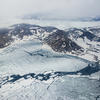
At the end of this winter, the icecap still extends to the mouth of the Young Sund fjord where the station is located. The scientists need to travel on snowmobiles to get to the diving site.
Laurent Chauvaud/Lemar/CNRS Photothèque
Slideshow mode
Share
Share
[8]
[9]
[10]
2
To reach the water, the researchers will need to drill 2 meters into the ice. Dives are then carried out under extreme conditions at a temperature of –1.9 °C (the freezing point of seawater). Cords are used as a safety link with the surface and also to hold the necessary equipment (e.g. emergency air tanks, flash lamps, sampling nets, etc.).
Erwan Amice/Lemar/CNRS Photothèque
Slideshow mode
Share
Share
[8]
[11]
[10]
3
The presence of this basket star, a species closely related to starfish, is a good omen for the diver investigating the area. If it can find enough plankton to strive, this means that there is enough of this basic nutrient in the surroundings to support the bivalves of interest.
Erwan Amice/Lemar/CNRS Photothèque
Slideshow mode
Share
Share
[8]
[12]
[10]
4
A pneumatic suction pump is used to inject air into the bottom of the tube, thus aspirating the sea floor, which pulls up into the tube a sample of the sediment—with the species living within it. The contents of the net, placed at the tip of the device, will be taken back to the laboratory for in-depth analysis.
Erwan Amice/Lemar/CNRS Photothèque
Slideshow mode
Share
Share
[8]
[13]
[10]
5
The day’s catch is good: among the marine worms and crustaceans, the researchers identify small Hiatella bivalves (the white shellfish on the left), a species that acts as a good sentinel to monitor climate change.
Erwan Amice/Lemar/CNRS Photothèque
Slideshow mode
Share
Share
[8]
[14]
[10]
6
Before being returned to its natural environment, one of the Hiatella bivalves collected was fitted with an accelerometer. This device, affixed to the shell, will allow monitoring of movements over a two-week period. The goal is to determine whether its activity is affected by the variations in temperature and oxygen concentrations associated with climate change.
Erwan Amice/Lemar/CNRS Photothèque
Slideshow mode
Share
Share
[8]
[15]
[10]
7
The Astarte, another bivalve prized by the researchers, was not seen today. Like growth rings in trees, the striations on its shell reveal its age, as well as any changes in its environment to which the creature has been exposed. One of the aims is to use it as a model for reconstituting past climates.
Erwan Amice/Lemar/CNRS Photothèque
Slideshow mode
Share
Share
[8]
[16]
[10]
8
A welcome surprise at the end of the day: the team spot this magnificent adult Arctic Fox with its winter coat on the outskirts of the station. Less fortunate photographers have had to wait hours to capture such a shot.
Erwan Amice/Lemar/CNRS Photothèque
Slideshow mode
Share
Share
[8]
[17]
[10]

Explore more

Life
Bats on a tree
[18]
Article
11/26/2025
Bats, super virus busters [18]
A male zebra trying to wake a dead pregnant female zebra
[19]
Article
11/24/2025
Animals are no strangers to death [19]
[20]
Article
09/24/2025
When phytoplankton kills [20]
bacteriophage © University of Basel / Biozentrum / SPL
[21]
Article
09/01/2025
Medicine goes viral [21]
Illustration d’un Gastornis gigantea poursuivant une proie © Jaime Chirinos / SPL
[22]
Article
08/07/2025
Giants with feet of clay [22]
arctic
[23]
Video
02/08/2024
Arctic depressions [23]
[24]
Article
03/06/2022
Forgotten dates in Europe’s history (2/4) [24]
[25]
Article
11/24/2021
MAGIC explores the polar skies [25]
[26]
Article
09/22/2021
The mechanics of sea ice [26]
[27]
Article
06/07/2021
The poles at the centre of the world stage [27]

Keywords

arctic [28] Climate change [29] Marine Animals [30] Indicators [31] Sentinels [32]

Share this article

[33]
[34]
[8]
[10]

Source URL:https://news.cnrs.fr/slideshows/research-in-cold-waters

Links
[1] https://news.cnrs.fr/ [2] https://lejournal.cnrs.fr/diaporamas/enquete-en-eaux-froides [3] https://news.cnrs.fr/javascript%3A%3B [4] https://news.cnrs.fr/life [5] https://news.cnrs.fr/earth [6] https://news.cnrs.fr/life-1 [7] https://news.cnrs.fr/authors/christelle-mercier [8] https://twitter.com/intent/tweet?url=https%3A//news.cnrs.fr/print/1334%2F&text=Research in Cold Waters [9] http://www.facebook.com/sharer/sharer.php?s=100&p%5Burl%5D=https%3A//news.cnrs.fr/print/1334&p%5Btitle%5D=Research%20in%20Cold%20Waters&p%5Bimages%5D%5B0%5D=https%3A//news.cnrs.fr/sites/default/files/styles/lightbox-hd/public/assets/images/diapo_groenland_01.jpg%3Fitok%3DKGsJ5_Xx&p%5Bsummary%5D= [10] https://bsky.app/intent/compose?text=Research in Cold Waters%0Ahttps%3A//news.cnrs.fr/print/1334 [11] http://www.facebook.com/sharer/sharer.php?s=100&p%5Burl%5D=https%3A//news.cnrs.fr/print/1334&p%5Btitle%5D=Research%20in%20Cold%20Waters&p%5Bimages%5D%5B0%5D=https%3A//news.cnrs.fr/sites/default/files/styles/lightbox-hd/public/assets/images/diapo_groenland_02.jpg%3Fitok%3D1kjoYY4_&p%5Bsummary%5D= [12] http://www.facebook.com/sharer/sharer.php?s=100&p%5Burl%5D=https%3A//news.cnrs.fr/print/1334&p%5Btitle%5D=Research%20in%20Cold%20Waters&p%5Bimages%5D%5B0%5D=https%3A//news.cnrs.fr/sites/default/files/styles/lightbox-hd/public/assets/images/diapo_groenland_03.jpg%3Fitok%3DkUU1nif-&p%5Bsummary%5D= [13] http://www.facebook.com/sharer/sharer.php?s=100&p%5Burl%5D=https%3A//news.cnrs.fr/print/1334&p%5Btitle%5D=Research%20in%20Cold%20Waters&p%5Bimages%5D%5B0%5D=https%3A//news.cnrs.fr/sites/default/files/styles/lightbox-hd/public/assets/images/diapo_groenland_04.jpg%3Fitok%3D0r_BglWN&p%5Bsummary%5D= [14] http://www.facebook.com/sharer/sharer.php?s=100&p%5Burl%5D=https%3A//news.cnrs.fr/print/1334&p%5Btitle%5D=Research%20in%20Cold%20Waters&p%5Bimages%5D%5B0%5D=https%3A//news.cnrs.fr/sites/default/files/styles/lightbox-hd/public/assets/images/diapo_groenland_05.jpg%3Fitok%3DknrO5KDT&p%5Bsummary%5D= [15] http://www.facebook.com/sharer/sharer.php?s=100&p%5Burl%5D=https%3A//news.cnrs.fr/print/1334&p%5Btitle%5D=Research%20in%20Cold%20Waters&p%5Bimages%5D%5B0%5D=https%3A//news.cnrs.fr/sites/default/files/styles/lightbox-hd/public/assets/images/diapo_groenland_06.jpg%3Fitok%3DcMH6Edmz&p%5Bsummary%5D= [16] http://www.facebook.com/sharer/sharer.php?s=100&p%5Burl%5D=https%3A//news.cnrs.fr/print/1334&p%5Btitle%5D=Research%20in%20Cold%20Waters&p%5Bimages%5D%5B0%5D=https%3A//news.cnrs.fr/sites/default/files/styles/lightbox-hd/public/assets/images/diapo_groenland_07.jpg%3Fitok%3DwBLQq9GI&p%5Bsummary%5D= [17] http://www.facebook.com/sharer/sharer.php?s=100&p%5Burl%5D=https%3A//news.cnrs.fr/print/1334&p%5Btitle%5D=Research%20in%20Cold%20Waters&p%5Bimages%5D%5B0%5D=https%3A//news.cnrs.fr/sites/default/files/styles/lightbox-hd/public/assets/images/diapo_groenland_08.jpg%3Fitok%3DxcEE_A3w&p%5Bsummary%5D= [18] https://news.cnrs.fr/articles/bats-super-virus-busters [19] https://news.cnrs.fr/articles/animals-are-no-strangers-to-death [20] https://news.cnrs.fr/articles/when-phytoplankton-kills [21] https://news.cnrs.fr/articles/medicine-goes-viral [22] https://news.cnrs.fr/articles/giants-with-feet-of-clay [23] https://news.cnrs.fr/videos/arctic-depressions [24] https://news.cnrs.fr/articles/forgotten-dates-in-europes-history-24 [25] https://news.cnrs.fr/articles/magic-explores-the-polar-skies [26] https://news.cnrs.fr/articles/the-mechanics-of-sea-ice [27] https://news.cnrs.fr/articles/the-poles-at-the-centre-of-the-world-stage [28] https://news.cnrs.fr/arctic [29] https://news.cnrs.fr/climate-change [30] https://news.cnrs.fr/marine-animals [31] https://news.cnrs.fr/indicators [32] https://news.cnrs.fr/sentinels [33] http://www.facebook.com/sharer/sharer.php?s=100&p%5Burl%5D=https%3A//news.cnrs.fr/print/1334&p%5Btitle%5D=Research%20in%20Cold%20Waters&p%5Bimages%5D%5B0%5D=&p%5Bsummary%5D= [34] https://news.cnrs.fr/printmail/1334