Wanda Diaz-Merced, the astronomer who listens to the stars
You are here
 Lire en français [2]
Wanda Diaz-Merced, the astronomer who listens to the stars
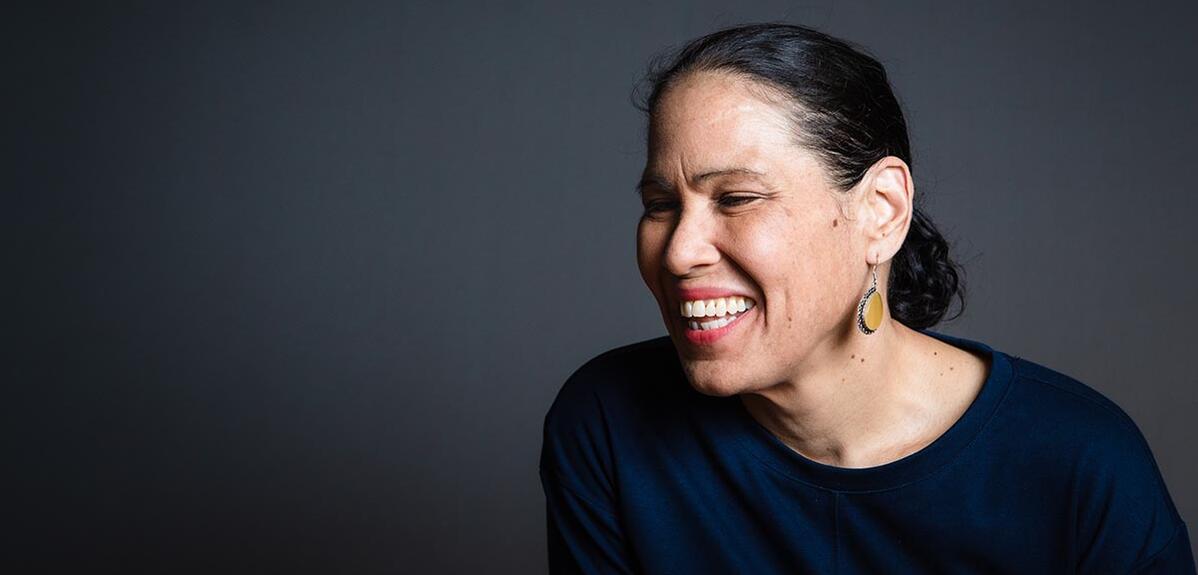
Cheerfully apologising for being late, even though she isn’t, Wanda Diaz-Merced invites us into her office at the AstroParticle and Cosmology (APC) laboratory1. Her grey-blue eyes are riveting, like two stars. But she cannot return our gaze: Diaz-Merced is blind. Planets, stars, galaxies… she sees none of them. Nevertheless, this astronomer is intimately familiar with the spectacle of the sky, thanks to a technique that she developed to convert signals from the cosmos into audible sounds. This tool offers the scientist an alternative approach to the data prior to more in-depth analysis and, given the circumstances, is also a powerful instrument for inclusion. After spending a year at the European Gravitational Laboratory (EGO) near Pisa (Italy), Diaz-Merced recently began a one-year residency in Paris, where she will pursue her unique endeavour to make signals from the sky accessible to all.
Diaz-Merced says she has been interested in science since she was a child, growing up in Puerto Rico. When it was time for her to enter university, she first wanted to study medicine. But her future took a dark turn. She had started to lose her eyesight as a teenager, and by the time she graduated from secondary school she was totally blind. “I couldn’t even see what the professor was writing on the board, and I obviously couldn’t read books anymore,” she recalls, referring to a critical period in her life when she almost gave up everything.
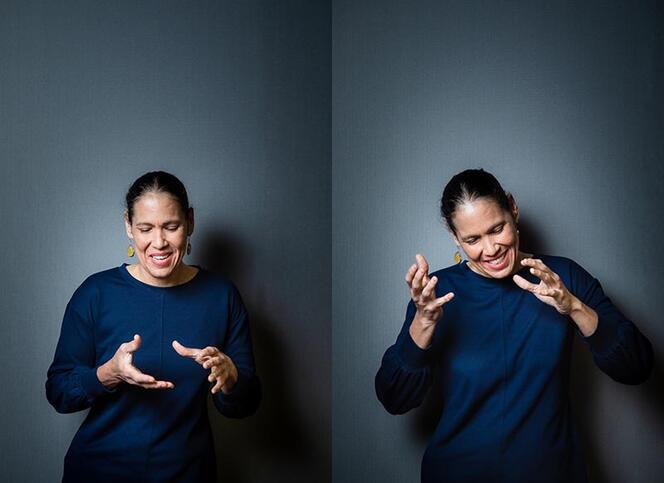


It was a classmate who saved her from the black hole of her disability. An amateur astronomer, he was contributing to a NASA participatory science project called Radio Jove, recording and analysing radio transmissions from Jupiter, the Sun and the whole galaxy using a small make-it-yourself antenna. He had the young student listen to the transposition into audible frequencies of the radio signal from a solar flare. “I felt as though I were hearing the Sun in real time, and then, after the flare, the background sound of the galaxy,” she recalls, with a note of excitement. “I had the deep feeling that this was a possibility for me.”
The ear of the astronomer
Taking action, Diaz-Merced became involved in the Radio Jove project. “I participated in teleconferences and learned as much as I could,” she recounts. Then in 2005 she was selected for a summer internship at the Goddard Space Flight Center in the United States, where she met Robert Candey, the astrophysicist whom she still considers her mentor nearly 20 years later. With Candey, she began working on the development of a programme called xSonify, which translates signals from astrophysical objects into variations in audio frequency and intensity. “It allowed me to analyse my first data from a radio telescope,” Diaz-Merced explains.
The following year she worked on recordings made by the Swift satellite of gamma-ray bursts, flashes of high-energy photons emitted by the fusion of neutron stars or the explosion of giant stars. “That’s when I realised that astronomy was a science that I could work in,” she says.

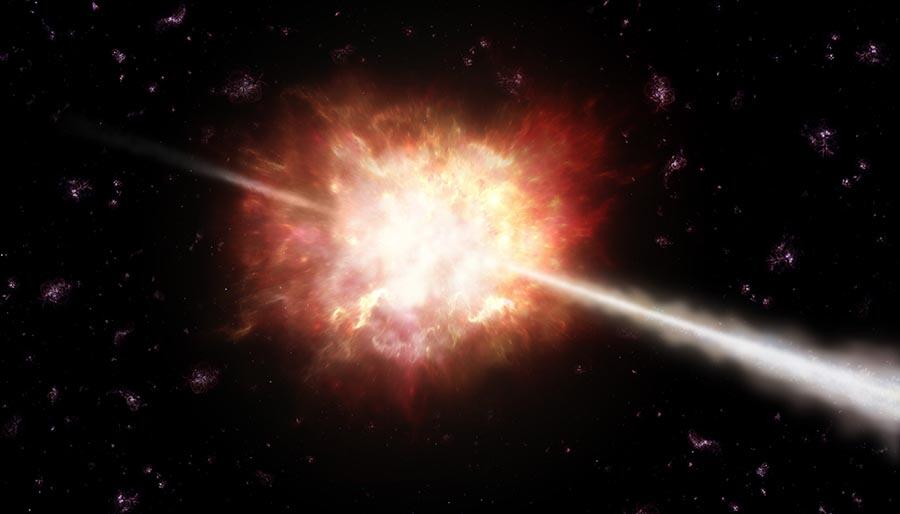
In 2013 Diaz-Merced defended her doctoral dissertation at the University of Glasgow (UK). She then undertook a series of postdoctoral residencies at the Harvard Smithsonian Center for Astrophysics (US), the South African Astronomical Observatory (SAAO), then in Japan, and at the EGO. Over the years she fine-tuned her approach to the sonification of astrophysical data, applying it to the study of solar wind, coronal mass ejections, cosmic rays and the coalescence of black holes. As she points out, “Sonification cannot replace meticulous mathematical analysis, but it’s a way of accessing data that can identify potentially significant signals for subsequent in-depth study.” Better still, the researcher has been able to show, through a series of perceptual experiments, that even for sighted astronomers under professional working conditions, sound enhances the ability to access very weak signals that are by nature invisible to the human eye.
Exploring the signals of the Universe
In parallel, Diaz-Merced is participating in a variety of inclusive participatory science projects. In 2016 she gave a TED talk in which she advocated making science accessible to everyone. In 2019 she co-directed a conference entitled “Astronomy for Equity, Diversity and Inclusion” at the National Astronomical Observatory of Japan.
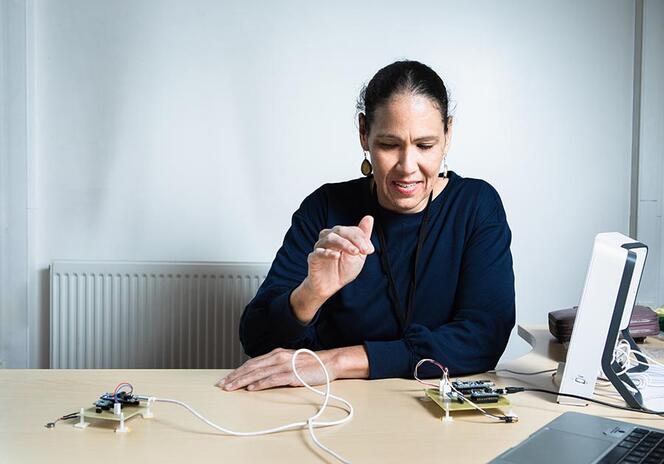
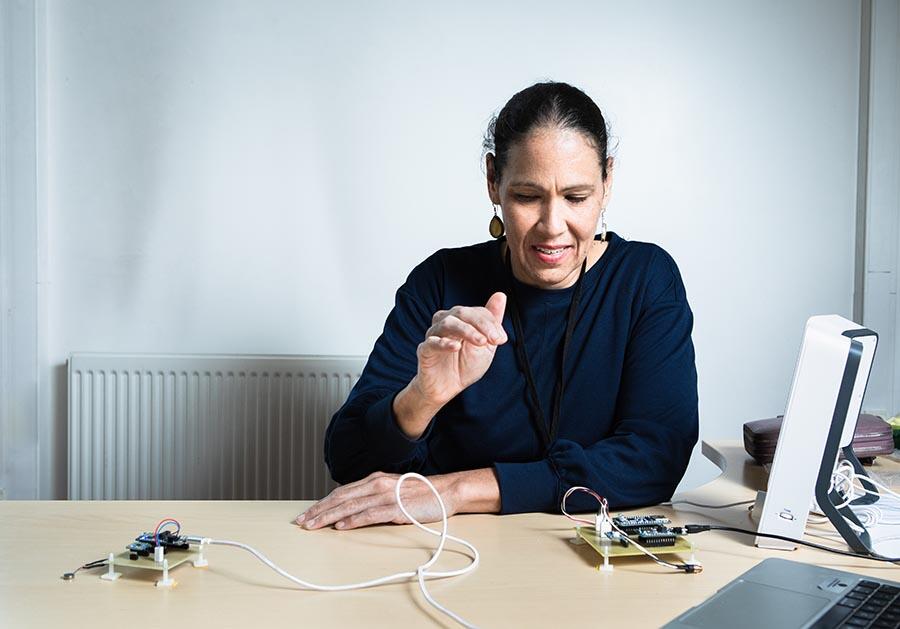
In Paris, the researcher has begun discussions with her new colleagues to decide how she will interact with them on the topics studied in the laboratory. According to her director, Antoine Kouchner, “Electromagnetic radiation, cosmic rays, neutrinos, gravitational waves… The APC stands out by bringing teams together to work on all of the messengers for observing the Universe. From this point of view, Wanda’s approach could be very useful for exploring these signals and will contribute to making the laboratory accessible to all.”
In strictly scientific terms, data sonification could, for example, find an application in the preparation of the observations of SVOM, a French-Chinese satellite scheduled to launch in March 2024. Its mission is to identify the characteristics and locations of gamma-ray bursts, in order to facilitate their monitoring by ground-based observatories. Will sonification enable discoveries that are beyond the reach of more conventional methods? For the moment, this is still only a hypothesis. But one thing is certain: with her ears fixed more closely than ever on the sky, Diaz-Merced is determined to demonstrate that astronomy has everything to gain, here and now, by remaining open to all approaches and all abilities. ♦
- 1. CNRS / Université Paris Cité.
Explore more