CNRS News
Published on CNRS News (https://news.cnrs.fr)

Home > The holy Hittite city of Zippalanda finally identified
The holy Hittite city of Zippalanda finally identified

You are here
Home [1]
Society [2]
Archaeology [3]
-A [4] +A [4]
article

The holy Hittite city of Zippalanda finally identified

05.25.2023, by
Cécile Michel [5]
Reading time: 3 minutes
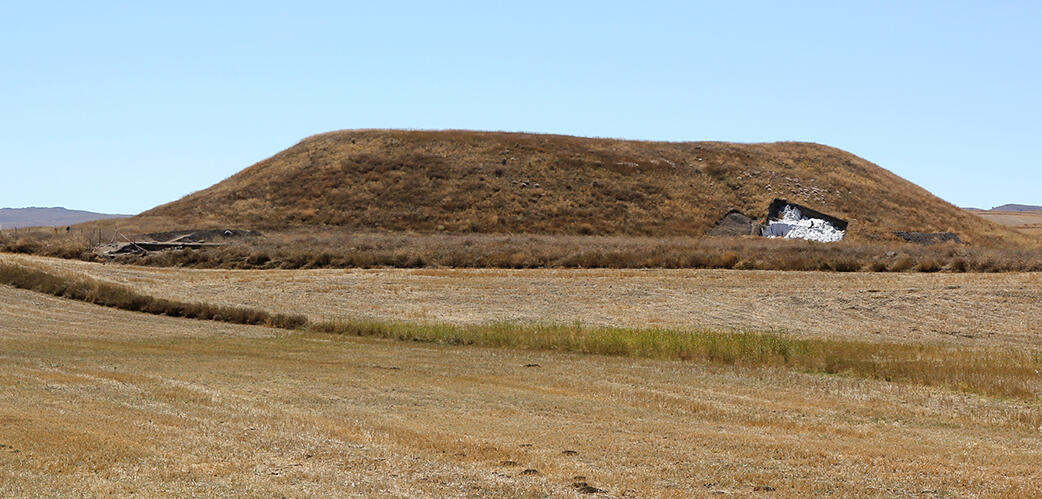
Photo Ingeborg Simon / Wikimedia commons
Historians who decipher cuneiform texts frequently discover names of ancient cities that they are unable to locate on a map. In addition, the original designations of many sites excavated by archaeologists in the Near and Middle East have yet to be determined. Discovering the names they were known by in antiquity sheds light on their history, their development and even their demise. This is why the recent identification of Uşaklı höyük (Turkey) as the location of the holy Hittite city of Zippalanda represents a major scientific advance, explains Cécile Michel, an Assyriologist at the CNRS's ArScAn archaeology and sciences of antiquity laboratory.

In the first half of the 2nd millennium, Zippalanda was the centre of the cult dedicated to the Storm god, who was the son of the Storm god of Hatti and the Sun goddess of the Earth. The archives of Hattusha, the Hittite capital, describe the festivities organised in honour of the god, in which the king took part. In fact, he had a residence in Zippalanda for this very purpose.

Despite the importance of this city in the religion of the Hittites, until the end of 2022 there was some uncertainty about its actual location. Different places had been proposed, all located in central Anatolia. At Alaca höyük, in Turkey's Çorum province, archaeologists had unearthed orthostats showing a religious ritual involving the royal couple and suggesting the site's importance as a place of worship. Another candidate was Çadır höyük, in Yozgat  province, not far from Mount Kerkenes, which according to Hittite sources corresponds to Mount Taha, the sacred mountain of the Storm god of Zippalanda.

A third hypothesis first put forward in the 1990s placed Zippalanda at Uşaklı höyük, and this now appears to have been confirmed by recent discoveries. The site is located 20 km east of Yozgat, in a narrow valley north of Mount Kerkenes. Over the past ten years, it has been excavated by an Italian-Turkish mission led by archaeologists from the University of Pisa (Italy). Settled since the end of the 3rd millennium, it reached its peak during the Hittite period, in the middle of the 2nd millennium.

During recent excavations, archaeologists unearthed the remains of several monumental buildings, including a palace and the city's main temple, presumably dedicated to the Storm god, as well as several fragments of cuneiform tablets in Hittite dating from the 14th and 13th centuries BC.
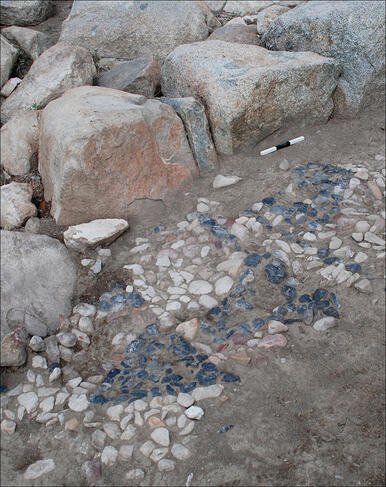

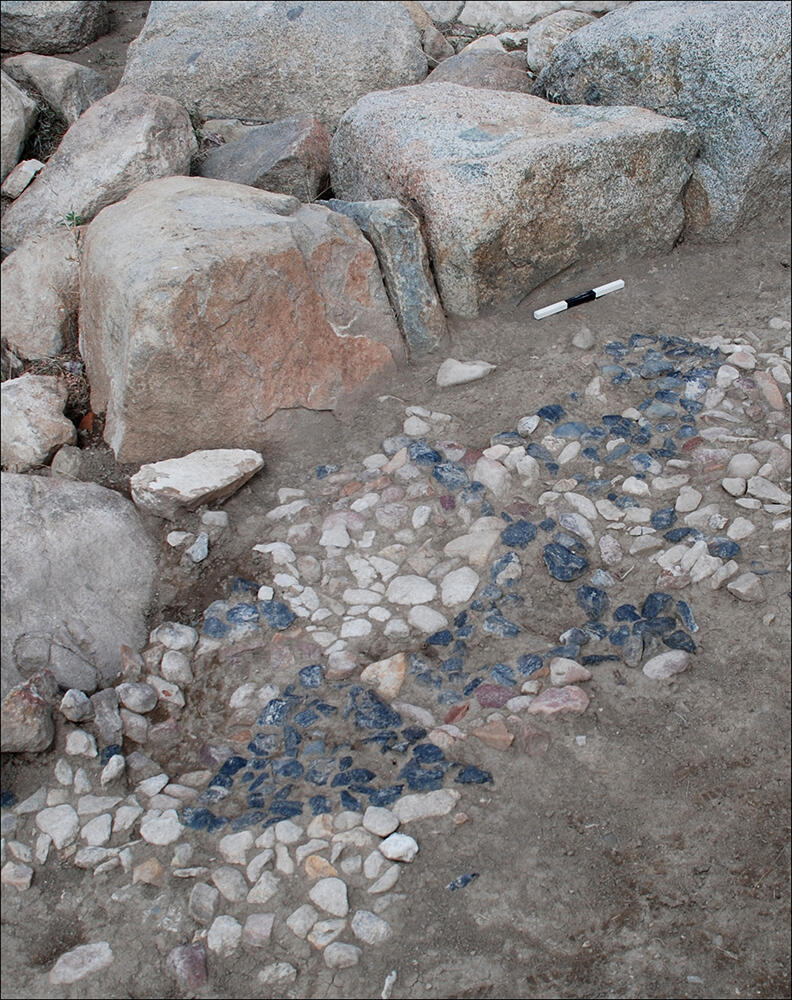
mosaic © Uşaklı Höyük Archaeological Project.
Detail of the mosaic at Uşaklı höyük
CNRS News
mosaic © Uşaklı Höyük Archaeological Project.
Detail of the mosaic at Uşaklı höyük
Uşaklı Höyük Archaeological Project
Share
Share
[6] [7] [8]

In 2018, a public building from the late Bronze Age with the typical layout of a Hittite temple was uncovered on the lower terrace. To the east of the building there is a courtyard whose floor is covered with a mosaic made of pebbles arranged in a chequered pattern. It is one of the oldest known mosaics.

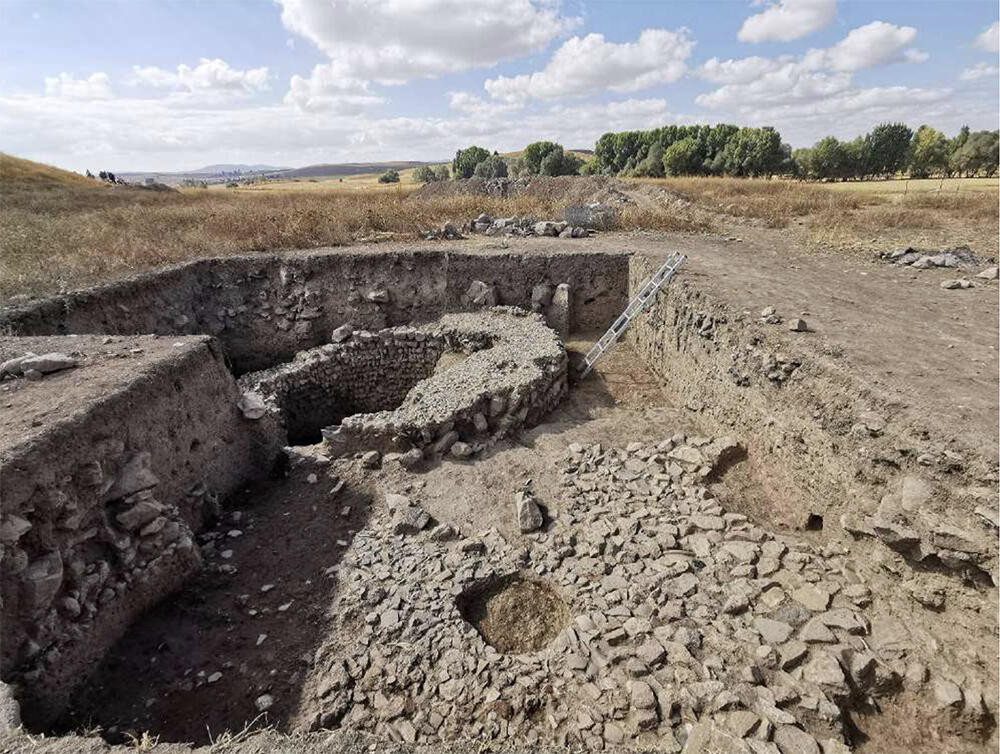
During the 2022 campaign, a circular stone structure built on the slope was unearthed north of the city's main temple, near the river that flows just below the ramparts. This unusual structure probably had a ritual function, since its centre was filled with animal remains and fragments of ceramics, suggesting offerings to a deity. A Hittite ritual mentioning the Storm god of Zippalanda, which was intended to protect the life of the royal couple, consisted in sacrificing animals in a pit called a “hattessar”, located by a river.
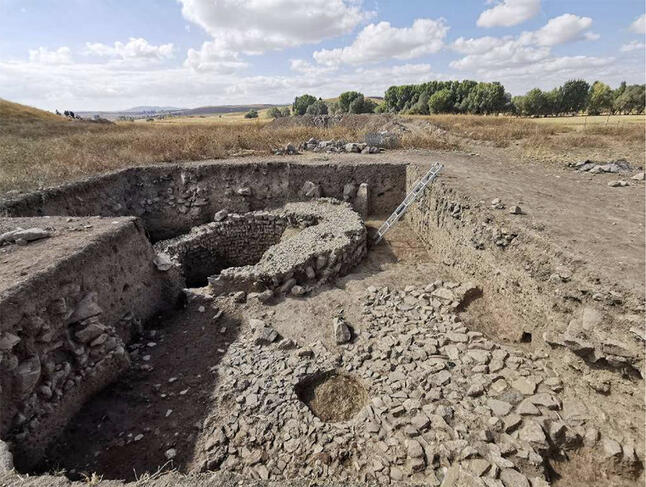
 

© University of Pisa / Uşaklı Höyük Archaeological Project
A circular structure discovered at Uşaklı höyük in 2022.
CNRS News
© University of Pisa / Uşaklı Höyük Archaeological Project
A circular structure discovered at Uşaklı höyük in 2022.
University of Pisa / Uşaklı Höyük Archaeological Project
Share
Share
[6] [9] [8]

In addition to the fact that the site is situated near the sacred mountain of the Storm god of Zippalanda, the connection between the circular structure and its contents with this Hittite ritual confirms the identification of Uşaklı höyük as the location of the Hittite city of Zippalanda.

No doubt this promising site holds many more discoveries in store for the Italian and Turkish archaeological teams. 

Explore more

Society
 metamorworks / iStock.com
[10]
Article
12/02/2025
Science one step ahead [10]
adoption of a historic global warming pact at the COP21 Climate Conference in Le Bourget, north of Paris, on December 12, 2015
[11]
Article
11/09/2025
Ten years on, mixed results for the Paris Agreement [11]
[12]
Article
10/20/2025
Colonialism in green camouflage [12]
[13]
Article
10/15/2025
Cervantes, an influencer of his time [13]
[14]
Article
10/03/2025
The myth of energy transition [14]
Archaeology
[15]
Article
09/29/2025
The Arabian desert reveals long-hidden jewels [15]
[16]
Article
04/21/2025
Climate change puts archaeological sites at threat [16]
[17]
Article
04/16/2025
Meet Arthur, the first deep-sea robot archaeologist [17]
© Xavier Muth / Ludovic Slimak
[18]
Slideshow
11/08/2024
The adventurers behind the lost Neanderthal [18]
[19]
Article
10/31/2024
When science enters the Chauvet Cave [19]

Keywords

Zippalanda [20]

Share this article

[21]
[22]
[6]
[8]

Source URL:https://news.cnrs.fr/articles/the-holy-hittite-city-of-zippalanda-finally-identified

Links
[1] https://news.cnrs.fr/ [2] https://news.cnrs.fr/society [3] https://news.cnrs.fr/archaeology-0 [4] https://news.cnrs.fr/javascript%3A%3B [5] https://news.cnrs.fr/authors/cecile-michel [6] https://twitter.com/intent/tweet?url=https%3A//news.cnrs.fr/print/1969%2F&text=The holy Hittite city of Zippalanda finally identified [7] http://www.facebook.com/sharer/sharer.php?s=100&p%5Burl%5D=https%3A//news.cnrs.fr/print/1969&p%5Btitle%5D=The%20holy%20Hittite%20city%20of%20Zippalanda%20finally%20identified&p%5Bimages%5D%5B0%5D=https%3A//news.cnrs.fr/sites/default/files/styles/lightbox-hd/public/assets/images/urn_cambridge_org_idbinary_fig6_72dpi.jpg%3Fitok%3DCLrJCPOh&p%5Bsummary%5D= [8] https://bsky.app/intent/compose?text=The holy Hittite city of Zippalanda finally identified%0Ahttps%3A//news.cnrs.fr/print/1969 [9] http://www.facebook.com/sharer/sharer.php?s=100&p%5Burl%5D=https%3A//news.cnrs.fr/print/1969&p%5Btitle%5D=The%20holy%20Hittite%20city%20of%20Zippalanda%20finally%20identified&p%5Bimages%5D%5B0%5D=https%3A//news.cnrs.fr/sites/default/files/styles/lightbox-hd/public/assets/images/uni_pisa_capture_pdf_72dpi.jpg%3Fitok%3Du5B0IShh&p%5Bsummary%5D= [10] https://news.cnrs.fr/articles/science-one-step-ahead [11] https://news.cnrs.fr/articles/ten-years-on-mixed-results-for-the-paris-agreement [12] https://news.cnrs.fr/articles/colonialism-in-green-camouflage [13] https://news.cnrs.fr/articles/cervantes-an-influencer-of-his-time [14] https://news.cnrs.fr/articles/the-myth-of-energy-transition [15] https://news.cnrs.fr/articles/the-arabian-desert-reveals-long-hidden-jewels [16] https://news.cnrs.fr/articles/climate-change-puts-archaeological-sites-at-threat [17] https://news.cnrs.fr/articles/meet-arthur-the-first-deep-sea-robot-archaeologist [18] https://news.cnrs.fr/slideshows/the-adventurers-behind-the-lost-neanderthal [19] https://news.cnrs.fr/articles/when-science-enters-the-chauvet-cave [20] https://news.cnrs.fr/zippalanda [21] http://www.facebook.com/sharer/sharer.php?s=100&p%5Burl%5D=https%3A//news.cnrs.fr/print/1969&p%5Btitle%5D=The%20holy%20Hittite%20city%20of%20Zippalanda%20finally%20identified&p%5Bimages%5D%5B0%5D=&p%5Bsummary%5D= [22] https://news.cnrs.fr/printmail/1969